POLITICS
Bengal: Inside the backlash against Abhishek Banerjee
Widely seen as Mamata Banerjee's political heir, Abhishek now finds himself at the centre of a growing debate within TMC
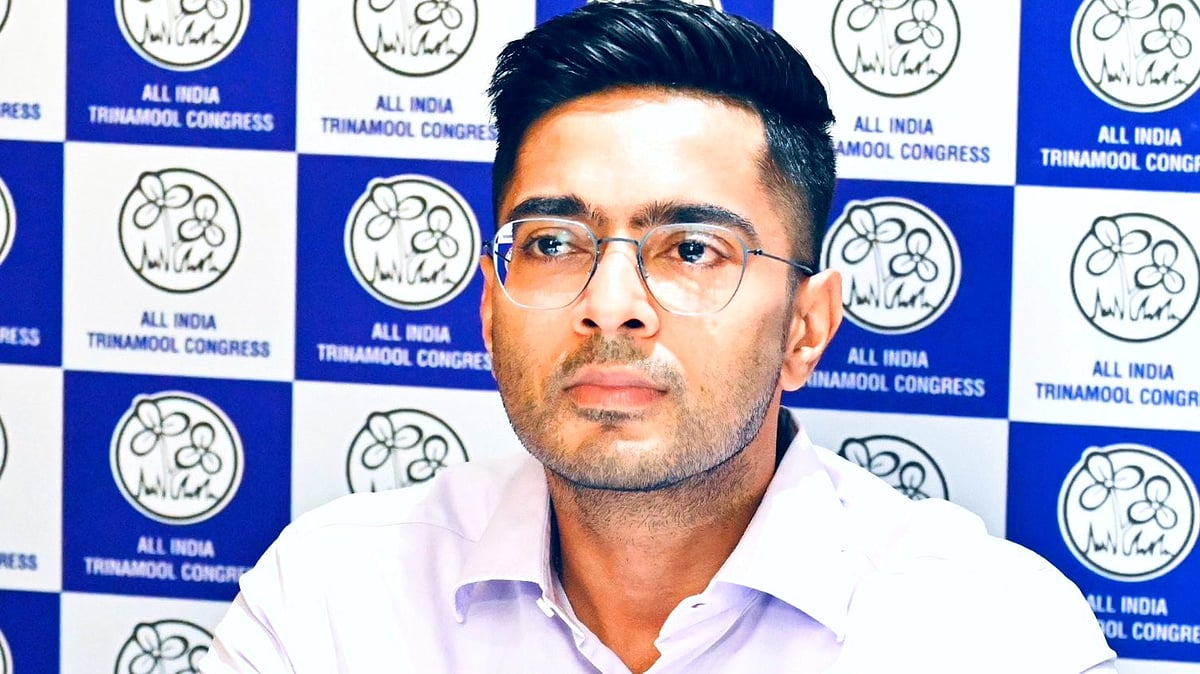
The rise of Abhishek Banerjee — in the news recently over the assault on him by alleged BJP workers and the seeming 'public anger' against him — within the Trinamool Congress (TMC) has been one of the defining developments in West Bengal politics over the past decade. As national general-secretary of the party and widely regarded as the political heir to former chief minister Mamata Banerjee, Abhishek had become one of the most influential figures in the organisation.
His rise, however, also generated resistance from sections of the party's old guard. In recent years, a number of TMC leaders, former legislators and dissidents have publicly criticised his leadership style, the growing role of political consultants, and what they describe as the centralisation of power within the party.
The criticism became particularly visible after the TMC's May Assembly election defeat, when several leaders openly questioned decisions taken by the leadership and the influence of consultants associated with I-PAC.
One of the most common complaints has been that decision-making became increasingly concentrated around Abhishek Banerjee and a small group of advisers. Former and dissident leaders have alleged that traditional channels within the party weakened over time and that senior leaders who had built the organisation at the grassroots level found themselves sidelined.
Among the strongest public criticisms came from Krishnendu Narayan Chowdhury, who said, "The person who destroyed the TMC bit by bit is Abhishek Banerjee. He did whatever he wanted." TMC leader Rabindranath Ghosh similarly alleged, "Abhishek created a second power centre within the party."
Others argued that the party was changing in character. TMC spokesperson Kohinoor Mazumdar accused the leadership of turning the party into a corporate organisation, while senior leader Atin Ghosh drew a distinction between Mamata Banerjee's political journey and that of her nephew, remarking, "Mamata has risen from the grassroots, while Abhishek has been a new-age leader."
Although not all these comments directly attacked Abhishek Banerjee, they reflected broader concerns among some senior leaders regarding the direction in which the organisation was moving.
Another recurring source of resentment was the growing role of political consultants associated with the party through Abhishek Banerjee. A frequent complaint from party insiders was that grassroots workers felt ignored while consultants gained influence. A senior leader quoted in reports alleged, "I-PAC people used to threaten leaders in Abhishek Banerjee's name."
Others claimed consultants would contact elected representatives at short notice seeking videos, testimonials and campaign material, frustrating leaders accustomed to a more traditional political structure.
Supporters of the consultant-driven approach argue that such methods helped modernise election management and improve organisational efficiency. Critics, however, believe the system weakened local leadership and reduced the authority of experienced political workers.
Some current and former leaders have also complained that senior party figures found it increasingly difficult to directly communicate with the top leadership. According to these accounts, many leaders who previously had direct access to Mamata Banerjee believed organisational structures changed over time, making communication more formal and centralised.
Several dissidents have further claimed that Abhishek Banerjee adopted a more corporate management style than previous generations of TMC leadership. Some alleged that senior leaders were expected to follow instructions without question and that disagreements were not always welcomed.
These perceptions were reflected in comments made by expelled MLA Ritabrata Banerjee, who said, "You could not criticise Abhishek."
That remark has become one of the most frequently cited examples used by dissidents to illustrate what they describe as declining internal debate within the party.
No political figure has had a more significant and lasting conflict with Abhishek Banerjee than present BJP chief minister Suvendu Adhikari.
Before joining the BJP, Adhikari was among the most influential leaders in the TMC and played a major role in expanding the party's organisation, particularly in Purba Midnapore. Many political observers believe the roots of the dispute lay in competing centres of influence within the party. As Abhishek Banerjee's role grew, Adhikari reportedly became concerned about his own political future and the increasing concentration of power around the leadership's inner circle.
Analysts have often described the conflict as partly a succession battle. Adhikari represented an older generation of mass leaders who built support through organisational networks and local mobilisation. Abhishek represented a newer generation that relied more heavily on modern campaign management, digital outreach and centralised decision-making.
Supporters of Adhikari argued that traditional leaders were losing influence, while supporters of Abhishek maintained that the party needed organisational reforms to remain competitive. The disagreements eventually became irreconcilable, leading to Adhikari's departure from the TMC and his move to the BJP before the 2021 Assembly election. Since then, the rivalry has become deeply personal and intensely political.
Following the TMC's defeat in the Assembly election, criticism of Abhishek Banerjee became more public than at any previous point in his political career. Leaders questioned candidate selection, campaign strategy and the party's dependence on consultants, while some blamed what they described as excessive centralisation of authority.
Veteran TMC MP Kalyan Banerjee was reported as saying, "The party leadership has moved away from grassroots workers."
The comments reflected a wider debate within the organisation about whether the party had drifted away from the structures that originally fuelled its rise.
Political opponents of the TMC frequently claim that disgruntled leaders are increasingly finding common ground with Adhikari's criticisms of the party leadership. What is clear is that many of the criticisms now being voiced by dissident TMC leaders closely resemble arguments Adhikari has been making since his departure from the party. As a result, the political narrative he promoted has gained greater visibility since the TMC's setback.
The debate ultimately goes beyond individual personalities. It reflects a larger struggle over the future direction of the TMC. Whether the party chooses to continue along its current path or accommodate the concerns raised by its critics may determine how effectively it rebuilds after its defeat.
Join our official telegram channel (@nationalherald) and stay updated with the latest headlines