POLITICS
The BJP tries a new political stunt in Punjab
Desperate for a toehold in the state, the BJP is playing with fire
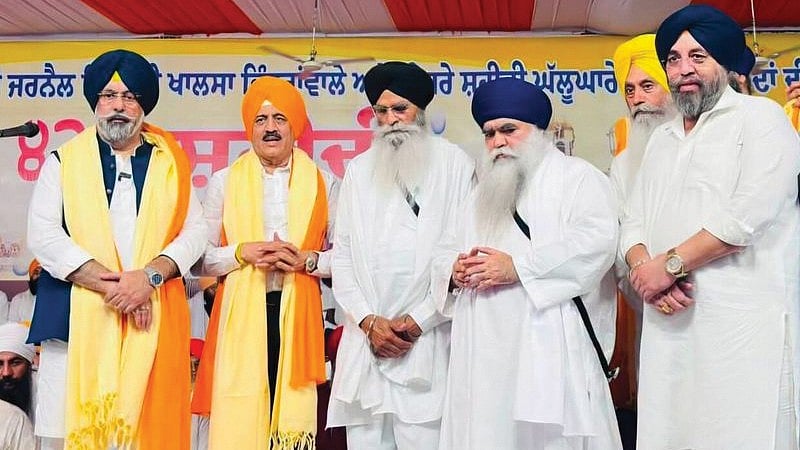
By hook or by crook: that seems to sum up the BJP’s Punjab strategy as it prepares for the 2027 state Assembly elections. Desperate for a foothold in the state, its recent stunts have bemused political observers in Punjab.
On 6 June, senior BJP leader and Maharashtra minister Girish D. Mahajan attended the 42nd anniversary of Operation Bluestar observed at the Damdami Taksal headquarters in Amritsar. The event has always been politically sensitive. Even senior Akali Dal leaders, despite their deep roots in Sikh politics, tend to steer clear. An official BJP representative from Maharashtra to this gathering? That had to be a first.
Even more controversial than Mahajan’s presence were his remarks from the podium: Operation Bluestar was a military attack, 6 June 1984 was a ‘black day’ in Indian history, those killed were martyrs. He accused then prime minister Indira Gandhi of forcibly sending the Army into the Golden Temple complex and likened the military action to the invasions of Ahmad Shah Abdali.
For decades, BJP leaders have opposed attempts to glorify or memorialise Jarnail Singh Bhindranwale and his associates, maintaining that Operation Blue Star, however tragic, was carried out to restore law and order.
While several Sikh organisations objected to Sikhs being referred to as ‘Sanatani Sikhs’ at the event, most wondered how or why a water resources minister from Maharashtra had landed up at this event. But those familiar with recent developments suggest the visit was not as random as it seemed.
The growing proximity between the Damdami Taksal and the BJP has been evident for some time. During the 2024 Maharashtra Assembly elections, Baba Harnam Singh of the Taksal extended support to the BJP-led Mahayuti alliance. Earlier this year, the Taksal also participated in the Maharashtra government’s commemoration of the 350th anniversary of the martyrdom of Guru Tegh Bahadur, an event attended by Union home minister Amit Shah.
Mahajan’s visit, said BJP spokesperson Prof. Sarchand Singh, was a “reciprocal gesture”. He was merely representing the Maharashtra chief minister at the event. If this explanation is accepted, it would appear that the BJP has been cultivating relationships with groups it once viewed with suspicion.
Interestingly, when Amit Shah was asked about Mahajan’s remarks, he distanced the party from what he called Mahajan’s “personal opinion”. If the remarks were indeed personal, critics ask, why was a senior minister sent to the event in the first place?
The controversy has also generated debate in Maharashtra. Operation Bluestar was conducted under the leadership of General Arun Kumar Shridhar Vaidya, a distinguished Maharashtrian soldier who paid a steep price for his part in the operation. In 1986, after he had retired, General Vaidya was assassinated by Khalistani terrorists in Pune. Critics in Maharashtra are asking: how could a minister from the state overlook the sacrifice of one of Maharashtra’s most decorated military figures?
Pundits believe the BJP’s ‘evolving’ approach is driven by electoral compulsions. According to political analyst Prof. Kuldip Singh, the party is attempting to overcome its limited appeal among Punjab’s Sikh peasantry and rural voters. The scars left by the now-repealed farm laws continue to haunt the BJP in large parts of rural Punjab, and the party is looking for ways to soften resistance and expand its social base.
Dangerous opportunism, says Punjab Pradesh Congress Committee president Amarinder Singh Raja Warring. “Punjab has long rejected divisive and sectarian politics. Don’t try to revive it for petty electoral gains. Don’t play with fire. Punjabis will never accept such a divisive agenda,” Warring warned.
He further argued that the BJP routinely brands its opponents ‘anti-national’ while taking political positions that suit its electoral calculations. For this, and more, “the BJP owes the people of Punjab an answer”.
The ideological gymnastics did not end at Mehta Chowk.
Last week, newly appointed Punjab BJP president Kewal Singh Dhillon declared that if voted to power, the party would usher in Maharaja Ranjit Singh’s ‘Sarkar-e-Khalsa’, that model of equal treatment for all, irrespective of caste, class or creed. For a party whose ideological parent organisation has long championed a Hindu rashtra as its ultimate political vision, that’s (more than) a bit rich.
Join our official telegram channel (@nationalherald) and stay updated with the latest headlines