POLITICS
Congress: SHANTI Bill rushed in Parliament for ‘TRUMP and ADANI’
Ramesh shares a report suggesting the Adani Group is set to enter nuclear sector once private participation is allowed
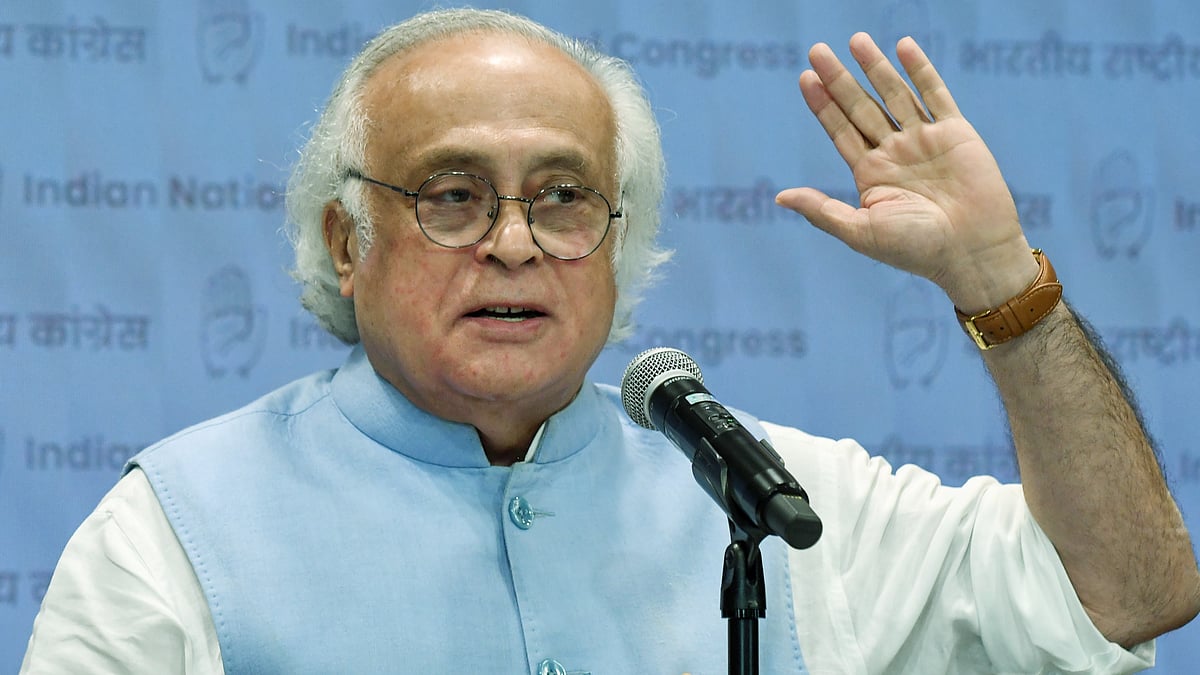
The passage of the SHANTI Bill in Parliament has drawn sharp criticism from the Congress, which accused the Modi government of “bulldozing” the legislation not just for international alignment, but also to serve private corporate interests. The party’s general secretary in charge of communications, Jairam Ramesh, claimed the bill was rushed through to benefit both “TRUMP and ADANI.”
In a post on X, Ramesh shared a media report suggesting that the Adani Group is poised to enter the nuclear energy sector once private participation is formally allowed under the new legislation. The Sustainable Harnessing and Advancement of Nuclear Energy for Transforming India (SHANTI) Bill, passed by the Rajya Sabha on Thursday and earlier by the Lok Sabha, aims to open India’s tightly-controlled civil nuclear sector to private players.
“SHANTI was bulldozed through in Parliament not only for TRUMP (The Reactor Use Management Programme) but also for ADANI (Accelerated Damaging Adhiniyam for Nuclear India),” Ramesh wrote, alleging that the move undermines longstanding safeguards. He further claimed that the legislation did away with key provisions of the Civil Liability for Nuclear Damage Act, 2010 — a concern that had also been flagged in the United States’ National Defence Authorisation Act for 2026.
Highlighting the US connection, Ramesh pointed out that President Donald Trump recently signed the 3,100-page Act, which contains references to joint assessments between the United States and India on nuclear liability rules. “Now we know for sure why the Prime Minister bulldozed the SHANTI Bill through Parliament earlier this week… It was to restore SHANTI with his once good friend,” he added, posting a copy of the US Act.
Ramesh also suggested a playful renaming of the bill, dubbing it the “TRUMP Act – The Reactor Use and Management Promise Act”, while reiterating concerns that private firms cannot replace the country’s public sector units as the driving force behind nuclear energy infrastructure. Speaking in the Rajya Sabha, he urged the government to prioritize indigenous technology and ensure that public sector enterprises remain central to India’s nuclear ambitions.
The bill, which aims to bolster self-reliance in nuclear energy and reduce dependence on conventional sources, was passed in the Upper House by a voice vote. Several amendments proposed by the opposition, including suggestions to send the bill to a parliamentary committee, were rejected. Minister of state for atomic energy Jitendra Singh defended the legislation, saying it would strengthen India’s energy independence and accelerate the growth of nuclear capacity.
The episode underscores the intersection of politics, global alignment, and corporate ambitions in shaping India’s nuclear energy landscape, as the SHANTI Bill seeks to transform the sector while stirring debate in Parliament and beyond.
With PTI inputs
Join our official telegram channel (@nationalherald) and stay updated with the latest headlines