POLITICS
Rathee shows passport, hits back at ‘German citizen’ claims post-detention
YouTuber rejects BJP claims that he is a German citizen and alleges he was ‘kidnapped’ ahead of Delhi CJP rally
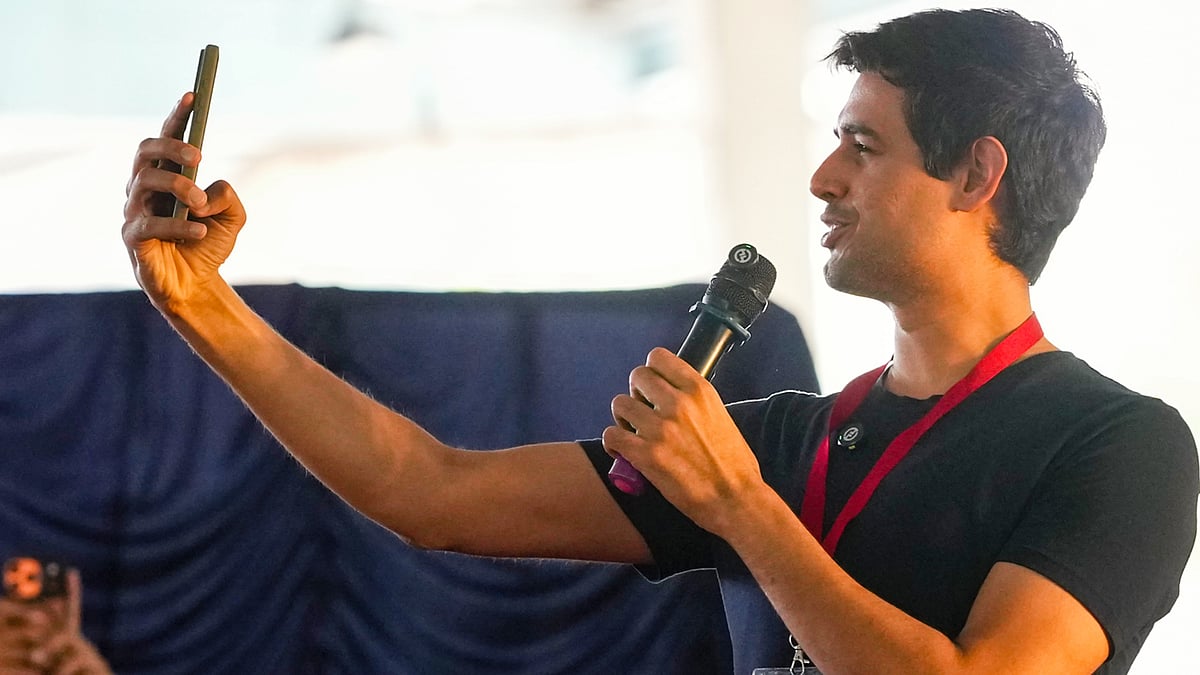
Dhruv Rathee displays his passport, rejects claims of German citizenship after participating in Bengaluru protest.
He alleges plainclothes personnel dragged him from his Gurugram bedroom and held him for 22–23 hours.
His detention comes amid a crackdown ahead of the CJP’s Delhi protest against chief election commissioner Gyanesh Kumar.
In a video post on social media, YouTuber Dhruv Rathee has hit back at claims circulating among right-wing voices that he is a German citizen who should not be allowed to participate in political protests in India, displaying his passport and asserting that he is an Indian citizen in a video released after his detention ahead of the Cockroach Janata Party’s (CJP) demonstration in Delhi.
“I am an Indian citizen, have been and will remain one,” Rathee said, holding up his passport. He accused sections of the media of spreading rumours about his nationality to justify his detention, calling claims that he was a foreign passport holder and therefore could not participate in the protest “blatant lies”.
“I am an Indian citizen, and I have the same rights as any ordinary citizen,” he said.
The nationality row followed Rathee’s participation in an anti-SIR protest in Bengaluru on 8 October. The demonstration at Freedom Park, organised by civil society groups and the CJP, saw protesters criticise the Election Commission of India (ECI) over the special intensive revision (SIR) of electoral rolls. Actor-activist Prakash Raj and CJP founder Abhijeet Dipke were also present.
On 9 October, former Bengaluru police commissioner and BJP leader Bhaskar Rao wrote to the Union home ministry seeking verification of Rathee’s citizenship, immigration status and compliance with visa conditions. Rao said Rathee was understood to hold German citizenship and asked the ministry to examine whether his participation in a political protest was permissible under the rules governing his stay in India. He also sought verification of the passport Rathee had used to enter the country.
Rathee’s video directly addresses the controversy, with the YouTuber displaying his passport and rejecting the suggestion that he is a foreign national. He also denounced attempts to use the nationality allegation to discredit his participation in the protest.
The passport controversy unfolded as Rathee prepared to travel to Delhi for the CJP’s proposed protest at Jantar Mantar on Saturday, 10 October. He had announced his intention to join the demonstration in a video posted on X on Friday evening.
Delhi Police detained him at his residence in Gurugram’s Sector 56 on Saturday morning. Police sources told NDTV that around 50 personnel were involved in the operation. The CJP demanded his immediate and unconditional release, describing the detention as part of a crackdown on dissent.
In the video released after his release, Rathee alleged that around 20 people in plain clothes entered his home at approximately 7.00 am while he was asleep. He said they pushed his mother aside, entered his bedroom and dragged him out before he could react.
“I am using the word ‘kidnapped’ because this was neither an arrest nor a detention,” he said, alleging that the personnel did not identify themselves or explain why they were taking him away.
Rathee claimed he was dragged down the stairs, sustained injuries and was not allowed to put on his slippers before being bundled into a jeep. He said his phone and those belonging to his parents were taken away, and that he was moved between police stations.
He further alleged that he was denied access to a lawyer and a phone for approximately 22–23 hours, and that his parents were manhandled during the operation. According to reports and CJP social media posts, Rathee was released late on Saturday night.
The police have described the operation as preventive, saying they sought to stop Rathee from travelling to an unauthorised gathering. Delhi Police had denied permission for the CJP’s protest, citing security concerns and procedural requirements. Authorities deployed personnel across the capital and detained protesters at several locations to prevent them from reaching Jantar Mantar.
The CJP demonstration was called to demand the resignation of chief election commissioner Gyanesh Kumar over alleged irregularities in electoral rolls and the SIR exercise. The crackdown extended to activists and other people associated with the protest, amid extensive security arrangements and restrictions on public transport.
Rathee, meanwhile, described his treatment as evidence of India’s slide towards dictatorship, calling it an “unofficial Emergency”. He alleged that people had been stationed around his home to monitor his movements and prevent him from leaving.
Rathee ended his statement by thanking supporters and vowing to continue speaking out on issues concerning the country. “The more you suppress people, the louder and more forcefully they will raise their voices,” he said.
Join our official telegram channel (@nationalherald) and stay updated with the latest headlines