POLITICS
Maharashtra govt backs down on Hindi test after fresh language row
Opposition from Thackeray brothers and pro-Marathi groups forces Fadnavis govt to defer Hindi proficiency exam for state employees
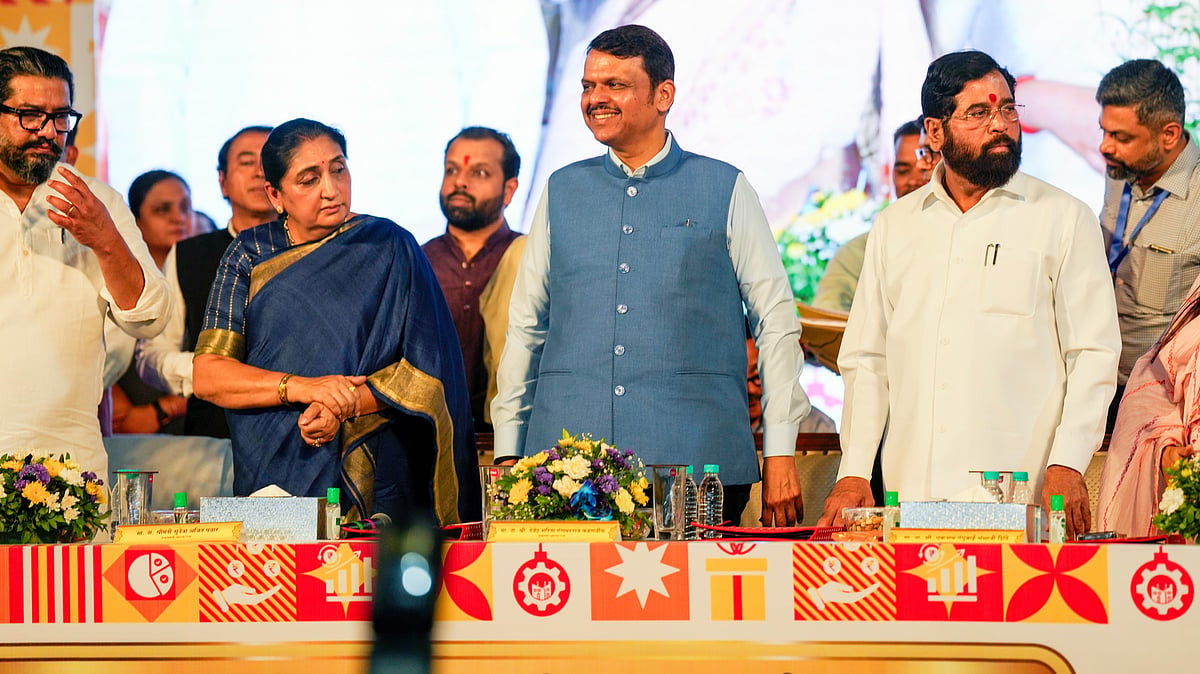
The language controversy in Maharashtra shows no signs of fading. Opposition has erupted over proposals to teach Marathi to migrant taxi and autorickshaw drivers. Before that, the state witnessed protests against the introduction of Hindi from Classes 1 to 5 under the three-language formula. Now, the latest flashpoint is a proposed Hindi proficiency examination for gazetted officers and non-gazetted government employees.
The examination, scheduled for 28 June, has been postponed after strong opposition from the Thackeray brothers and several pro-Marathi groups. Facing mounting criticism, the Devendra Fadnavis government has temporarily deferred the test.
This was not the first time such an examination was to be conducted. Under the Maharashtra Civil Services (Hindi Language Examination) Rules, 1976, government officials and employees have long been required to demonstrate knowledge of Hindi. The rule makes Hindi proficiency compulsory for government service.
Employees who had not studied Hindi as a subject up to Class 10 during their schooling were required to pass the Hindi language examination within a stipulated period after joining service. Failure to clear the examination could lead to penalties such as withholding of salary increments or obstacles in promotions.
Language director Arun Gite had issued a notification announcing that the examination would be held on 28 June in Mumbai, Pune, Nagpur and Chhatrapati Sambhajinagar. Applications were to be submitted by 20 May.
However, the notification triggered a fresh political and cultural debate over language priorities in the state, with critics describing it as an attempt to impose Hindi.
Shiv Sena (UBT) chief Uddhav Thackeray criticised the move in a post on X, writing: “The decision to conduct a Hindi language proficiency examination for officers and employees serving in the Maharashtra government is beyond comprehension. Maharashtra’s identity is linked to the Marathi language and culture. The question arises: whose interests are being served by this attempt to impose Hindi on state employees? Maharashtra will not accept this double standard of granting classical language status to Marathi while simultaneously imposing Hindi.”
Raj Thackeray’s Maharashtra Navnirman Sena (MNS) also issued an open warning to the Fadnavis government, saying that if the examination was conducted, the government would have to bear responsibility for any situation arising in the state.
Dr Deepak Pawar, president of the Marathi Abhyas Kendra, also criticised the move. He questioned the rationale behind testing employees’ Hindi proficiency when administrative communication in the state is already conducted in Marathi.
“Hindi is neither Maharashtra’s official language nor essential for day-to-day administration,” he argued, while also questioning whether similar examinations existed in non-Hindi-speaking states such as Tamil Nadu, Karnataka or Gujarat.
Calling the move unnecessary, Pawar alleged that it weakened Marathi and amounted to a waste of administrative resources. He demanded that the examination be scrapped altogether.
Amid the growing backlash, industries and Marathi language minister Uday Samant from the Eknath Shinde-led Shiv Sena faction announced on Wednesday, 6 May that the examination had been cancelled for now.
“I discussed the matter with the department’s principal secretary, after which it was decided to postpone the examination. We will examine whether the Hindi examination is necessary in future. If it is not required, we will decide against conducting it,” Samant said.
He added that the examination had been conducted annually under the 1976 rules, but the government would now review whether those rules remained relevant in 2026 before taking any further decision.
Join our official telegram channel (@nationalherald) and stay updated with the latest headlines