POLITICS
Neha Bora peace bond case: What Delhi HC said while rejecting her petition
The high court upheld the notice but directed the magistrate to share evidence with Bora and follow due process
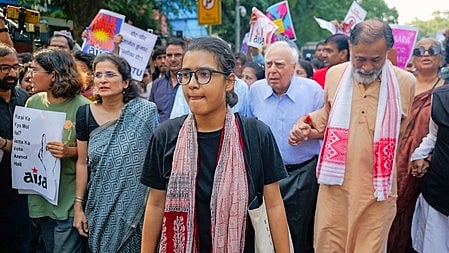
Delhi High Court upholds legality of notice seeking peace bond from AISA national president Neha Bora.
Court directs special executive magistrate to furnish all material to Bora and follow due process.
Bora’s challenge remains open at an appropriate stage as proceedings before SEM continue.
At 7.00 pm on Friday, 23 October, Delhi High Court dismissed a petition filed by Neha Bora challenging the legality of a notice asking her to execute a ‘peace bond’ and furnish personal surety of Rs 10,000.
The high court ruled that the notice was legal and that the special executive magistrate (SEM), an assistant commissioner of police (ACP)-rank officer, had relied on case diaries and previous breaches of prohibitory orders. It also held that the law contained sufficient safeguards against its misuse.
Delhi Police, the court was told by additional solicitor-general Chetan Sharma, had placed before the SEM general diary entries, a list of earlier FIRs, accounts of speeches and gatherings, and photographs. The court held that it was for the SEM to assess the material on record and decide whether Bora needed to be restrained.
Sharma cited six FIRs, repeated defiance of prohibitory orders and a gathering at which “regime change” was proclaimed. He also argued that a call by Bora could draw others into an unlawful assembly, making it necessary to restrain her even if she herself had not committed an offence.
Justice Subramonium Prasad said the court could not test the SEM’s subjective satisfaction, noting the Delhi Police’s submission that the notice was based on three general diary entries registered at different police stations on different dates.
The court, however, directed the SEM to furnish all material to Bora and follow the law. Justice Prasad said the notice met the requirements of a show-cause notice and that it was open to the petitioner “to raise a challenge at an appropriate stage”.
The court also said the SEM would have to consider the implications of Section 135 of the Bharatiya Nagarik Suraksha Sanhita (BNSS).
“Whether 135 would warrant a production of the bond at the very first instance, or it's only during the course of the inquiries, and (after) further incident takes place…these are matters the magistrate will take into account,” the court said.
Bora challenged a 17 October notice issued by the SEM under Sections 126 and 130 of the BNSS. Section 126 provides for requiring a person to show cause why they should not execute a bond for keeping the peace when a magistrate receives information that they are likely to commit a breach of the peace. Section 130 deals with the contents of an order initiating proceedings.
The petition argued that the timeline showed the SEM had failed to conduct an inquiry, hear the other side or examine any witness before demanding an interim bond through a notice issued on 18 October. The notice set 24 October as the next date for Bora to appear.
The petition also pointed out that the notice attributed to Bora a call to assemble at Connaught Place, which she had not made. It accused her of hoisting the national flag ‘without permission’, a requirement the petition challenged on the ground that citizens did not need permission to do so.
It further questioned the SEM’s position as an ACP-rank officer in the Delhi Police, the same force whose superiors had directed the proceedings to be initiated.
Proceedings before the SEM are continuing, and the inquiry has not yet begun. The petition also noted that no ‘speaking order’ had been issued by the SEM — a reasoned order setting out the basis for the decision — before requiring Bora to execute a bond.
The law allows Bora to appear before the SEM through counsel. If dissatisfied with the eventual order, she can seek revision and pursue an appeal, subject to the applicable legal provisions.
Join our official telegram channel (@nationalherald) and stay updated with the latest headlines