POLITICS
‘Permission for India?’ Bessent remark sparks row over national dignity
Opposition says US treasury secretary’s comment reduces India to a subordinate ally; government silent
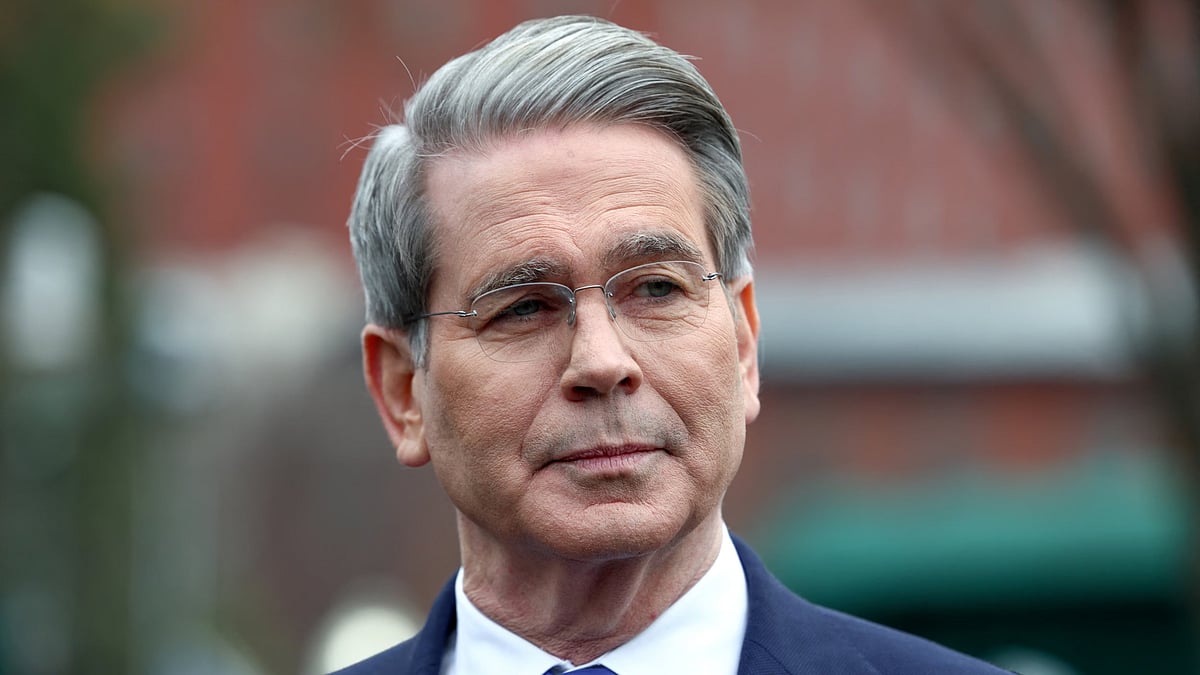
A remark by US Treasury Secretary Scott Bessent suggesting that Washington had given India “permission” to buy Russian oil in the wake of the war in Iran has triggered a sharp political backlash, with the Congress accusing the Narendra Modi government of allowing India’s sovereignty to be undermined.
Bessent made the comment during a television interview on Friday, saying: “The Indians have been very good actors. We asked them to stop buying Russian oil, and they did. Now we have given them ‘permission’ to buy Russian oil.”
The phrasing immediately drew criticism from the Congress, which said the idea that India needed approval from Washington to conduct its energy trade was deeply offensive.
“Permission? For India?” the party said in a statement on social media, arguing that a country of 1.4 billion people should not appear to be waiting for approval from another nation.
“India fought for freedom so that no foreign power could dictate terms to us. Yet today, the United States is openly talking about giving India ‘permission’,” the party said, calling the remark humiliating.
“This is not diplomacy. This is humiliation,” it added, demanding an explanation from Prime Minister Narendra Modi.
Diplomatic observers say the controversy stems less from the technical context of the remark and more from its tone.
Bessent was referring to a temporary sanctions waiver allowing Indian refiners to receive Russian oil cargoes that were already in transit. But his description — portraying India as having complied with US requests and later receiving “permission” — struck many as condescending.
Such language touches a particularly sensitive nerve in India’s foreign policy tradition, which has long emphasised strategic autonomy and resistance to great-power diktats.
Since independence, successive Indian governments — across political parties — have been careful to project the country as an independent actor rather than a subordinate partner in global alliances.
The episode has given the Opposition fresh ammunition to question the Modi government’s handling of India’s relations with Washington.
The BJP government has repeatedly highlighted the deepening India–US partnership, including growing defence cooperation and expanding trade ties. However, critics argue that the optics of such remarks risk reinforcing the perception that New Delhi is drifting too close to Washington’s strategic orbit.
The government has not yet responded publicly to Bessent’s statement.
Ironically, the controversy comes at a time when India’s oil import patterns are already shifting. Provisional estimates from tanker-tracking firms such as Kpler and Vortexa suggest that imports of Russian crude — which surged after Western sanctions on Moscow — have been declining in recent months.
Russia’s share of India’s crude imports is estimated to have fallen from about 34 per cent in November 2025 to roughly 19 per cent by February 2026.
At the same time, imports of US crude have risen sharply, climbing from around 6 per cent of India’s oil basket in September 2025 to nearly 20 per cent by February 2026.
Energy analysts say these changes largely reflect commercial calculations by Indian refiners, including price differentials and logistical considerations.
Yet for the Opposition, the political issue is not the economics of oil imports but the symbolism of the US remark. “Indians are not actors in someone else’s script,” the Congress said, arguing that the country’s foreign policy should never appear to operate under another power’s approval.
Join our official telegram channel (@nationalherald) and stay updated with the latest headlines