POLITICS
The abiding mystery of denial and martyrdom a year after Op. Sindoor
Six martyrs' names raise fresh questions over Rajnath Singh's Parliament claim of no Indian troop casualties
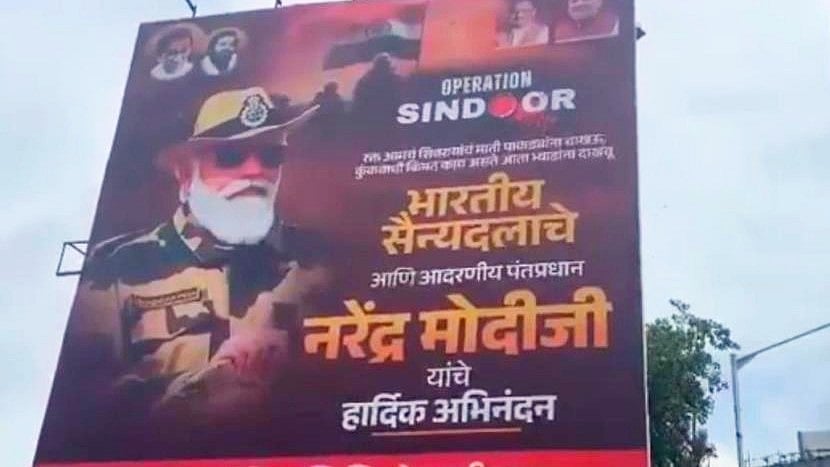
Has disclosure come a year too late? The martyrdom of six Indian soldiers during Operation Sindoor in May 2025, it is alleged, was hidden from Indian citizens for the past year. Although they have now been conferred with gallantry awards, and their names quietly inscribed on the National War Memorial in the capital without any fanfare. The controversy, however, is acquiring a life of its own.
The names of the six are subedar major Pawan Kumar, rifleman Sunil Kumar, lance naik Dinesh Kumar, aviation technician Mood Murlinaik, havildar Sunil Kumar Singh and sergeant Surendra Kumar. There was no ceremonial announcement. The names of the six martyrs — five Army personnel and an Air Force sergeant — were quietly put up on the roll of honour — the list of armed forces personnel killed in the line of duty — on the National War Memorial website on Friday, 26 June.
'These are the brave sons of India who laid down their lives defending India’s honour and the sindoor of our sisters after the Pahalgam attack. Their names should have been etched into the national consciousness. Their families should have seen a grateful nation honouring their sacrifice,' Congress media and publicity head Pawan Khera posted on X. 'Instead, for an entire year, the BJP government chose to conceal their martyrdom from the nation. The same government that wraps itself in the flag and speaks endlessly of nationalism denied these heroes the recognition and remembrance they deserved. Such a shame!'
The outrage was not confined to political parties. 'If reports are true that the sacrifice of our soldiers was not promptly acknowledged, it is a profound disservice to the very men who swore to defend this nation. A government's first duty is to honour its fallen with honesty,' posted a doctor while a lawyer and founder of Maadhyam, a parliamentary watchdog, tweeted, 'If true, then a fit case for privilege motion!'
Parliamentary privileges, she went on to explain, are meant to enable Parliament to do its job without interference and obstruction. 'Ministers making false or misleading statements on the floor of the House prevents Parliament from doing its job of fixing accountability of Govt'.
However, since the privileges are not codified and because the issue is decided by the Lok Sabha speaker, who has been sitting on a breach of privilege motion against the prime minister, she clearly does not expect the needle to move.
In a video clip from last year from the floor of the Lok Sabha, defence minister Rajnath Singh is heard emphatically denying any loss of life (kshati) on the Indian side. The statement was reportedly made on 28 July 2025, two-and-a-half months after hostilities ceased on 10 May. Singh can be heard saying in Hindi: "क्या हमारे किसी वीर सैनिक को कोई नुकसान पहुँचा? इसका उत्तर है — नहीं। हमारे किसी भी सैनिक को कोई नुकसान नहीं पहुँचा (were any of our brave soldiers harmed? The answer is no. None of our soldiers were harmed)."
A slightly longer version has the minister daring the Opposition, "If you have to ask a question, then ask this: did any of our brave soldiers suffer any loss in this operation? The answer is no" And to this, the ruling party benches roared and clapped vigorously, thumping their desks.
The controversy has also arisen because even on the eve of Independence Day last year, the names were not revealed. 'An extraordinarily high number of gallantry awards were given this Independence Day but no citations of their acts were released. PM didn't even mention those soldiers who made the ultimate sacrifice during Op Sindoor. This spectacle over substance is dangerous,' wrote Sushant Singh in The Telegraph.
However, on 11 May 2025, a day after hostilities ceased, director-general of military operations Lt-Gen. Rajiv Ghai publicly paid tribute to soldiers who had been killed during Operation Sindoor. The Indian Air Force publicly honoured the family of its fallen airman. Individual funerals took place across the country. Two of the personnel were later awarded gallantry decorations posthumously. The armed forces themselves had acknowledged that India had suffered military fatalities.
Why then was Parliament subsequently told that no Indian soldier had been harmed? During India’s wars of 1962, 1965 and 1971, Parliament debated military developments and reverses on the battlefield while accepting that certain operational details could not be revealed.
‘National security’, the catchphrase used by this government to justify its omissions and commissions, is not an alibi when it comes to parliamentary practices. Parliamentary conventions require ministers to give correct information to the House and correct the record if they subsequently discover that information given to the House was inaccurate.
Join our official telegram channel (@nationalherald) and stay updated with the latest headlines