POLITICS
Adhikari, Kabir and the rise of polarisation in Bengal
Despite differing political spaces, both leaders use religious messaging to emerge as decisive winners in Bengal’s Assembly election
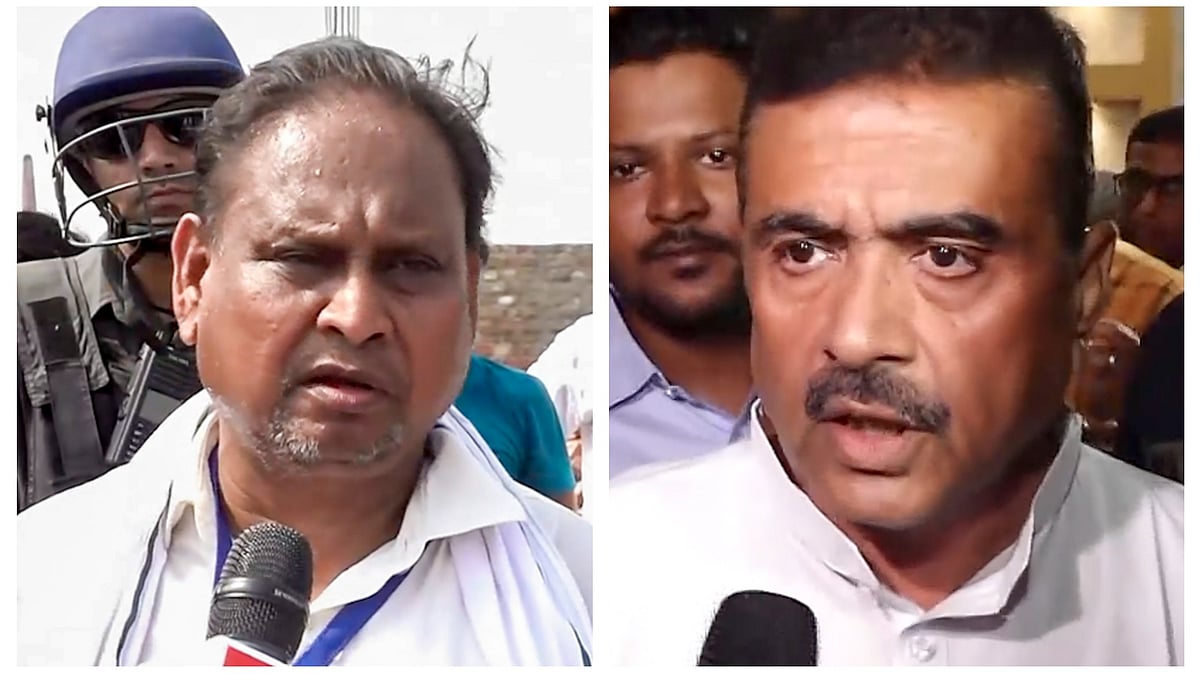
The 2026 West Bengal Assembly election produced many dramatic results, but few were as revealing as the parallel rise of Suvendu Adhikari and Humayun Kabir. Though they operate in very different political spaces, both leaders followed a strikingly similar path: each contested two seats, each relied heavily on religious messaging, and each converted that approach into decisive victories.
Adhikari, a former TMC leader and minister who went on to become one of the BJP's most visible faces in Bengal, won both Nandigram and Bhabanipur. His Bhabanipur victory was especially notable, as he defeated chief minister Mamata Banerjee by more than 15,000 votes in what had been seen as a prestige battle. In Nandigram, he secured a margin of 9,665 votes. These results confirmed his position as a central figure in the BJP’s state strategy.
Kabir’s success, while on a smaller scale, was no less striking. Leading the newly formed Aam Janata Unnayan Party (AJUP), he won both Nowda and Rejinagar in Murshidabad district. His margins were substantial — nearly 28,000 votes in Nowda and an overwhelming 58,876 in Rejinagar. For a leader heading a fledgling party, this was an outcome few had predicted.
Before the election, expectations had been quite different. Adhikari was widely expected to retain Nandigram, but Bhabanipur was seen as far less certain. Kabir, on the other hand, was not widely expected to win even a single seat, especially after a sting operation video surfaced just days before the election, purportedly showing him receiving funds from the BJP. Yet both men outperformed those projections, suggesting that their campaign strategies resonated more deeply with voters than many analysts had anticipated.
A closer look at those strategies reveals a clear common thread: both leaders placed religious identity at the centre of their campaigns. Adhikari’s rhetoric consistently framed the election as a moment of Hindu consolidation. During the campaign, he declared, “All Hindus are voting for the BJP,” and frequently warned, “Hindus must rise, unite, and vote for the BJP — or Bengal will turn into another Bangladesh.” Once the results were announced, he reiterated that the BJP had achieved “a consolidation of both Hindu and Adivasi votes”.
Kabir’s messaging mirrored this approach, though it was directed at Muslim voters. He repeatedly accused Banerjee of taking Muslim support for granted while pursuing Hindu religious projects. “Mamata Banerjee takes Muslim votes and builds temples after becoming chief minister three times,” he said during the campaign.
Positioning himself as a defender of minority interests and promising the construction of a Babri Masjid, he added, “When she does things for Hindus, won’t I work for Muslims?” In another controversial remark cited during the election, he suggested that if Muslim voters shifted away from Banerjee, “she will not be in power”.
These statements underline how both leaders used religious identity not as a background factor, but as the organising principle of their campaigns. Political analysts have described the 2026 election as “highly polarised”, with some pointing to “unprecedented Hindu consolidation” alongside a parallel consolidation of minority voters in certain regions.
Political analyst Sujit Chatterjee observed that what had once been limited to campaign rhetoric has now become “a more permanent, ground-level mobilisation”. This assessment helps explain why both Adhikari and Kabir were able to turn their messaging into concrete electoral gains.
The margins of victory further reinforce this point. Adhikari’s win in Bhabanipur, a high-profile urban seat, suggests that identity-based appeals extended beyond rural strongholds. Kabir’s landslide in Rejinagar, meanwhile, indicates an almost complete consolidation of support within his target base. In both cases, the results reflect disciplined voting patterns rather than fragmented or incidental support.
Despite these similarities, there are also important differences. Adhikari operates within the framework of a major national party and benefits from a broad organisational network. His campaign formed part of the BJP’s wider strategy in Bengal, which combined identity politics with issues such as governance, law and order, and corruption.
Kabir, by contrast, leads a small regional party with a limited geographical footprint. His influence is currently concentrated in parts of Murshidabad. However, his campaign has attracted attention not just for its success, but also for the political narrative it has generated. Opponents have suggested that his positioning may indirectly benefit the BJP by fragmenting opposition votes — a claim that remains contested but has gained traction in political discussions.
The broader impact of these developments is a deepening sense of polarisation in Bengal politics. Supporters of both leaders argue that their campaigns have brought clarity and representation, forcing attention on issues they believe had long been neglected. Critics, however, warn that such strategies risk turning elections into contests defined primarily by religious identity rather than governance.
Banerjee herself accused the BJP of attempting to win through “fraudulent methods”, reflecting the bitterness that marked the campaign. At the same time, analysts like Chatterjee have noted, “The dynamic of mutual consolidation — Hindu voters moving towards the BJP and minority voters rallying elsewhere — can create a cycle that is difficult to break.”
The victories of Suvendu Adhikari and Humayun Kabir, therefore, tell a larger story about the direction of politics in West Bengal. Two leaders from very different backgrounds used similar methods and achieved similar outcomes: they exceeded expectations, secured multiple seats, and demonstrated the electoral power of identity-based mobilisation.
What remains uncertain is the long-term effect of this shift. While such strategies may deliver short-term success, they also risk entrenching divisions that could shape the state’s political landscape for years to come.
Join our official telegram channel (@nationalherald) and stay updated with the latest headlines