POLITICS
Wonders of SIR: Hindu votes in Muslim homes! BLO says “we’d have fixed it”
SDM suggests SIR enumeration form did not contain a column for house numbers
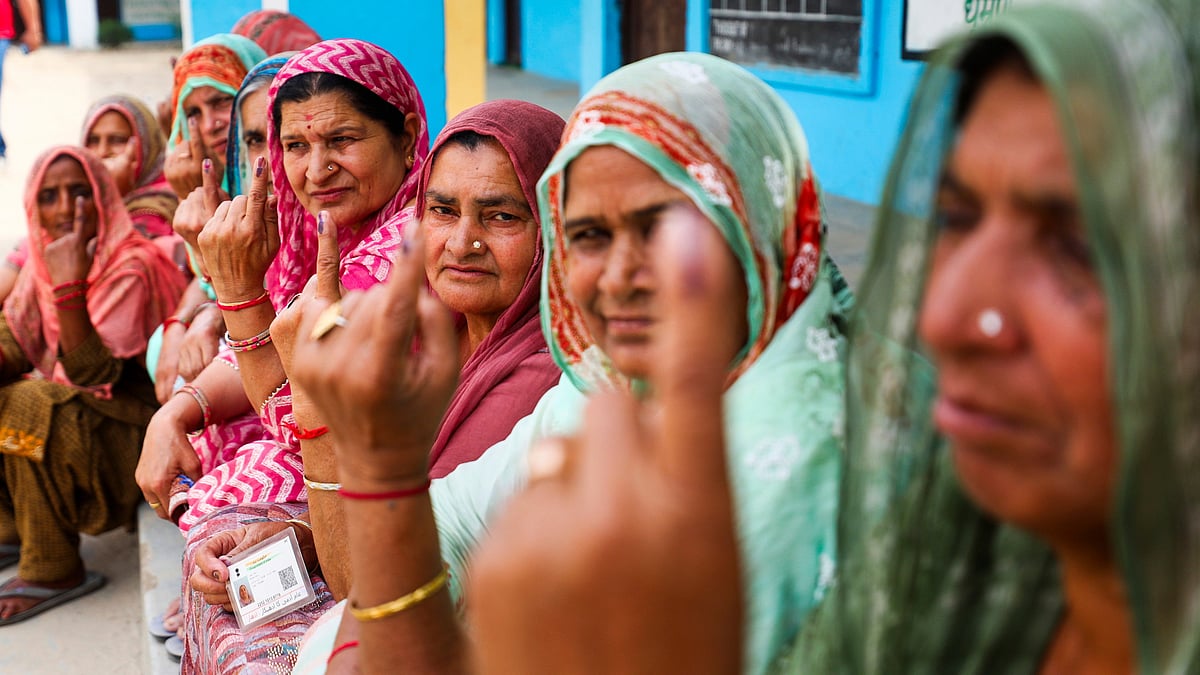
In Pahasu nagar panchayat of Bulandshahr, Uttar Pradesh, the Election Commission’s big clean-up exercise — the Special Intensive Revision (SIR) — has produced outcomes that can only be described as imaginative. Draft voter rolls for booths 307 and 311 list Hindus and Muslims against addresses where they have never lived, leaving residents both bemused and indignant.
Take Malviya Nagar Chapeti’s house no. 12, where resident Sabir Malik discovered 14 names assigned to his address in the draft list. His nephew Imran dryly noted that one of those names is indeed his own, except he lives in Aligarh’s Nai Basti, several kilometres away, and has no idea who most of the other 13 are.
In the same lane, house no. 14 — home to a single occupant — displays a small crowd of voters on the rolls. Idris’s home (no. 15) has 10 Hindu voters magically attached to it, even though those individuals reportedly live in an entirely different neighbourhood, Purana Dak Khana Wali Gali. Mahmood’s house, too, has been blessed with a civic overpopulation of 12 extra voters in the paperwork.
Local officials have treated the matter with admirable sangfroid. Booth-level officer (BLO) Devendra reportedly promised the errors would be sorted out in “a day or two”. Bulandshahr sub-divisional magistrate Arun Verma insisted this was a standard glitch in the SIR process and would be corrected through Form-8 — the prescribed mechanism for modifying entries — while pointedly rejecting the idea that the SIR process itself was flawed.
Asked why the BLO uploaded clearly inaccurate data, the SDM suggested the enumeration form did not contain a column for house numbers and that pre-printed details were involved, before circling back to Form-8 as the universal remedy. Attempts to reach BLO Gajendra Singh directly were not successful.
The controversy gained political traction after Samajwadi Party leader and Pahasu nagar panchayat president Saghir Ahmed uploaded a video complaining that names of Valmiki community voters had been placed in Muslim households in his neighbourhood.
According to Saghir, five to six Valmiki names were listed under his own address (no. 125), and across a dozen surrounding homes he counted 56 dubious entries. He pointed out that there isn’t a single Valmiki family living within a 200-metre radius, yet the draft rolls suggested otherwise.
When he confronted his BLO, Saghir says he was told, with bureaucratic candour, that it was a “technical mistake” and that instead of making noise he should simply have informed them so they could “fix it”. Eventually, officials from the land-records wing visited the area, verified the entries and flagged the suspicious ones, but Saghir maintains that no disciplinary action has been taken against any official so far.
What makes the Bulandshahr episode noteworthy is that it does not exist in a vacuum. Over the past year, the SIR exercise has triggered disputes across multiple states, turning what was meant to be a technocratic, hygiene-oriented revision into a political and administrative flashpoint.
In Uttar Pradesh, for instance, the state’s draft voter rolls saw nearly 3 crore names removed, amounting to a reduction of almost a fifth of the electorate, sparking public concern and partisan accusations about mass deletions.
Around the same time, Opposition parties alleged a staggering four-crore mismatch between two sets of voter lists and accused authorities of presiding over duplicate entries, dead voters remaining on the rolls, and genuine voters being scrubbed out. The Commission has denied wrongdoing, but the claims have provided ample ammunition for political theatre.
Farther east, West Bengal has seen a long-running stand-off between the state government and the Election Commission. Chief minister Mamata Banerjee has repeatedly written to the chief election commissioner alleging that genuine voters are being marked “not found”, documents are not being acknowledged properly, and automated processes are producing errors that effectively disenfranchise citizens.
The disputes in Bengal have escalated into court cases and public statements, while on the ground, voters have reported confusion over misspelled names, outdated addresses and repeated demands for documentation during verification campaigns. BLOs themselves have quietly complained about being required to certify data they insist is externally generated or poorly transmitted, calling it an unreasonable burden and a liability risk.
The Bulandshahr fiasco may look farcical — with phantom Hindus appearing in Muslim homes and BLOs suggesting quiet back-channel fixes — but the broader national picture is neither trivial nor isolated.
Join our official telegram channel (@nationalherald) and stay updated with the latest headlines