


Lucknow, Ghaziabad among districts with highest uncollected voter forms in UP’s SIR exercise
Draft electoral roll shows wide district-wise variation as 2.89 crore voters excluded; CEO says figures subject to change after claims period
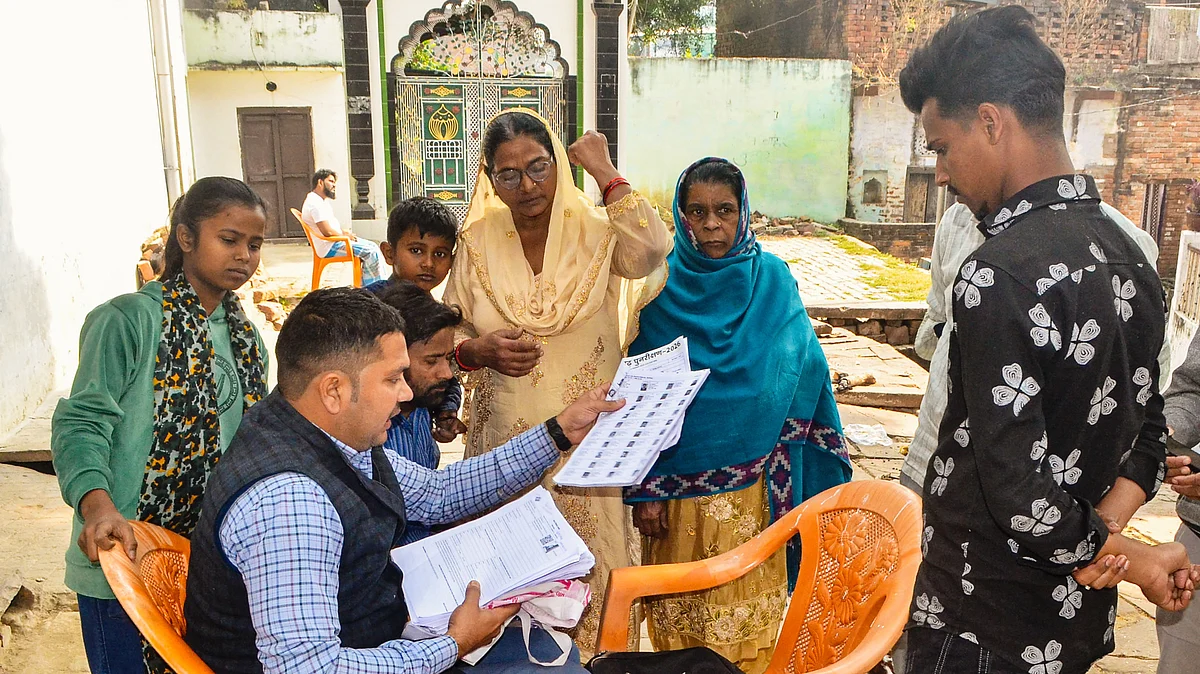


Lucknow, Ghaziabad, Balrampur and Kanpur Nagar are among the districts in Uttar Pradesh that recorded the highest percentage of electors whose enumeration forms remained uncollected during the SIR (Special Intensive Revision) of the electoral roll, according to official data released after publication of the draft roll.
In contrast, several districts in the Bundelkhand region — including Lalitpur, Hamirpur, Mahoba, Jhansi and Chitrakoot — reported the lowest proportion of removals from the draft roll.
The draft electoral roll, published on Tuesday, excludes 2.89 crore voters but retains 12.55 crore electors. The excluded voters — 18.70 per cent of the 15.44 crore listed earlier — could not be included due to deaths, permanent migration or multiple registrations, Chief Electoral Officer Navdeep Rinwa said.
Districts with highest uncollected forms
According to the district-wise data released on 6 January, Lucknow topped the list with 30.04 per cent of enumeration forms uncollected, affecting around 12 lakh electors.
The district’s electorate fell from 39.94 lakh in October 2025 to 27.94 lakh in the revised draft. Of the uncollected cases:
1.28 lakh were linked to deaths,
4.28 lakh to voters marked untraceable or absent, and
5.36 lakh to permanent shifting.
Ghaziabad followed with 28.83 per cent uncollected forms, involving about 5.83 lakh electors. Its electorate declined from 28.38 lakh to 20.20 lakh. The breakup showed:
around 64,000 death-related cases,
3.20 lakh untraceable or absent voters, and
3.60 lakh cases of permanent shifting.
Balrampur ranked third with 25.98 per cent uncollected forms, affecting about 4.11 lakh electors, as the district’s electorate dropped from 15.83 lakh to 11.18 lakh. The figures included:
63,000 deaths,
1.60 lakh untraceable or absent voters, and
1.33 lakh permanent shifts.
Kanpur Nagar recorded 25.50 per cent uncollected forms, involving about 9.02 lakh electors, with its electorate declining from 35.38 lakh to 26.36 lakh. The data showed:
1.04 lakh death-related cases,
3.10 lakh untraceable or absent voters, and
3.92 lakh permanent shifting cases.
Prayagraj stood next with 24.64 per cent uncollected forms, translating into about 11.56 lakh electors. Its electorate declined from 46.93 lakh to 35.37 lakh, including:
1.74 lakh deaths,
3.67 lakh untraceable or absent voters, and
4.89 lakh permanent shifting cases.
Gautam Buddh Nagar recorded 23.98 per cent uncollected forms, or about 4.47 lakh electors, while Agra reported 23.25 per cent, involving about 8.37 lakh voters.
Other key districts
Among other prominent districts:
Varanasi reported 18.18 per cent uncollected forms,
Gorakhpur 17.61 per cent,
Rae Bareli 16.35 per cent,
Amethi 18.60 per cent,
Etawah 18.95 per cent,
Kannauj 21.57 per cent,
Saharanpur 16.37 per cent,
Muzaffarnagar 16.29 per cent,
Aligarh 18.60 per cent, and
Mathura 19.19 per cent.
Districts with least removals
At the other end of the spectrum, Lalitpur recorded 9.95 per cent uncollected forms, followed by Hamirpur (10.78 per cent), Mahoba (12.42 per cent), Banda (13 per cent), Chitrakoot (13.67 per cent) and Jhansi (13.92 per cent) — the lowest rates in the state.
Figures subject to revision
Chief Electoral Officer Navdeep Rinwa told PTI on Wednesday that the data is based on the draft electoral roll and remains subject to revision.
“These figures will be finalised only after the completion of the claims and objections period, which runs till 6 February. The final electoral roll will be published on 6 March,” Rinwa said.
Under the process, voters whose names have been excluded can seek inclusion or correction, while objections can also be filed against entries in the draft roll.
With PTI inputs
Join our official telegram channel (@nationalherald) and stay updated with the latest headlines