Science Tech
A valuable tool that requires vigilance
Pope Leo XIV, a man of faith and a man of science, on safeguarding humanity in the time of AI
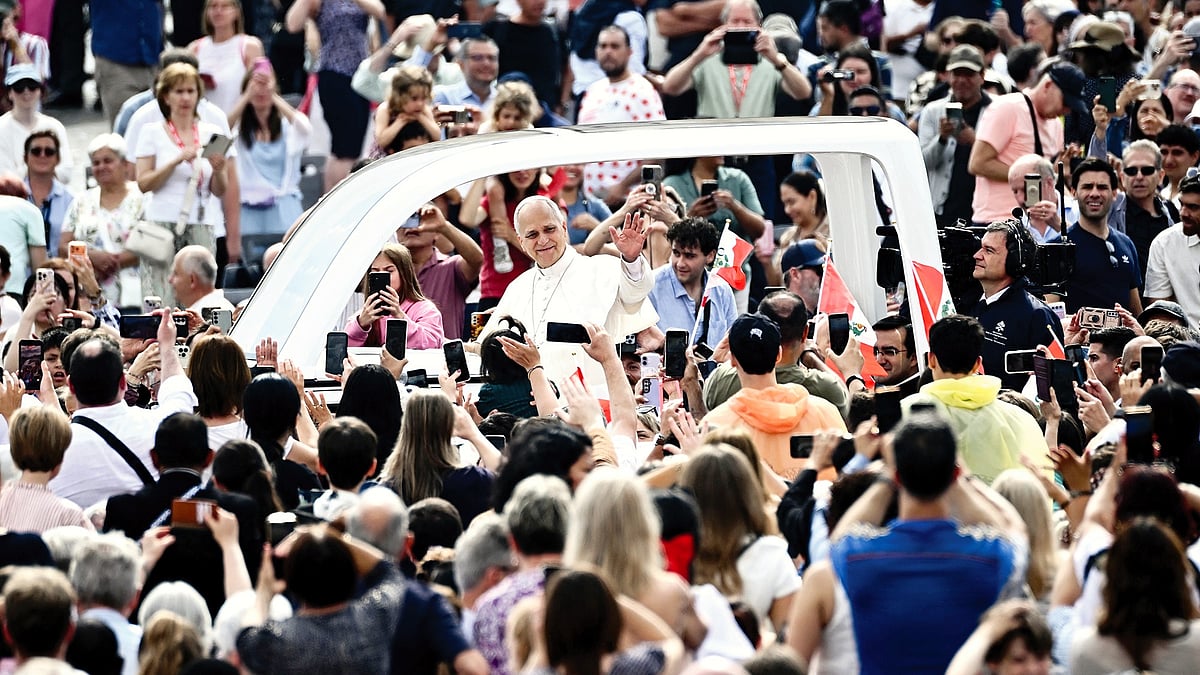
It is not my intention here to offer a comprehensive treatment of artificial intelligence, nor to give an overview of the extensive relevant literature, since authoritative contributions already exist, including within the ecclesial context. I limit myself to recalling a few essential elements for a moral and social discernment that safeguards the primacy of the human person, in order to ensure that it will always be human intelligence, with its conscience and freedom, that guides technical innovations and responsibly determines their use and limits.
It is appropriate to preface this discussion with two considerations. First, any statement regarding AI risks becoming quickly outdated, given the remarkable pace at which these systems are developing.
Second, all of us, including those who design them, possess only a limited understanding of their actual functioning. Indeed, current AI systems are more ‘cultivated’ than ‘built’, for developers do not directly design every detail, but instead create a framework within which the intelligence ‘grows’.
As a result, fundamental scientific aspects — such as the internal representations and computational processes of these systems — remain, at present, unknown. There thus emerges an urgent need for a twofold commitment: on the one hand, a deepening of scientific research; on the other, the exercise of moral and spiritual discernment.
It is not possible to provide a single, comprehensive definition of AI. What can be stated, however, is that we must avoid the misconception of equating this type of ‘intelligence’ with that of human beings. These systems merely imitate certain functions of human intelligence. In doing so, they often surpass human intelligence in speed and computational capacity, offering tangible benefits across many fields. Yet this power remains entirely tied to data processing.
So-called artificial intelligences do not undergo experiences, do not possess a body, do not feel joy or pain, do not mature through relationships and do not know from within what love, work, friendship or responsibility mean. Nor do they have a moral conscience, since they do not judge good and evil, grasp the ultimate meaning of situations, or bear responsibility for consequences.
They may imitate language, behaviour and analytical skills, or even simulate empathy and understanding, but they do not understand what they produce, for they lack the affective, relational and spiritual perspective through which human beings grow in wisdom. Even when these tools are described as capable of ‘learning’, their way of doing so is different from that of a human person.
It is not the experience of those who allow themselves to be shaped by life and grow over time through choices, mistakes, forgiveness and fidelity. Rather, it is a form of statistical adaptation based on data and feedback, which can be very effective, but does not imply inner growth.
[...]
A valuable tool that requires vigilance
The speed and simplicity with which information, complex analyses, media content and practical assistance can be accessed undoubtedly makes life easier. Yet they can also encourage excessive reliance and the search for readymade answers, and weaken personal creativity and judgment.
The apparent objectivity of the responses and suggestions these systems provide can lead us to overlook the fact that they reflect the cultural assumptions of those who designed and trained them, with all their strengths and limitations. The artificial imitation of positive human communication — words of advice, empathy, friendship and even love — can be engaging and at times genuinely helpful. However, for less discerning users, it can also be misleading, creating the illusion of a relationship with a real personal subject.
When words are simulated, they do not build genuine relationships, but only their appearance. The artificial imitation of care or support can become particularly risky when it enters contexts where real relationships and emotional bonds are lacking. Here, the danger is not so much that a person may believe they are communicating with another person, but rather that they may gradually lose the very desire to form genuine human connections.
Broadening our perspective to the use of AI in society, we see that it is now embedded in decision-making processes across many sectors and at multiple levels: in communication, management and control. The gains in efficiency and the potential to improve certain services are clear, yet rapidly and uncritically adopting them exposes us to a range of risks, including the tendency to overlook the environmental impact.
Current AI systems require enormous amounts of energy and water, significantly influencing carbon dioxide emissions, and place heavy demands on natural resources. As their complexity increases, especially in the case of large language models, the need for computing power and storage capacity grows too, which requires an extensive network of machines, cables, data centres and energy-intensive infrastructure.
For this reason, it is essential to develop more sustainable technological solutions that reduce environmental impact and help protect our common home.
Responsibility, transparency and the governance of AI
The use of AI is never a purely technical matter: when it enters processes that affect people’s lives, it touches on rights, opportunities, status and freedom.
Important and sensitive decisions — concerning employment, credit, access to public services or even a person’s reputation — risk being fully delegated to automated systems that do not know ‘compassion, mercy, forgiveness, and above all, the hope that people are able to change,’ and can therefore give rise to new forms of exclusion.
There are clearly harmful uses, such as the manipulation of information or violations of privacy. Yet there is also a subtler danger, for when AI systems present themselves as neutral and objective, they end up reflecting and reinforcing the stereotypes or ideological bias of their designers and developers.
Indeed, entrusting an algorithm in practice with the power to select who is worthy or not, without anyone bearing responsibility for that judgment, is to hand over the task of redefining the boundaries of human possibilities. In this process, political responsibility is also lost, not just empathy toward those excluded, which can, after all, be simulated.
The exclusion of the vulnerable becomes cloaked in a veneer of neutrality and objectivity, against which it becomes difficult to raise objections. In this way, injustice goes unnoticed, and compassion, mercy and forgiveness — understood not as mere appearances but as real political actions — gradually disappear from view.
From this follows a simple but compelling consequence: we cannot consider AI to be morally neutral. In reality, every technical tool embodies choices and priorities through what it measures, ignores and optimises, and how it classifies people and situations. If a system is designed or used in a way that treats some lives as less worthy, or excludes them without the possibility of appeal, then it is not merely a tool ‘to be used well’, since it has already introduced criteria that contradict the inalienable dignity of the human person.
For this reason, ethical discernment cannot be limited to asking whether we are using a system for good or bad purposes; it must also examine how that system is designed and what vision of the human person and society is embedded in the data and models that guide it.
For AI to respect human dignity and truly serve the common good, responsibility must be clearly defined at every stage: from those who design and develop these systems to those who use them and rely on them for decisions. In many cases, the internal processes leading to a result remain opaque, making it harder to assign responsibility and correct errors. This is where accountability becomes crucial: the possibility of identifying who must ‘account’ for decisions, justify them, monitor them and, when necessary, challenge them and remedy any harm caused.
Extracted from ‘Magnifica humanitas’, Pope Leo XIV's first encyclical published on 25 May 2026. Part 2 of this reflection will be published next week
Join our official telegram channel (@nationalherald) and stay updated with the latest headlines