World
From Tehran to Moscow: How US adversaries are reading Trump’s midterm defeat
Tehran portrays Democratic victories as rebuke to Trump's military campaign, Moscow seeks continuity in Ukraine diplomacy, while Beijing stresses that election is an internal American matter
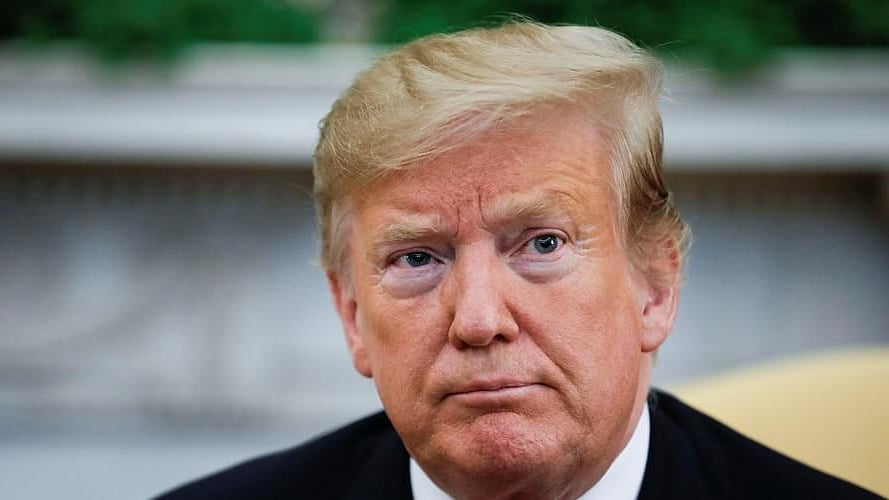
From Tehran to Moscow and Beijing, US President Donald Trump's midterm setback is being viewed through sharply different geopolitical lenses — as a rebuke to his war policy, a test for Ukraine diplomacy as well as an 'internal American affair'.
Iran's Parliament Speaker and chief negotiator with Washington, Mohammed Bagher Ghalibaf, said American voters had delivered a message against war, which Tehran endorsed.
"Conscience or the cost of living, Americans said NO TO WAR, and we endorse this message," Ghalibaf wrote on X.
He warned that if the US government ignored public opinion to serve what he described as "international paymasters and blackmailers", it would face consequences from Iran.
His remarks came after Trump acknowledged that the conflict with Iran and the resulting rise in petrol prices had contributed to Republican losses. The US president, however, insisted he did not regret launching the joint military campaign with Israel in February.
Iran's Supreme Leader Mojtaba Khamenei also dismissed expectations of a change in Washington's approach following the elections. In a statement, he said those expecting a shift in American "hostility towards the Iranian nation" were "gravely mistaken".
Russia hopes Trump continues Ukraine peace efforts
The Kremlin said it hoped the midterm results would not affect what it described as Trump's "peacemaking efforts".
"President Trump continues to exercise his powers. We sincerely hope that he will also continue his efforts toward peace," Kremlin spokesman Dmitry Peskov said on Wednesday, according to Russian media.
Moscow's response comes amid Trump's attempts to negotiate an end to Russia's war in Ukraine. The US president has faced criticism over his approach to the conflict, including pressure on Kyiv to make concessions and moves concerning sanctions on Russian energy exports.
Russian state newspaper Rossiyskaya Gazeta, meanwhile, suggested that the Democratic victories could prove detrimental to Ukraine, which has received strong backing from European governments.
China calls elections an internal US matter
China refrained from commenting directly on the political implications of the Republican setback. Foreign ministry spokesperson Mao Ning said the midterm elections were an internal affair of the United States.
She said Beijing remained willing to work with Washington to implement the consensus reached by Chinese President Xi Jinping and Trump during their recent meeting.
China also expressed readiness to strengthen communication, manage differences and expand cooperation to build a "constructive, strategically stable" relationship based on respect, fairness and reciprocity.
The statement came amid continuing trade and diplomatic tensions between the two countries.
Other international reactions
In Europe, Spanish Prime Minister Pedro Sánchez offered one of the most pointed political responses, presenting the results as a rejection of Trump's political agenda.
"Yesterday, the American people voted against policies that only serve to impoverish people. Against hatred. Against sexism. Against climate denial and against the privileges of the elites," Sánchez wrote on X.
Norwegian Prime Minister Jonas Gahr Støre described the outcome as a "powerful political signal" indicating a change in direction among American voters.
Speaking to Reuters, Støre said voices were emerging in US politics that were closer to Norway's positions on climate, the environment, foreign policy and development assistance than those of the Trump administration.
In the United Kingdom, Prime Minister Andy Burnham said the results offered an opportunity to focus on ending conflicts and addressing the cost-of-living crisis. He said the US-UK relationship would remain strong despite the shift in political power in Washington.
London Mayor Sadiq Khan congratulated the Democrats, describing their campaign as a rejection of what he called Trump's "damaging and divisive politics".
South African President Cyril Ramaphosa said the American people had spoken and suggested the outcome could usher in a new phase in international relations. He also referred to continuing trade ties between Pretoria and Washington despite tensions over South Africa's exclusion from the African Growth and Opportunity Act.
Japan, meanwhile, emphasised continuity in its relationship with Washington. Chief Cabinet Secretary Minoru Kihara said the US-Japan alliance remained essential for global peace and stability and continued to be the cornerstone of Tokyo's foreign and security policy.
In Israel, opposition leaders used the Democratic victories to criticise Prime Minister Benjamin Netanyahu, a close ally of Trump. Opposition leader Yair Golan said the results showed how unpopular Netanyahu had become among both Democrats and Republicans, while Yair Lapid said they undermined the possibility of a unity government led by the Israeli prime minister.
Not all foreign governments commented directly on the results. Several appeared to avoid treating the midterms as a referendum on US foreign policy, stressing instead the continuity of their bilateral relationships with Washington.
The reactions come as the Democratic victories are expected to have implications for US policy on Iran, Ukraine, trade and military assistance. However, Trump retains executive powers over major foreign policy decisions, and the election outcome does not automatically signal an immediate change in the administration's approach.
Join our official telegram channel (@nationalherald) and stay updated with the latest headlines