


Bashir Badr, the poet who humanised the Urdu ghazal
With the passing of Dr Bashir Badr at 91, Indian literature loses one of the last towering figures of the modern Urdu ghazal
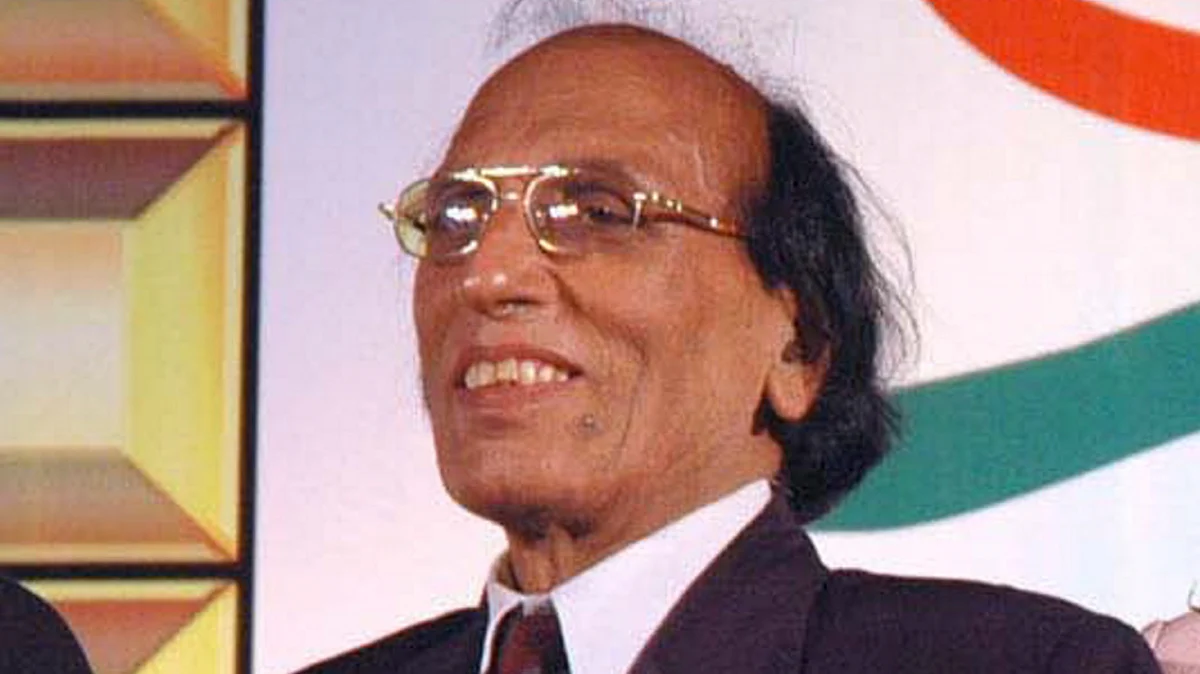


With the passing of Dr Bashir Badr on Thursday, 28 May at 91, Indian literature loses one of the last towering figures of the modern Urdu ghazal — a poet whose words escaped the confines of literary gatherings and settled permanently in the emotional vocabulary of ordinary people.
Dr Badr was not merely a celebrated Urdu poet; he was a cultural phenomenon. His couplets travelled effortlessly across generations, classes, and linguistic boundaries. They appeared in mushairas and newspapers, films and political speeches, handwritten letters and, more recently, across social media timelines. Few poets in post-Independence India achieved such intimate public presence.
At a time when poetry often risked becoming either excessively ornamental or intellectually inaccessible, Badr restored to the ghazal its most essential quality: emotional immediacy. He spoke a language people recognised — the language of longing, dignity, heartbreak, civility, memory, and survival.
Born Syed Muhammad Bashir on 15 February 1935 in Ayodhya, Bashir Badr belonged to a generation shaped by both the cultural richness and political upheavals of 20th-century India. As the trauma of Partition altered the landscape of Urdu literature, Badr emerged as one of the writers who ensured that Urdu would continue to flourish within India’s composite cultural imagination.
Educated at Aligarh Muslim University, where he later completed his doctoral studies, Badr combined academic sophistication with remarkable accessibility. Unlike many classical poets whose verses demanded extensive familiarity with Persian symbolism and literary tradition, Badr’s poetry spoke directly to lived experience.
He wrote about broken homes, fading relationships, loneliness, communal wounds, urban alienation, and fragile hope — all with extraordinary simplicity.
Perhaps no couplet captures his moral clarity more powerfully than this immortal sher:
Log toot jaate hain ek ghar banane mein/ Tum taras nahin khate bastiyan jalane mein
(People break themselves building a single home/ Yet you feel no pity while burning entire settlements)
These lines became far more than poetry. They became an indictment of violence, hatred, and the casual destruction of human lives. Decades after they were first recited, they continue to resonate in moments of communal tension and political unrest..
The genius of Bashir Badr lay in making profound truths appear effortless. His verses seemed conversational, almost casual, yet beneath their simplicity rested deep philosophical reflection and emotional intelligence.
Har dhadakte paththar ko log dil samajhte hain/ Umr beet jaati hai dil ko dil banane mein
(People mistake every beating stone for a heart/ A lifetime passes before a heart truly becomes a heart)
In another widely quoted couplet, he distilled the ethics of disagreement and coexistence:
Dushmani jam kar karo lekin ye gunjaish rahe/ Jab kabhi hum dost ho jaayein to sharminda na hon
(Be enemies with conviction if you must/ But leave enough room that friendship may someday return without shame)
Behind the gentleness of Badr’s poetry lay deep personal sorrow. During the communal violence that scarred parts of northern India in the late 20th century, his house in Meerut and a large part of his personal library were reportedly destroyed in a fire. Manuscripts, books, and years of memories vanished overnight.
That experience of loss and displacement quietly transformed his poetry. Themes of exile, fragility, and remembrance became more pronounced in his later work. Yet remarkably, he never allowed bitterness to overpower his writing. Instead, he responded to cruelty with introspection and compassion.
His poetry often carried the ache of someone searching for humanity amid devastation:
Ujaale apni yaadon ke hamaare saath rehne do/ Na jaane kis gali mein zindagi ki shaam ho jaaye
(Let the lights of memory remain with me/ Who knows in which street life’s evening may descend)
Alongside poets such as Nida Fazli and Rahat Indori, Bashir Badr helped redefine the public life of Urdu poetry in post-Independence India. His mushaira recitations attracted enormous audiences, yet he never relied on theatricality. The power of his poetry lay in its emotional recognisability.
He avoided unnecessarily dense vocabulary and instead embraced the shared linguistic space of Hindustani. That openness widened the reach of Urdu poetry at a time when the language itself faced cultural and political marginalisation.
Ironically, the digital age further expanded his legacy. Today, countless people quote Badr online — often without realising they are reciting one of the greatest Urdu poets of modern India.
One of his most perceptive verses remains especially relevant in an age obsessed with power and proximity:
Bade logon se milne mein hamesha faasla rakhna/ Jahaan dariya samandar se mila, dariya nahin rehta
(Always keep some distance from the powerful/ When a river meets the sea, it ceases to remain a river)
Over his long and distinguished literary career, Bashir Badr received numerous honours, including the Sahitya Akademi Award and the Padma Shri. His poetry collections — among them Subah Ki Pehli Kiran, Aas, Bisat, and Udāsī — became landmarks of contemporary Urdu literature.
Yet his true achievement cannot be measured through awards alone.
Bashir Badr succeeded in something far rarer: he became part of public memory. His poetry accompanied people through love, separation, migration, ageing, grief, and reconciliation. His verses survived because they offered comfort without sentimentality and wisdom without arrogance.
His passing leaves behind an irreplaceable void in Urdu literature. He represented a tradition where poetry was not merely performed but lived — where language carried ethical grace, emotional restraint, and cultural civility.
In an increasingly polarised world, Bashir Badr’s poetry reminded readers that kindness itself could be an act of resistance.
As tributes pour in from writers, scholars, artists, politicians, and admirers across the world, one realises that Bashir Badr was never simply a poet of romance. He was a poet of human fragility.
And perhaps that is why his words continue to endure.
Today, as the curtains fall on one of Urdu’s most cherished voices, his own lines return with haunting poignancy:
Mohabbaton mein dikhawe ki dosti na mila/ Agar gale nahin milta to haath bhi na mila
(In love, do not offer friendships of pretence/ If you cannot embrace me, do not even extend your hand)
Bashir Badr may have departed, but his poetry will continue to inhabit the emotional life of the subcontinent — quietly, gracefully, eternally.
Hasnain Naqvi is a former member of the history faculty at St Xavier’s College, Mumbai. More of his writing here
Join our official telegram channel (@nationalherald) and stay updated with the latest headlines