


The lonely woman behind the powerful prime minister: Sonia Gandhi on Indira
In Belonging: A Journey of Love, Sonia Gandhi recalls Indira Gandhi's temper, family life, affection for her grandchildren and loneliness
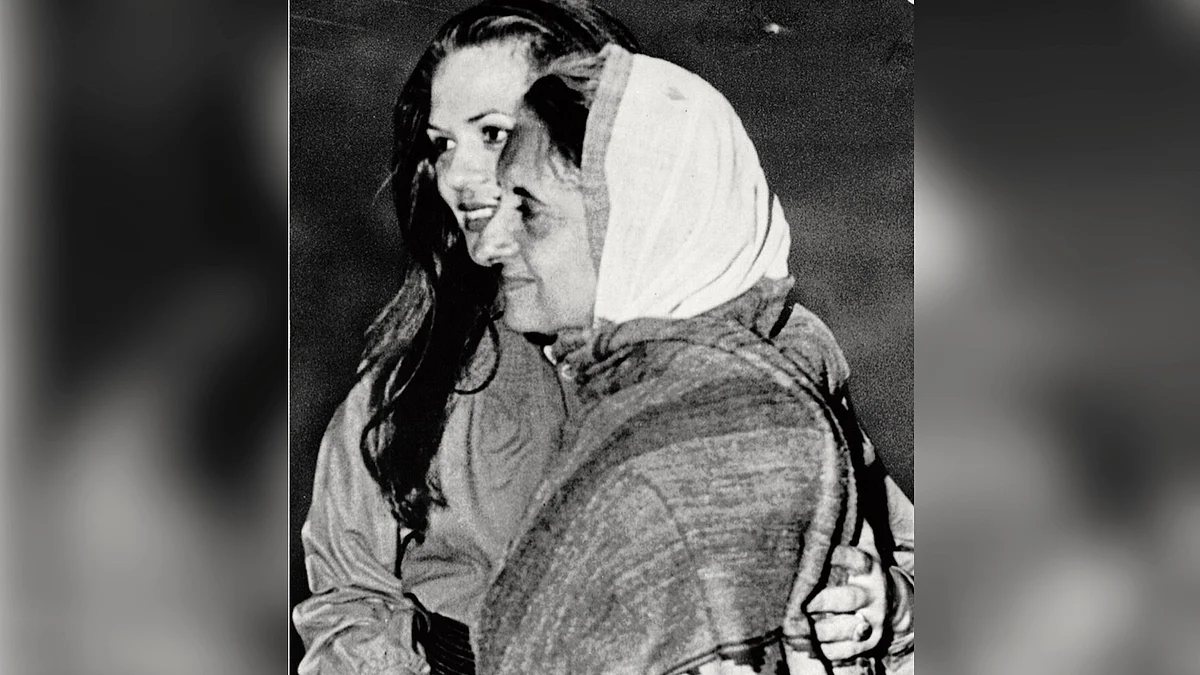


For decades, Indira Gandhi has occupied the Indian imagination as an embodiment of political steel — the decisive prime minister who reshaped South Asia's map in 1971 and suspended democratic norms during the Emergency four years later. In her memoir, Belonging: A Journey of Love, however, Sonia Gandhi steps beyond the imposing public image to recall the woman she lived with for 16 years: a formidable political leader, but also a mother, grandmother and, at times, a deeply vulnerable individual.
'Much has been written about my family, but rarely with real insight into who they were, their motivations, their struggles, their very human flaws,' Sonia writes, explaining her decision to break decades of reticence. 'I wanted to portray them honestly, as people I knew and loved.' At the heart of her account is the contrast between the public persona and the private woman. 'In the newspapers she was portrayed as tough or harsh, but at home she was just like any other mother.'
A temper that could freeze a room
When Sonia Maino arrived in New Delhi as a young Italian bride in 1968, the stature of her mother-in-law, then India's prime minister, was daunting enough. What unsettled her even more, however, was Indira's unpredictable temper.
'What I found most alarming was my mother-in-law's occasional explosions of temper,' Sonia recalls candidly. 'They could freeze the staff into numbness.' For a newcomer adjusting to an unfamiliar culture and household, the outbursts brought back painful memories of her own upbringing. 'Such outbursts would unsettle me, reminding me of my father's explosions. While I'd feel perturbed and shaken, Rajiv and Sanjay would sit quietly, waiting for the unpleasant moment to be over.'
Rajiv, accustomed to his mother's temperament, would try to reassure his anxious wife: "Don't let yourself get so scared. She'll be all right in no time." But reassurance did not immediately dispel Sonia's apprehension. 'Until I got to know her well, I'd quake in my seat,' she admits. The household was so accustomed to Indira's shifting moods that aides and even her physician would cautiously whisper 'Mood theek hai (is her mood all right)?' before entering her room.
Sonia also draws a distinction between Indira's occasional domestic outbursts and her unforgiving approach to political betrayal. At home, she writes, Indira 'normally repented her outburst and, in her own way, communicated her regret to whoever had annoyed her.' In politics, however, a breach of trust could be irreversible: 'She'd distance herself and not ever deal with that person again.'
Saris, photographs and a grandmother's softer side
Away from the demands of public office, Indira found comfort in the rituals of domestic life and the preservation of family memories. Sonia recalls her mother-in-law asking longtime aide Amie Crishna to bring out boxes of old family photographs, which she would painstakingly arrange in chronological order.
She was equally particular about her collection of clothes, especially old Kashmiri shawls and pre-khadi saris that had belonged to her mother, Kamala Nehru. 'Or she'd take out her saris and, with our help, arrange them according to their provenance, placing tags on each bundle so that it could be accessed easily,' Sonia writes. Lightly worn saris were carefully separated and bundled to be passed on as gifts to relatives.
It was her grandchildren, however, who brought out Indira's most affectionate side. She doted on Rahul and Priyanka, even teasing a chubby-cheeked young Rahul by comparing him to veteran Congress leader Kamalapati Tripathi. The children also became informal intermediaries whenever tensions lingered in the household.
'As the children grew up, it was they who'd be sent to get a sense of her "mood",' Sonia recalls. 'A smile or an innocent question from her grandchildren at once melted her; they helped her to relax and provided a lot of contentedness to her.'
Besieged and alone in the corridors of power
Perhaps the most revealing passages in Belonging challenge the image of an all-powerful leader untouched by self-doubt. Sonia portrays a woman who, even at the height of her authority, often felt 'besieged and profoundly alone'. That vulnerability became particularly pronounced in the turbulent months leading up to the Emergency in 1975.
Faced with nationwide agitations and the Allahabad High Court verdict threatening her parliamentary position, Indira was also under pressure from her younger son Sanjay to hold on to office. Sonia recalls her mother-in-law voicing her fears about the consequences of stepping down.
'If I resign, the party will split and scatter, and the RSS will have its way... How can we allow it?' Sonia quotes her as saying. 'We fought them throughout the freedom movement. We fought them all these years. They are going to destroy the country.'
The sense of isolation deepened after the Congress's crushing defeat in the 1977 general election. The Gandhi family experienced a sudden reversal of fortunes, with political isolation spilling into everyday life. One particularly painful episode involved neighbourhood parents quietly keeping their children away from Rahul's birthday party.
Behind closed doors, Indira also had to confront the consequences of the Emergency. When Rajiv told Sanjay, "I cannot forgive you Sanjay. You have brought Ma to this pass," Indira did not invoke her authority to defend herself. Instead, she acknowledged her own responsibility: 'What Rajiv said is true Sanjay. How many times you gave orders without my knowledge!'
A final cry of 'Mummy'
Sonia's account of Indira's final hours on 31 October 1984 is perhaps the most harrowing passage in the memoir. The relationship that had evolved from that of a frightened young bride and an intimidating mother-in-law into one of trust and affection was brought to an abrupt end that morning.
About to step into her bath at 1 Safdarjung Road, Sonia heard sharp, firecracker-like sounds outside. She rushed towards the path leading to Akbar Road and climbed into the white Ambassador carrying the wounded prime minister.
In the frantic drive to hospital, political stature and public legacy ceased to matter. What remained was the anguish of a daughter-in-law watching someone she loved fight for her life.
'I'm in the car now, crouching on the floor, facing her … Blood – blood on her sari, blood on her chest,' Sonia writes. 'Her large eyes are wide open; her face wears a surprised expression. She doesn't move. I attempt to speak to her, to call out, "Mummy, Mummy", but no word comes out.'
By refusing to reduce Indira Gandhi to either a faultless icon or a caricature of authoritarianism, Belonging offers a more layered portrait of one of India's most consequential political figures. Through Sonia's recollections, the woman who commanded a nation emerges in all her contradictions — intimidating yet affectionate, politically unforgiving yet capable of remorse, powerful yet vulnerable to the loneliness that accompanied power.
Hasnain Naqvi is a former member of the history faculty at St Xavier’s College, Mumbai. More of his writing here