


When history collides with Hindutva mythology
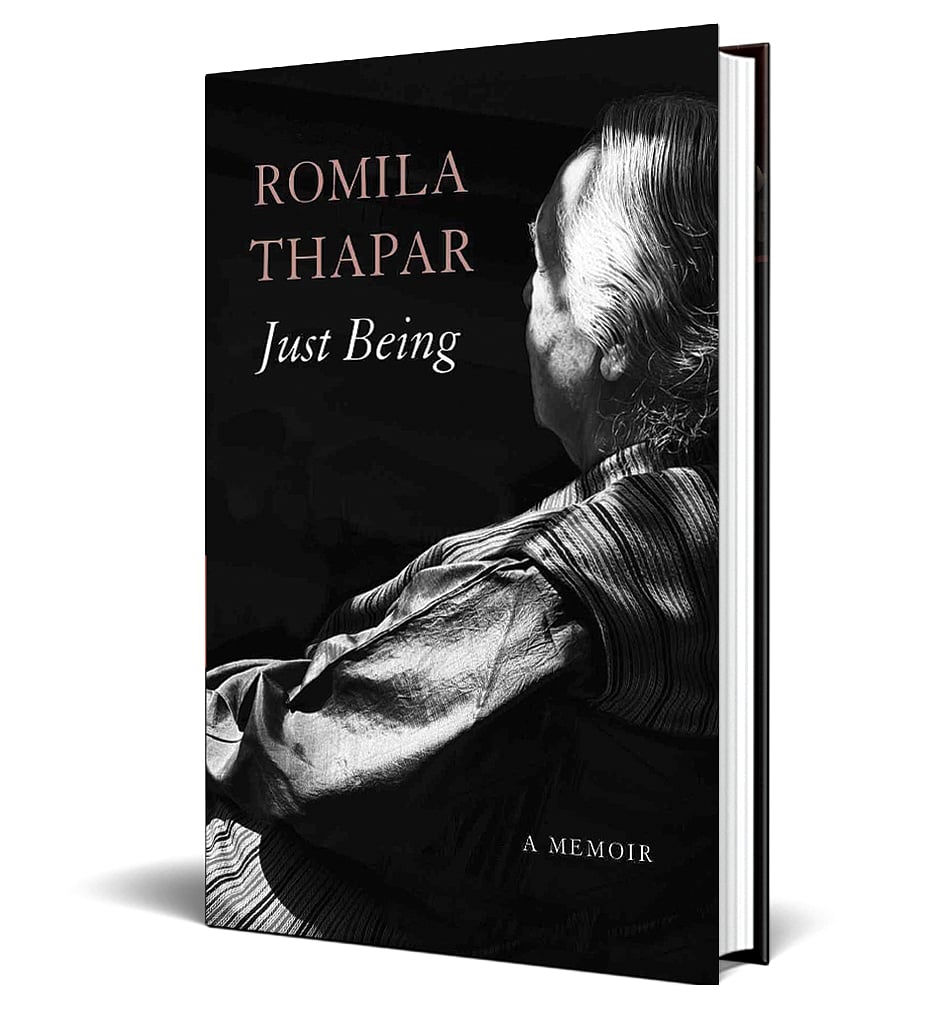
Subhoranjan Dasgupta uses Romila Thapar’s recently published memoir to explain why she is so reviled by the Hindutva establishment
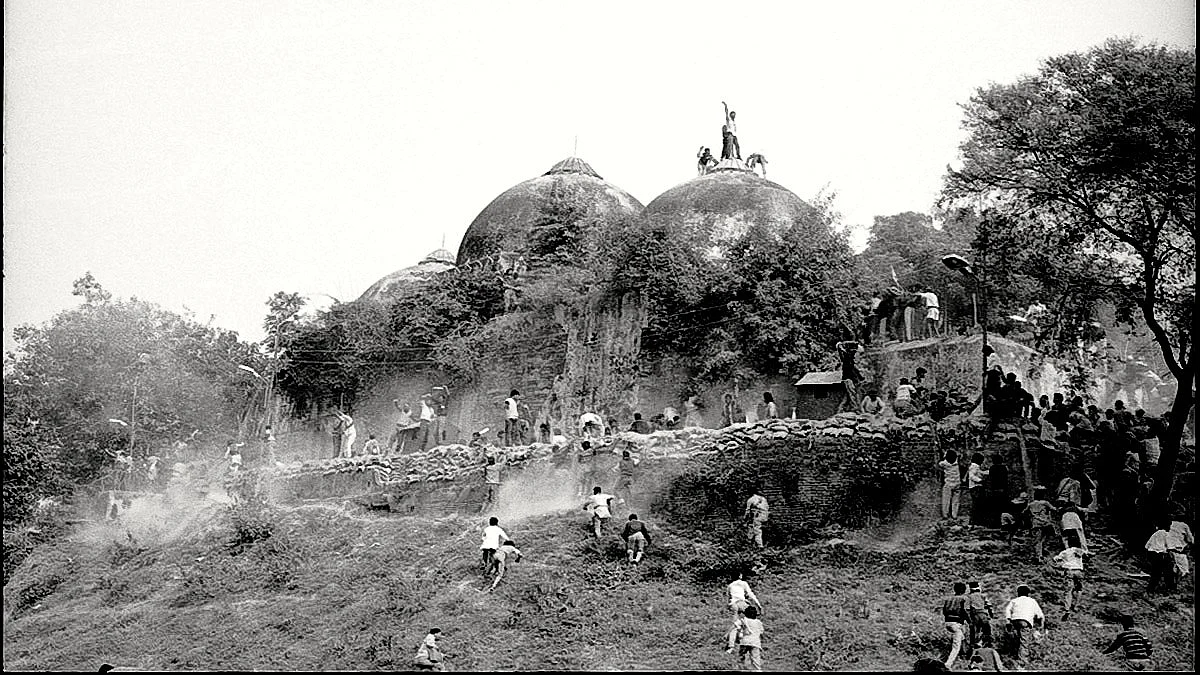


Babri Masjid fell in 1992. For the BJP, its ideological mentor the RSS and its militant affiliate Vishva Hindu Parishad, which spearheaded the movement for Ram Janmabhoomi, this was a moment of civilisational triumph. For other Indians, still an overwhelming majority composed overwhelmingly of Hindus, proud of their Constitution’s devotion to pluralism, it was a horrific reminder that the ghosts of Partition had not been exorcised, that religious bigotry was alive and kicking in the country.
The first rumblings of discontent with academic retellings of ancient and early medieval Indian history can be traced to the first non-Congress, Janata Party government that was voted to power in 1977, the election that followed the Emergency.
The BJP, in its earlier avatar as Bharatiya Jana Sangh, was an influential partner in this government and it used its leverage to voice its impatience with the kind of history that had been disseminated and taught till then. Morarji Desai, then prime minister, was more than just sympathetic to the clamour; he ‘asked that the history textbooks prescribed by the NCERT be banned, a stunning surprise.’ (Just Being: A Memoir, Seagull Books, p.20).
The ensuing conflict, an outcome of the radical change in policy, soon degenerated into virulent, personal attacks on old-vanguard historians like Romila Thapar. Affluent NRIs, no doubt egged on by their mentors in Delhi, sneeringly remarked ‘I [Romila Thapar] was incompetent as a historian, inept as a scholar, and should never have been appointed to the position I held.’ (p.221).
The Janata Party experiment unravelled quickly, which meant that the project to rewrite Indian history, in order to align it with the Hindutva project, had to wait till the first NDA government came to power in 1998 under its disarmingly amiable prime minister, Atal Behari Vajpayee.
On the surface, Vajpayee affected a moderate outlook with assertions like “India was secular, is secular, and will be secular,” but he did nothing to curb his rampaging HRD minister Murali Manohar Joshi, who revived the history project and went after the likes of Irfan Habib, Sarvepalli Gopal and his bête noire, Romila Thapar.
In her own words, ‘Death threats that started in the 1980s were more often made at midnight over the phone’ (p.222). They ‘regarded me as a threat that had to be silenced.’ (p.481).
Why was Thapar such a prime target, I’ve often wondered. Two reasons come to mind. Thapar’s area of interest was ancient and early India or the so-called Hindu and pre-Muslim India, which our majoritarian Hindutva-vadis consider their stomping ground. And this gadfly impertinently questioned the glory and grandeur, the peace and harmony that reigned before the Muslim invaders arrived.
Indeed Romila Thapar and Richard Eaton, the celebrated American historian, had with their scholarship demolished this myth of Hindu India. While Thapar exposed (perhaps most eloquently in her 2020 book of essays Voices of Dissent) the bitter disputes between the Brahmanas and Shramanas, which even led to bloodshed and carnage, Eaton narrated the furious battles waged by Hindu kings against one another, who not only plundered the victims’ kingdoms but also destroyed their temples and deities (Temple Desecration and Muslim States in Medieval India, 2004).
So, the plunder of Hindu temples, packaged in the Hindutva retelling as their ‘desecration’, began on our Sanatani soil much before Mahmud of Ghazni first stormed the Somnath temple in CE 1026. The champions of Hindutva, who were badmouthing Thapar, could have even turned to Patanjali, the grammarian they so revere, whom Thapar also cites (in his 2nd century BCE opus Mahabhasya), as having described the relationship between the Brahmanas and Shramanas as one between ‘the snake and the mongoose.’
Also Read: The BJP’s latest history heist
Thapar also likely riles the champions of Hindutva because she wrote the history textbooks for school students. In her own words: ‘I was viewed by Hindutva as an unacceptable historian not so much because of my academic books but mainly because of the textbooks that I wrote for middle schools. Textbooks are pivotal to controlling the popular interpretation of history or any body of knowledge.’ (p.218-219).
It’s instructive to bear in mind the foundational myths of Hindutva history. We are led to believe that India’s pre-Muslim ‘sanatani’ past was a period of peace and social harmony. To hold on to this view, it elides the inhuman caste oppression of this time. To see it as ‘an era of peace’ is to ignore that great saga of forever wars — the Mahabharata, it is to ignore the annexationist practice of the ‘ashwamedha yagna’ that fuelled nonstop wars among Hindu kingdoms in this period.
The other myth about this sanatani Hindu civilisation are egregious overstatements about the strides it made in the arts and sciences, including the discovery of plastic surgery and airplanes. This civilisation was supposedly the greatest fountainhead of knowledge, a paradise looted and plundered by Muslim invaders, whose rule over these lands for five centuries constitute the Dark Ages of Indian history.
In this reckoning of history, not a single Muslim monarch, not even Akbar, did anything of note or lasting value. They were all ‘desecrators’ and are, therefore, best erased from our history textbooks.
On the years of the British Raj, this fictionalised history is ambivalent and often contradictory because the people who held this worldview were absent in the freedom struggle. In fact, they collaborated with the British at times, as the eminent historian Sumit Sarkar has shown in his meticulously researched work Towards Freedom, which the NDA government had suppressed but was later published (Part 1 in 2007, Part 2 in 2009) by OUP.
No wonder Romila Thapar infuriates the Hindutva hordes and their preferred mythologists masquerading as historians. They pick on her because she challenges the Hindutva-vadis on their own stomping ground. Her very first book, Ashoka and the Decline of the Mauryas (1961) uses epigraphic and archaeological sources to show that the Mauryan state was secular, based on political pragmatism rather than religious piety. She debunks the myth of a Hindu golden period.
Indeed, this denunciation runs like a refrain in her writings and can be heard in the same no-nonsense register in Just Being. Sample these: ‘If Hindutva is Hinduism, then it had demonstrated that it was as violent and intolerant as any other religion’ (p.383); ‘religious nationalism plays havoc with history’ (Page 400); ‘Hindutva is not a religion and it is not Hinduism. I label Hindutva as ‘Syndicated Hinduism’’ (p.212) …
She maintains that we have kept our own history — in our epics and discourses, edicts and monuments, and in excellent chronological narratives like Kalhana’s 12th century CE classic Rajatarangini. In other words, her allegedly ‘anti-Hindu’, ‘Eurocentric’, ‘Marxist’ reading of history does not regurgitate the findings of colonial historians, as the Sanatanis do, in peddling the pernicious, colonial thesis of endless wars between Hindus and Muslims.
In Somanatha (2004) too, she nudges us to question this polarising Hindu-Muslim narrative: was Mahmud of Ghazni a religious bigot or a merciless plunderer, who did not hesitate to ravage the mosque at Kandahar after his assault on Somnath? Those who have issued death sentences on her, have still not answered this question.
Firmly opposed to Hindutva’s compartmentalisation of culture and civilisation, Thapar argues that ‘civilisation is not a closed entity’ but rather ‘a porous condition, shaped by the interface of multiple cultures.’ (p.572)
Her redemptive vision as a historian brings to mind these lines from her favourite poet T.S. Eliot in his 1920 poem ‘Gerontion’:
‘After such knowledge, what forgiveness? Think now/ History has many cunning passages, contrived corridors/ And issues, deceives with whispering ambitions,/Guides us by vanities.’
Join our official telegram channel (@nationalherald) and stay updated with the latest headlines