


Phule vs Hindutva: The ideological gulf BJP cannot bridge
Phule’s writings on caste, religion and education reveal sharp contradictions with Hindutva politics
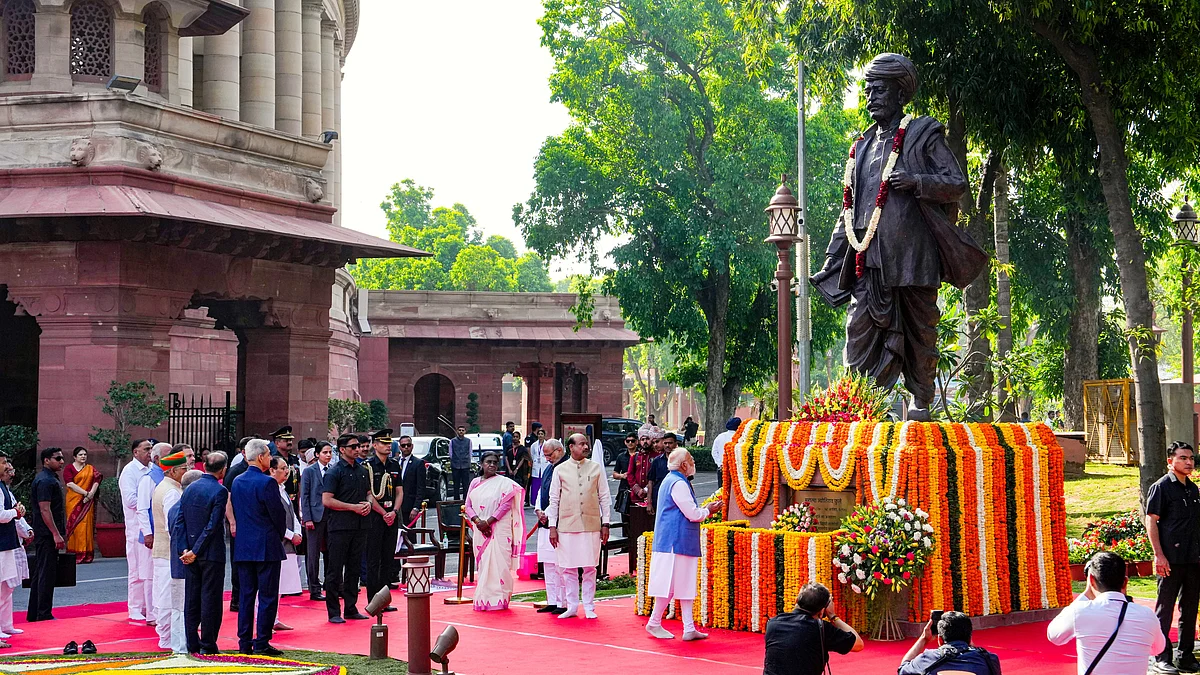


As the nation marks the start of the year-long bicentenary celebrations of the birth of Mahatma Jotirao Phule, the BJP has launched high-decibel celebrations of the 19th-century social reformer. From memorials to televised tributes, the party appears keen to claim the 'father of the Indian social revolution' as a mascot for its social engineering. Yet a closer reading of Phule’s seminal works — Gulamgiri, Shetkaryacha Asud, and Sarvajanik Satya Dharma Pustak — suggests the Hindutva project is not merely different from Phule’s vision, but its philosophical opposite.
‘Nirmik’ vs Hindutva
At the core of the BJP’s politics lies Hindutva, premised on a unified Hindu identity rooted in scripture. Phule’s final work, Sarvajanik Satya Dharma Pustak (1889), sharply rejected the authority of Vedic and Puranic traditions. He proposed the idea of Nirmik (the Creator), arguing that while the universe may be divinely created, religions and scriptures are human constructs serving priestly dominance.
Scholar Gail Omvedt notes that Phule did not seek to reform Hinduism but to articulate a universal religion of truth — placing him at odds with scriptural sanctity central to Hindutva.
Cultural nationalism vs the Gulamgiri critique
The BJP’s narrative of a Hindu 'golden age' contrasts with Phule’s interpretation in Gulamgiri (1873), where he described Brahmins as “alien invaders” who subjugated indigenous Shudras and Ati-Shudras. Re-reading the 'Dashavatara' as symbolic stages of conquest, Phule challenged mythological foundations often invoked in cultural nationalism. He instead invoked the egalitarian reign of Bali Raja as a counterpoint to Brahminical hierarchy.
Also Read: The BJP’s latest history heist
Agrarian distress and the ‘whipcord’
In Shetkaryacha Asud (1881), Phule offered a searing critique of bureaucratic and intermediary exploitation of farmers. He argued that the 'Bhat-Kulkarni' nexus drained peasant resources. His oft-cited verse — 'Vidyevina mati geli…' — underscored the centrality of knowledge to dignity and survival. Scholars such as Rosalind O’Hanlon emphasise that Phule’s politics centred on material liberation of peasants, rather than symbolic mobilisation.
Education as ‘third jewel’
Phule consistently argued that education was key to emancipation. In his play Tritiya Ratna (1855) and submission to the Hunter Education Commission (1881), he called for mass primary education rather than elite-focused models. His wife Savitribai Phule endured social hostility while educating girls, embodying a rationalist vision of learning that sought to dismantle caste hierarchy.
Appropriation and political reality
The BJP’s renewed invocation of Phule is widely viewed as an attempt to broaden appeal among OBC and Dalit communities. Yet critics point to continuing caste inequalities and high-profile cases of caste violence as evidence that the structural hierarchies Phule challenged persist. As Dhananjay Keer noted, Phule’s Satyashodhak Samaj aimed to institutionalise an anti-caste movement grounded in social justice.
A legacy beyond symbolism
Phule was not merely a reformer but a social revolutionary committed to samata (equality) and tark (reason). Celebrating his bicentenary while retaining social orthodoxies he opposed creates an enduring paradox. The most meaningful tribute to Phule lies not in symbolic gestures but in confronting inequality with the same intellectual courage he demonstrated.
Hasnain Naqvi is a former member of the history faculty at St Xavier’s College, Mumbai. More of his writing may be read here
Join our official telegram channel (@nationalherald) and stay updated with the latest headlines