


Asian stocks slide as AI investment fears deepen
South Korea’s Kospi falls as much as 5.8 per cent after a bruising session on Wall Street, while US stock futures pointed to a rebound
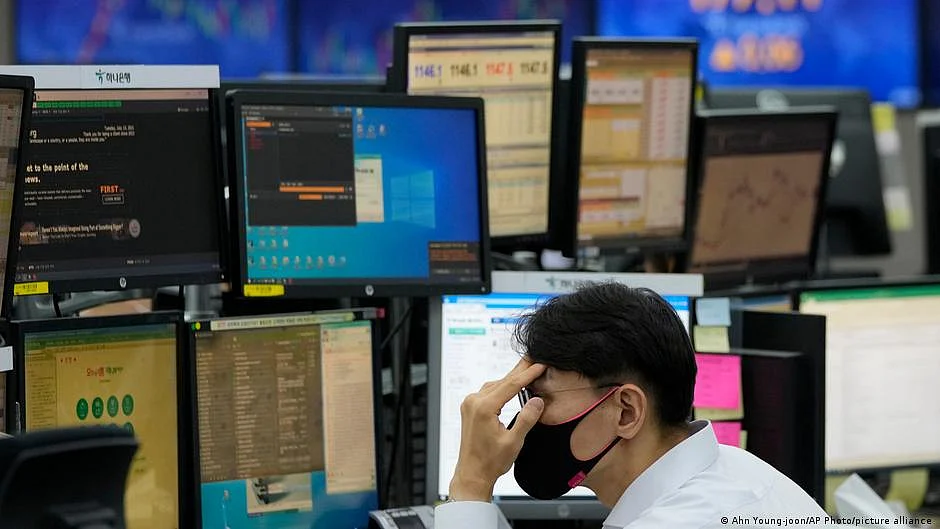


South Korea led Monday’s losses in Asia, with Hong Kong and mainland Chinese shares also falling
The S&P 500 entered correction territory on Friday, while the Nasdaq Composite erased its gains for 2026
US stock futures rose on Monday as investors weighed whether the tech sell-off had gone too far
Asian stocks fell on Monday, extending a tech-led sell-off as investors questioned whether companies could sustain the trillions of dollars being spent on artificial intelligence infrastructure.
South Korea’s Kospi slid as much as 5.8 per cent, while Hong Kong’s Hang Seng fell 1.8 per cent and mainland China’s CSI 300 dropped more than 1.3 per cent. Taiwan’s Taiex swung between gains and losses after opening more than 1 per cent lower. Japanese markets were closed for Labour Thanksgiving Day.
The losses followed a sharp retreat on Wall Street on Friday. The S&P 500 fell 3.7 per cent, taking it at least 10 per cent below its recent peak and into correction territory. The tech-heavy Nasdaq Composite dropped 5.3 per cent, wiping out its gains for the year.
Asian markets had already come under heavy pressure on Friday. South Korea’s Kospi, Japan’s Nikkei 225 and Taiwan’s Taiex ended the session between 5.1 per cent and 6.2 per cent lower, while Hong Kong’s Hang Seng lost 1.9 per cent.
US stock futures climbed on Monday despite the continued weakness in Asia. S&P 500 futures rose 2 per cent and Nasdaq futures gained 2.4 per cent. Rajat Agarwal, an Asia equity strategist at Société Générale, told Al Jazeera that investors were trying to gauge whether the correction had gone too far after an unusually steep fall in US technology shares.
At the centre of the sell-off is a question about how long technology companies can keep financing the data centres and computing capacity needed to train and run AI systems. Research firm Gartner expects global AI-related investment to reach $2.7 trillion in 2026 and $3.6 trillion in 2027, with debt funding much of the spending.
Investors are also weighing the prospect of closer scrutiny of the sector. Democratic gains in the US midterm elections could slow data centre construction in some states, while Washington faces calls to tighten restrictions on China’s access to advanced chips.
Khoon Goh, head of Asia research at ANZ, told Al Jazeera that AI concerns were likely to dominate trading this week as investors looked for signs that the sell-off was nearing a bottom. He pointed to the rise in US futures and strong South Korean exports in the first 20 days of November, when semiconductor shipments rose 294.4 per cent from a year earlier.
Join our official telegram channel (@nationalherald) and stay updated with the latest headlines