


Trump weighs new national security tariffs after US Supreme Court setback
White House considers fresh levies on key industries under long-standing trade law as legal challenges loom and EU pauses trade deal
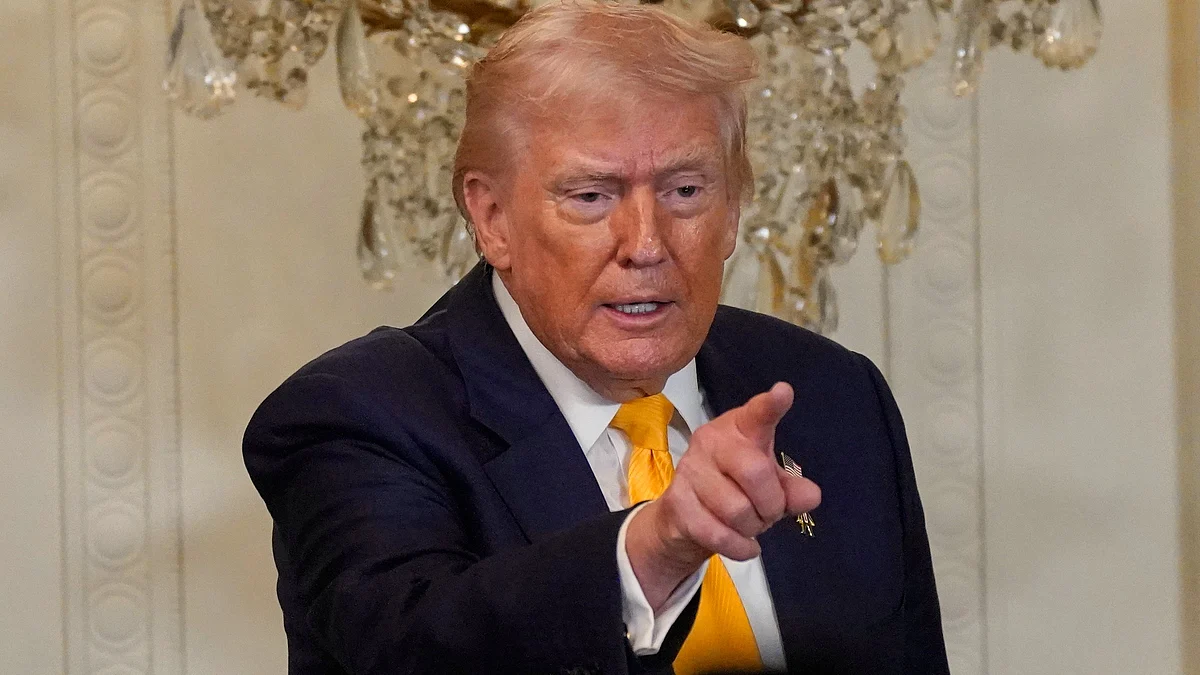


The administration of US President Donald Trump is considering imposing a new round of national security tariffs on several major industries following a recent ruling by the Supreme Court of the United States that struck down many of his second-term trade measures.
According to a report by The Wall Street Journal, the proposed duties would be introduced under Section 232 of the Trade Expansion Act of 1962. That provision allows the president to restrict imports deemed a threat to national security. The measures would be separate from a 15 per cent global tariff Trump announced over the weekend.
The White House did not immediately respond to requests for comment, and the plans have not been independently confirmed.
The Supreme Court ruled on Friday that Trump could not rely on the International Emergency Economic Powers Act (IEEPA) to justify sweeping tariffs on nearly all trading partners. The court found that the statute, intended for use during national emergencies, did not authorise such broad trade restrictions.
In response, Trump imposed a temporary 10 per cent tariff on imports from all countries, later increasing the rate to 15 per cent. These duties were introduced under Section 122 of the Trade Act of 1974, which permits the president to address significant balance-of-payments deficits with tariffs of up to 15 per cent.
The fresh measures now under consideration would target sectors including large-scale batteries, cast iron and iron fittings, plastic piping, industrial chemicals, and equipment used in power grids and telecommunications networks, the Journal reported.
Trump has previously used Section 232 to levy tariffs on steel, aluminium, automobiles, copper and lumber. Additional duties on pharmaceuticals, drones and semiconductors are said to be under review.
Legal opposition appears likely. Neal Katyal, who argued against the administration’s earlier tariffs before the Supreme Court, told NPR that further litigation “very well may” follow if new levies are imposed. However, trade lawyer Robert Shapiro told Forbes that challenging tariffs enacted under existing statutory authority such as Section 232 could prove more difficult, as courts may be more reluctant to overturn measures grounded in established trade law.
The developments have also prompted an international response. Officials from the European Union said on Monday that the bloc would suspend implementation of a recently agreed trade arrangement with Washington. Bernd Lange, chair of the European Parliament’s trade committee, said the deal would be paused “until further notice”, citing the need for legal clarity.
Trump criticised the move on social media, warning that countries seeking to exploit what he described as a “ridiculous” court decision would face even higher tariffs.
The administration is also reportedly examining revisions to existing duties on steel and aluminium. With the prospect of further legal battles and retaliatory trade measures, uncertainty over U.S. trade policy appears set to continue.
With agency inputs
Join our official telegram channel (@nationalherald) and stay updated with the latest headlines