


Markets cheer as crude plunges on talks of US-Iran peace deal
In early trade, the Sensex climbs over 1,200 points, or around 1.6%, to 76,725.27, while Nifty advances nearly 360 points
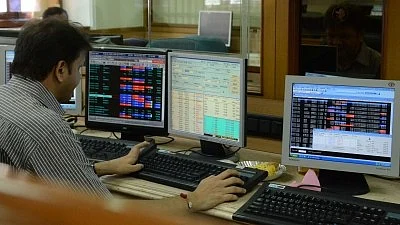


Equity markets across Asia and India rallied sharply on Monday after the United States and Iran announced an agreement aimed at ending months of hostilities, raising hopes of stability in global energy markets and easing concerns over oil supply disruptions.
Indian benchmark indices opened strongly higher, with the Sensex climbing more than 1,200 points, or around 1.6 per cent, to 76,725.27, while the Nifty advanced nearly 360 points, or 1.5 per cent, to 23,984.85 in early trade.
The rally was led by sectors expected to benefit from lower energy costs and improved economic sentiment. Realty stocks rose 2.6 per cent, cement companies gained 2.5 per cent and automobile shares advanced nearly 2 per cent. Consumer durables, oil and gas, and public sector banking stocks also recorded strong gains. Healthcare and pharmaceutical stocks, however, remained largely subdued.
The positive sentiment followed US President Donald Trump's announcement that Washington and Tehran had finalised a peace agreement, paving the way for the reopening of the Strait of Hormuz, one of the world's most critical oil shipping routes.
Al Jazeera reported that Trump also said the United States would lift its naval blockade around Iranian ports, developments seen by markets as reducing the risk of further disruption to global energy supplies.
The agreement was later acknowledged by Iranian officials, with reports indicating that a formal signing ceremony could take place in Switzerland later this week.
Crude oil prices reacted sharply to the development. Brent crude, the international benchmark, fell nearly 5 per cent to around $83 per barrel, while US West Texas Intermediate crude dropped more than 5 per cent to approximately $80 per barrel.
Analysts said the decline in oil prices could provide significant relief to major energy-importing economies such as India by reducing inflationary pressures and improving growth prospects.
Market participants noted that the prospect of lower crude prices may also give central banks greater flexibility on interest rates in the coming months, particularly as concerns over energy-driven inflation begin to recede.
The optimism was reflected across Asia-Pacific markets. Japan's Nikkei 225 surged more than 5 per cent, South Korea's Kospi rose nearly 6 per cent, Taiwan's Taiex gained close to 3 per cent and Australia's ASX 200 advanced around 1.5 per cent. Hong Kong's Hang Seng also traded higher, though it later pared some of its gains.
US equity futures pointed to a strong opening on Wall Street, with contracts linked to the S&P 500 and Nasdaq rising sharply in anticipation of improved investor sentiment.
While markets welcomed the breakthrough, industry experts cautioned that a full normalisation of global energy flows may take considerable time. Shipping and insurance executives said thousands of vessels remain stranded or delayed around the Gulf region following months of disruption.
They warned that logistical bottlenecks, damage to infrastructure and the possible presence of naval mines could delay the restoration of normal shipping operations even after the Strait of Hormuz reopens.
Energy sector observers said it could take several months before supply chains return to pre-conflict levels, although the agreement marks a significant step towards stabilising global trade and energy markets after a prolonged period of uncertainty.
For investors, however, the immediate message was clear: the risk of a major energy shock has eased, triggering a broad-based rally across equities and a sharp correction in oil prices.
With IANS inputs
Join our official telegram channel (@nationalherald) and stay updated with the latest headlines
Published: 15 Jun 2026, 10:13 AM