


Priyanka Chopra on Joe Rogan podcast: Colonial history and migration still shape identity
Actor discusses diaspora roots, colonial migration and stereotypes in Hollywood while speaking about her film The Bluff


Priyanka Chopra Jonas has built a career moving between worlds that do not always overlap easily — India's vast and multilingual film industries, the global machinery of Hollywood, and the cultural space in between where questions of migration, identity and history often intersect.
In a wide-ranging conversation on the Joe Rogan Experience podcast, the actor reflected on how centuries of empire, displacement and cultural exchange continue to shape how people understand themselves and their place in the world.
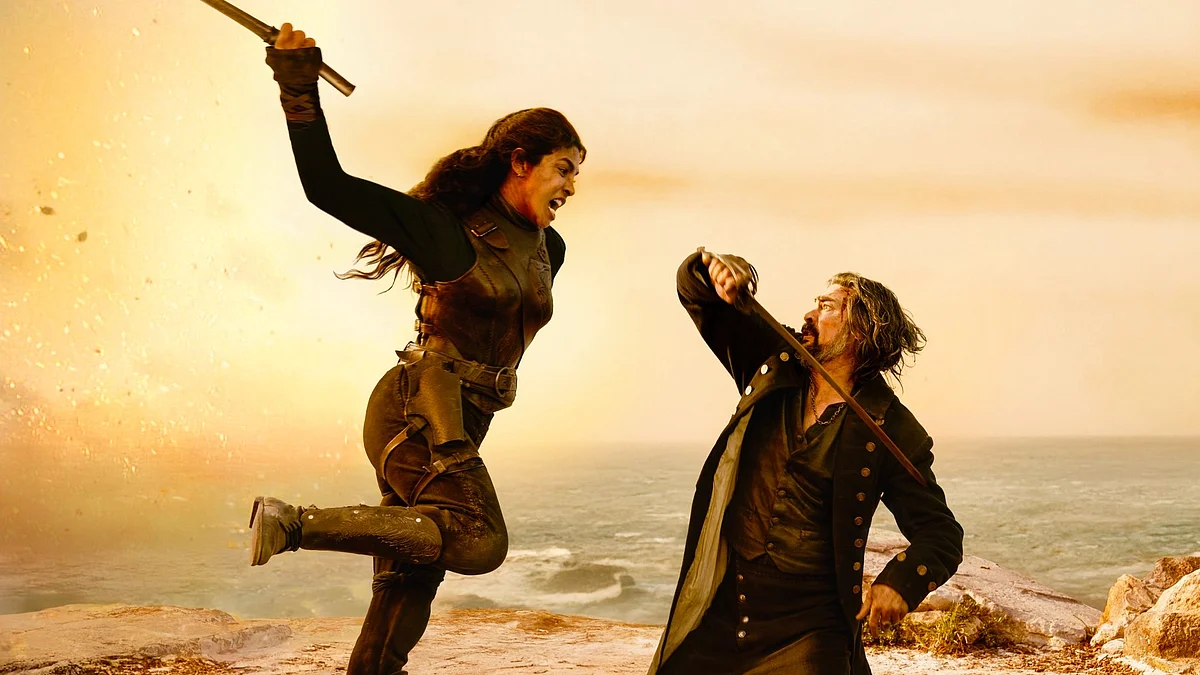
Those themes, she said, lie at the heart of her upcoming action film The Bluff, set during the age of colonial expansion and maritime conflict.
"My character's story — her parents and her family are indentured servants," Chopra said, describing a system that uprooted countless Indians during the 19th century.
After slavery was abolished across the British Empire, colonial authorities transported hundreds of thousands of Indians to plantations in the Caribbean, Africa and Southeast Asia. Many had been promised better opportunities and higher wages, only to find themselves bound to harsh labour in distant lands.
"They were told there would be new opportunities and more money," Chopra said. "But they were taken away as servants and dropped in different parts of the world."
Those journeys created large Indian-origin communities across the globe, particularly in the Caribbean — communities that remain culturally connected to India even as the memory of their origins has sometimes faded.
"The Caribbean has a huge Indian community whose history began with people being displaced from their lands and dropped somewhere else in the world," she said.
During a visit to the Cayman Islands, Chopra said she met many people who knew little about their ancestry. "I met so many people who don't know anything about their family tree beyond five generations," she said.
For her, that loss of historical memory carries deeper consequences. "That ambiguity in a person's history erases a part of you. It denies you the depth of your culture or where you come from."
India itself, Chopra observed, reflects centuries of migration, conquest and cultural exchange — forces that have created one of the most diverse societies in the world. "India has been invaded over thousands and thousands of years," she said, pointing to the many waves of political and cultural influence that have shaped the subcontinent.
The result is a diversity that often surprises outsiders. "The amount of diversity you will see, the range of people you will meet, is impossible to fathom."
Language alone reveals that complexity. India has dozens of major written and spoken languages, many with entirely different scripts and sounds. "If I go to another state, I might not even understand what people are saying," she said.
That linguistic variety also explains why India does not have a single film industry but many. International audiences often use 'Bollywood' as shorthand for Indian cinema, but the term refers only to the Hindi-language industry based in Mumbai.
Across the country, major film industries produce movies in languages such as Telugu, Tamil, Punjabi, Malayalam and Marathi. "Cumulatively, we make thousands and thousands of movies a year," Chopra said.
Her own journey across these industries — and eventually into Hollywood — has reflected both the opportunities and challenges faced by Indian actors abroad.
When Indian performers first began appearing regularly in English-language productions, she said, their roles were often shaped by narrow stereotypes. "Indian casting in English-language entertainment was usually seen as a diversity check," she said.
Characters frequently leaned on exaggerated cultural markers — heavy accents, convenience-store jobs or other familiar tropes. She recalled one audition in which she was told she needed to appear "more Indian". "What does that even mean?" she said.
At the same time, Chopra acknowledged that earlier actors who accepted such roles helped open doors for others. "Those were the actors whose shoulders I stand on, because that was all that was available."
In recent years, another life experience has influenced the way she approaches her work. Chopra said she filmed The Bluff shortly after becoming a mother, an experience that reshaped how she understood the character's motivations. "I was a new mom when I was filming this movie," she said.
The film centres on a mother determined to protect her child in a violent world — a theme that Chopra said resonated deeply with her own experience of parenthood. "If somebody came after my kid... what am I capable of?" she said. "I'd rip your head off."
At its core, she suggested, the story is about the universal instinct to protect family — a theme that resonates far beyond its historical setting.
Questions of identity, belonging and memory — shaped by centuries of migration and displacement — continue to influence how people navigate the modern world.
With IANS inputs
Join our official telegram channel (@nationalherald) and stay updated with the latest headlines