


Climate change, rising temperatures amplify gender inequality; put women's health at greater risk
Women and girls are disproportionately affected by climate change impacts, worsening existing inequalities and threatening livelihoods and health
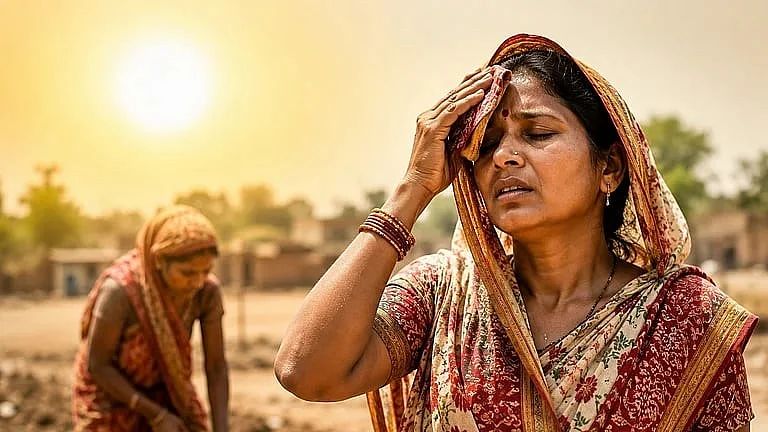


The World Meteorological Organisation (WMO) recently issued a warning that all previous records for extreme heat are likely to be shattered within the next five years. Between 2026 and 2030, the rate of temperature rise is expected to exceed 1.5 degrees Celsius annually; currently, the rise stands at 1.4 degrees Celsius, the UN agency said. This trend will lead to an increase in extreme temperature events, forest fires, droughts and reduced crop yields, alongside escalating health crises.
Until recently, temperatures in many Indian cities—including Delhi—consistently crossed the 40-degree Celsius mark, reaching as high as 46 degrees in several parts of the country. It is not just daytime temperatures; night-time minimum temperatures have also begun approaching 30 degrees. A group of scientists—World Weather Attribution—published a report stating that temperatures exceeding 40 degrees in most parts of India are no longer an anomaly. They have become the norm during the pre-monsoon season.
AQI, an organisation that tracks global weather and air pollution, described 27 April 2026, as an unprecedented day in modern times regarding urban temperatures: all of the world's 50 hottest cities on that day were in India. Most of these cities were in Uttar Pradesh, Madhya Pradesh, Maharashtra and Rajasthan. According to AQI, such a situation had never been witnessed in modern times. The average temperature across these 50 hottest cities was 44.7 degrees that day; the lowest temperature recorded was 41.9 degrees in Solapur, Maharashtra, while the highest was 46.2 degrees in Banda, Uttar Pradesh. This situation should have been declared a public health emergency across the country; however, the hardships faced by the general public rarely reach the corridors of power.
Traditionally, April is not the hottest month in India; however, climate change and rising temperatures have extended the pre-monsoon summer season and made it significantly hotter than before. According to AQI, if urgent measures are not taken to curb rising temperatures, the temperature in many Indian cities will exceed human tolerance limits by 2050. The average human body temperature is 37.5 degrees; any temperature exceeding this poses a public health emergency for the population.
Also Read: A towering inferno of bad policies
The Pan-European Commission on Climate and Health has urged the World Health Organisation (WHO) to declare climate change a global health emergency, similar to COVID-19. The WHO has already acknowledged climate change as a serious global health issue. Although climate change is neither a contagious disease nor one spread by vectors or biological agents, it is affecting the physical and mental health of the entire global population. The Pan-European Commission warns that without an urgent declaration of a health emergency, the premature death of millions of people annually is inevitable.
Rise in premature deaths
Climate change is a global crisis; it is driving an increase in vector-borne diseases, extreme temperatures are impacting health, agricultural productivity is suffering, and air pollution is escalating. All these factors are rapidly increasing the rate of premature deaths. Climate change is not "fake news"; its impact is now palpable to everyone. Its consequences—spanning health, the economy, food security, water resources, the environment, and safety—are not merely immediate but will have long-term repercussions. Addressing this requires a coordinated global plan, yet such a plan is currently lacking.
According to the Pan-European Commission, the time has also come to view the mental health impacts of climate change with the same urgency as a disaster. The ninth report in the Lancet Countdown series addresses the health impacts of climate change. It highlights how climate change and rising temperatures are driving up death tolls worldwide due to heat and extreme natural disasters; expanding the scope of malnutrition caused by food insecurity; exposing more people to polluted air from increasing wildfires; and widening the reach of various infectious diseases.
We are currently witnessing unprecedented health threats driven by climate change. Record-breaking heat, deadly natural disasters, and wildfires are affecting every corner of the globe. Forty-eight per cent of the world is grappling with severe drought, and many regions are experiencing extreme heat waves lasting more than 50 days. The ranks of the hungry have swelled by over 150 million people. Since 1990, the mortality rate among the population aged 65 and older due to extreme heat has risen by 167 per cent. Outbreaks of dengue, malaria and West Nile virus are affecting broader geographical areas and larger populations than before.
Daily effects on women
Researchers from the University of Melbourne, having conducted an extensive study across various countries in the Pacific, Asia, and Africa, have reported that extreme heat—which is increasing in both scope and intensity year by year—disproportionately affects women compared to men. This impact is driven not only by temperature itself but also by social factors. However, women also find ways to mitigate the effects of heat. This study was published in the open-access journal WIREs Climate Change on 14 April 2026.
Extreme heat is recognised as a serious health issue, causing approximately 500,000 premature deaths globally each year. Yet, discussions regarding these health impacts often overlook the specific daily effects on women or the proportion of women among those who die prematurely. While there is significant discussion about the total number of people affected or killed by extreme heat, the consequences extend beyond mere illness or death; extreme heat impacts overall physical and mental well-being.
Men and women experience extreme heat differently, a disparity determined by both temperature and socio-cultural factors. Regardless of rising temperatures, social norms often require women to wear more clothing throughout the day than men. Further, most women from poor and middle-class backgrounds traditionally manage the household and remain indoors. Many homes lack adequate ventilation or measures to protect against heat. A recent study revealed that indoor temperatures in such homes can actually exceed outdoor temperatures. Add to this the work in kitchens near cooking stoves. These and other factors cause women to experience heat more intensely than men and expose them to mental distress. These conditions do not merely cause illness; they also compromise fundamental aspects of physical health.
Women from impoverished backgrounds who work outside the home are often compelled to work in open, exposed environments. Another issue is that most common and open workplaces lack toilet facilities, or the existing toilets are so filthy that no one wants to use them. In such situations, working women drink less water than necessary and consequently suffer from dehydration during periods of extreme heat. Women become weak and lethargic, which also impacts their ability to manage household chores. Conditions are even worse for pregnant women. Numerous studies indicate that the incidence of domestic violence against women rises during periods of extreme heat.
A fundamental trait of women is their ability to find solutions to problems on their own; they do not wait for government schemes or external assistance. In Ahmedabad, many women from low- and middle-income families have painted their rooftops and walls exposed to direct sunlight white. This increases the reflection of solar rays, reduces heat absorption, and consequently lowers the indoor temperature. Additionally, spreading coconut coir and leaves on rooftops helps reduce the temperature. In Bangladesh, a campaign is underway to ensure that at least one room in every house is well-ventilated and shaded. In Jakarta, Indonesia, women have created community spaces by developing areas with dense shade and open surroundings; these spaces not only offer protection from the heat but also foster social interaction. Government policies aimed at mitigating the impact of extreme heat also need to specifically address issues affecting women.
Despite overwhelming evidence and escalating impacts, the world remains far from serious about curbing climate change and rising temperatures. The problem has become increasingly severe since the rise of capitalism and hardline right-wing factions to power.
Join our official telegram channel (@nationalherald) and stay updated with the latest headlines