


Climate change, Super El Niño threaten Nilgiris tea plantations: Study
Rising temperatures, erratic rainfall and more frequent extreme weather events are disrupting tea yields, quality and bush health
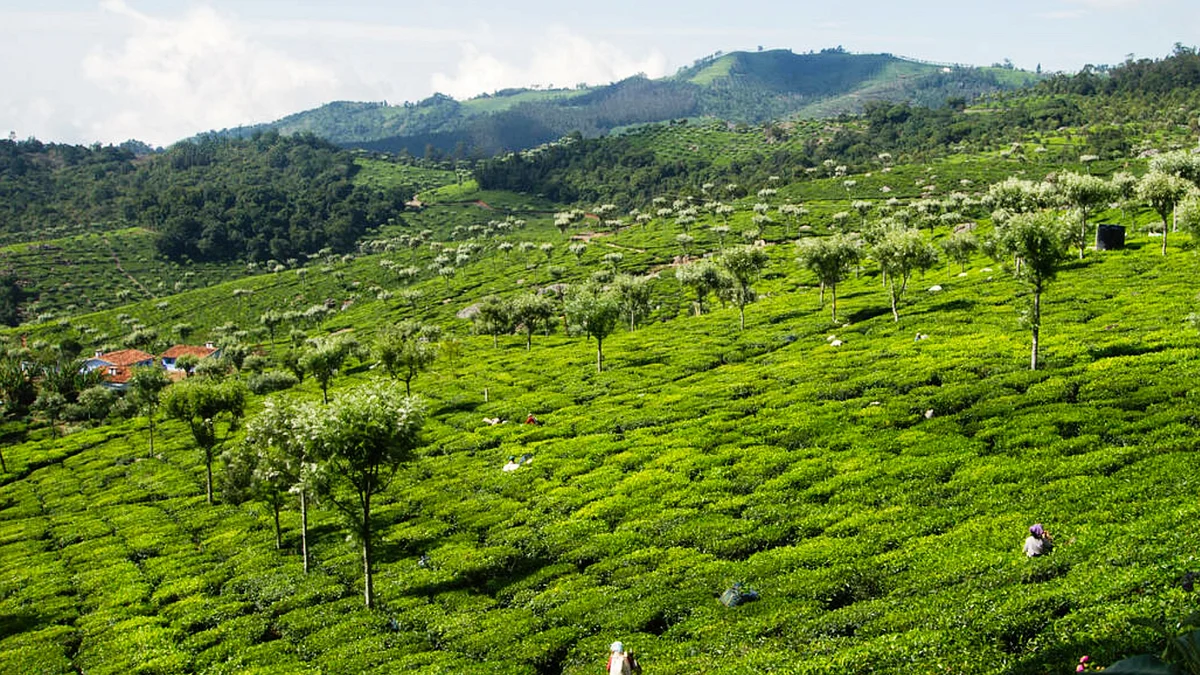


Tea plantations in Tamil Nadu's Nilgiris district are facing mounting challenges from rising temperatures, erratic weather patterns and the looming threat of Super El Niño, according to a study by the UPASI Tea Research Foundation.
The report warns that climate change is altering rainfall patterns and increasing the frequency of extreme weather events, with direct consequences for tea production in one of south India's most important tea-growing regions.
"South Indian tea tracts, particularly the Nilgiris region, are not governed by the quantum of total annual rainfall but by its temporal distribution," said P. Murugesan, advisory officer at the UPASI Tea Research Foundation's regional centre in Coonoor.
He noted that even where annual rainfall remains broadly unchanged, more frequent dry spells interspersed with short-duration, high-intensity rainfall events can create significant moisture deficits for tea cultivation.
Tea (Camellia sinensis) is particularly sensitive to environmental changes, with temperature, soil moisture, humidity and sunlight playing a critical role in determining shoot growth and leaf quality. Because tea bushes are harvested continuously for young shoots, even small climatic shifts can affect shoot development, internodal length, harvesting schedules, yields and long-term bush health.
Also Read: Pilgrimage in the time of climate change
Murugesan's paper, titled 'Super El Niño: Mitigation and Adaptation Strategies for The Nilgiris', said long-term observatory data show the region has witnessed an average temperature rise of about 0.5°C, a higher frequency of dry days, more intense rainfall events, and a wider geographical spread of frost and hailstorm damage.
"Because tea shoots are harvested continuously, these volatile conditions directly affect internodal length, shoot development, and harvesting schedules, ultimately threatening long-term bush health and crop yields," he said.
The report attributes these changes to anthropogenic climate change, which has intensified pressures on plantation ecosystems through rising average temperatures, irregular rainfall, prolonged dry spells, frost, hailstorms, high-intensity rainfall and shifting pest and disease patterns.
To help tea growers cope with increasingly volatile weather, the study recommends a series of adaptation measures, including strategic shade management using trees such as Gliricidia sepium to regulate microclimates, improved soil and water conservation, and customised crop care practices to enhance drought resistance and reduce physiological stress on tea bushes.
Estate managers and smallholders have been urged to adopt these interventions early to improve resilience against future climate shocks.
The report also recommends diversifying planting material, avoiding large-scale monoclonal cultivation, aligning pruning schedules with local wind, frost and drought conditions, strengthening surveillance for pests and diseases such as red spider mite, blister blight and grey blight, and protecting young tea plants through shade, mulching and irrigation.
The Nilgiris plateau supports tea cultivation between elevations of about 1,125 and 2,400 m, with nearly 70 per cent of plantations located between 1,500 and 2,000 m. The district typically receives 900-1,500 mm of annual rainfall, although rainfall patterns vary across regions, with Ooty and Kundah largely dependent on the south-west monsoon, while Coonoor, Kotagiri and Kullakamby receive most of their rainfall from the north-east monsoon.
Murugesan said the guiding principle for tea cultivation under Super El Niño conditions should be to prioritise the long-term health of tea bushes over short-term yields.
"Protect the bush before protecting the crop. Short-term crop extraction under severe climatic stress compromises bush vigour and future productivity. Resilient tea management therefore requires the integration of science-based early warning, field-specific adaptation, disciplined cultural practice and sustained ecological investment," he said.
With PTI inputs
Join our official telegram channel (@nationalherald) and stay updated with the latest headlines