


COP31 deadlock renews calls to reform UN climate summit decision-making
Climate experts say consensus-based system allows a handful of countries to block progress
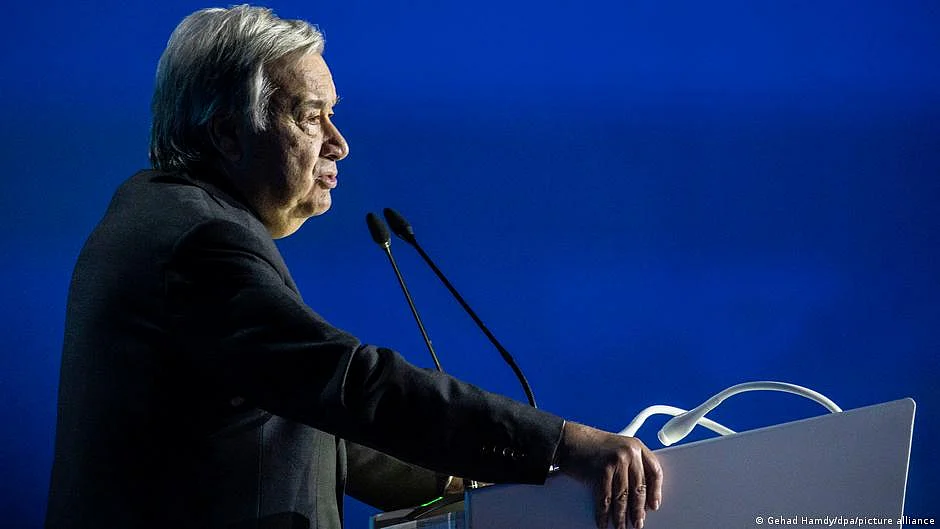


The failure of COP31 to reach a landmark agreement has renewed calls for reforms in the way the United Nations climate summits make decisions, with international climate diplomacy experts and scientists questioning whether the consensus-based system can deliver urgent climate action.
The talks in Antalya, co-chaired by Turkey and Australia, were expected to produce a sweeping agreement that would have strengthened calls for global climate action and support for countries vulnerable to the climate crisis.
However, the proposed "Antalya Pact" collapsed at the final plenary session after countries failed to reach a consensus on the final draft. Several nations objected to the text, arguing that it did not reflect the urgency of the climate crisis and failed to even mention "fossil fuels", an omission criticised as a concession to oil-producing countries.
Former US vice-president and climate activist Al Gore described the failure as an outrage and called for significant reforms to the COP process.
"World leaders no longer want to settle for the lowest common denominator. They want real action to implement and finance a just transition away from fossil fuels. It has been clear for years that the Cop process is in need of significant reform," he said.
Gore said most countries had attended the summit in good faith and sought progress, adding that the multilateral process needed to be strengthened to reflect the latest scientific findings and the will of the majority.
Australian climate minister Chris Bowen, who co-chaired COP31, also questioned the consensus-based decision-making system.
"The fundamental root problem is that when Cops were created, for reasons I understand, it was made consensus only. That's a very tough ask when you also need consensus to change consensus, which is a particular challenge," he said.
Bowen said an attempt had been made during COP31 to introduce reforms to make the process more efficient.
The UN's chief climate negotiator, Simon Stiell, defended consensus-based decision-making, pointing to the 2015 Paris Agreement as an example of its success. He said the agreement had helped lower projections of global warming by the end of the century from almost 5 degrees Celsius to 2.6 degrees Celsius.
However, as the talks concluded, Stiell acknowledged that the system had fallen short in Antalya. He said he was advocating a review process under the UN climate convention to seek external advice on "areas of potential reform".
Johan Rockström, director of the Potsdam Institute for Climate Impact Research, said COP summits needed to move away from negotiating commitments that were not implemented and focus instead on accountability and delivery.
Tobias Holle, co-founder of the NGO group Shifting Advocacy, said COP31 and previous failures showed that the process was no longer fit for purpose.
"Despite the political will of the many, the few blocking the progress end up winning in a process whose rules and decision-making structures repeatedly allow the lowest common denominator to dictate the level of ambition. We need a structural reform that delivers on climate justice," he said.
During the negotiations, Panama issued an open letter to the COP co-chairs outlining issues on which it would not compromise. These included opening a pathway to replace consensus-based decision-making with voting by a simple majority.
Matt McDonald, a professor of international relations at the University of Queensland who attended the talks, said the legacy of COP31 could be a recognition of the limitations of consensus-driven climate negotiations and the emergence of alternative platforms for climate action.
He said the global political landscape had changed since the Paris Agreement was reached in 2015, raising questions about the future of consensus-based multilateralism.
COP31 continued beyond its scheduled conclusion on Friday evening, finally ending late on Sunday, making it the longest climate summit so far.
Countries including members of the European Union, Panama, Belize, Vanuatu, the UK, the Marshall Islands and Norway formally objected to the final text, preventing its adoption. Some observers, however, viewed the refusal to accept the draft as a necessary stand against an inadequate agreement. Former UN climate chief Christiana Figueres described it as a "sign of courage".
China, India and several developing countries did not formally object to the text but later expressed disappointment over the failure to reach an agreement.
The Ghana delegation, which had accepted the text, told the plenary: "Africa has always chosen to build multilateralism rather than walk away from it."
Indu K Murthy, principal research scientist at India's Centre for Study of Science, Technology and Policy, said the COP process remained essential despite its shortcomings.
"Consensus and multilateralism still matter, perhaps more than ever," she said, arguing that majority voting could produce decisions but could not compel countries to reduce emissions.
She cautioned that countries repeatedly outvoted could walk away from the process, adding that the priority should be faster implementation and accountability rather than a dispute over voting rules that would itself require consensus to change.
Join our official telegram channel (@nationalherald) and stay updated with the latest headlines