


Environmental CSR spending rises but remains just 8.4 pc in FY24: Report
Climate-vulnerable districts and high-polluting sectors continue to receive limited attention despite growing environmental challenges
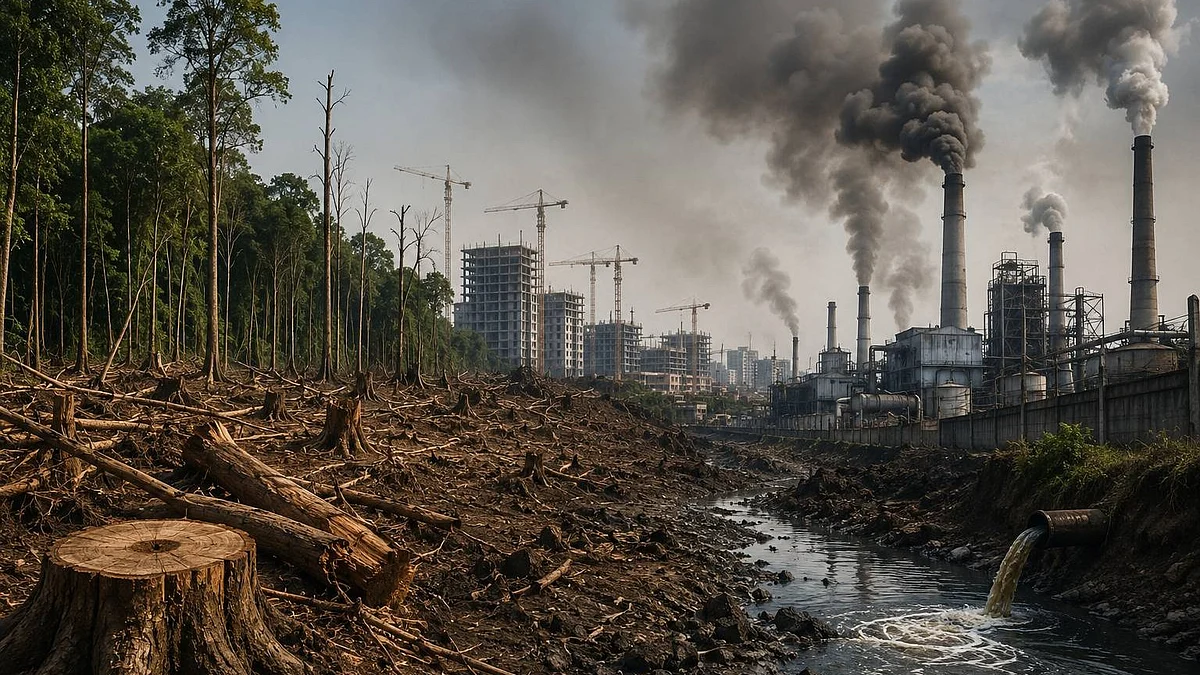


Corporate spending on environmental corporate social responsibility (CSR) has increased steadily over the past decade but still accounted for only 8.4 per cent of total CSR expenditure in the financial year 2023-24, highlighting a significant gap between corporate sustainability commitments and environmental investment, according to a report released on Monday.
The report, A Decade of Green Spending: What Rs 17000 Crores of Environmental CSR Reveals About Corporate India, released by global impact consulting firm Sattva Consulting, analysed environmental CSR trends over the last 10 years. It found that while companies have collectively spent around Rs 17000 crore on environmental initiatives during the period, such spending remains a small share of their overall CSR outlay.
The report also pointed to a mismatch between environmental need and CSR allocation. Among India's 50 most climate-vulnerable districts, 30 received only 1 per cent of total environmental CSR spending over the past three years, amounting to just Rs 106 crore.
According to the analysis, sectors with some of the country's largest environmental footprints continue to devote a relatively small proportion of their CSR budgets to environmental programmes.
"Sectors with high pollution intensity, including oil, gas, coal and petroleum, mining, and energy, allocate only 5-7 per cent of their CSR budgets to environmental initiatives," the report said.
In comparison, consumer-facing sectors such as fast-moving consumer goods (FMCG) and automotive allocate more than 10-15 per cent of their CSR budgets to environmental themes.
The report also examined the distribution of funding across major environmental sectors. It found that among high-value environmental CSR projects worth Rs 50 lakh and above in FY 2023-24, water management attracted the largest share at 15 per cent, followed by renewable energy at 12 per cent and biodiversity conservation at 11 per cent. Together, these three areas accounted for 38 per cent of all high-value environmental project funding during the year.
However, air quality received only Rs 14 crore, or around 5 per cent of the high-value project funding pool, despite air pollution remaining one of India's most pressing environmental and public health challenges.
Commenting on the findings, Srikrishna Sridhar Murthy, co-founder and CEO of Sattva Consulting, said India's climate ambitions would require every form of capital to be deployed more strategically.
"As climate risks increasingly affect business operations, supply chains and communities, environmental CSR has the potential to become a more catalytic source of capital by complementing public investment and unlocking broader climate action," he said.
Join our official telegram channel (@nationalherald) and stay updated with the latest headlines