


Explained: Why 100-metre rule for Aravallis poses threat to Delhi-NCR
Experts warn new height-based definition may erase most Aravalli formations, weaken legal protection and accelerate desertification
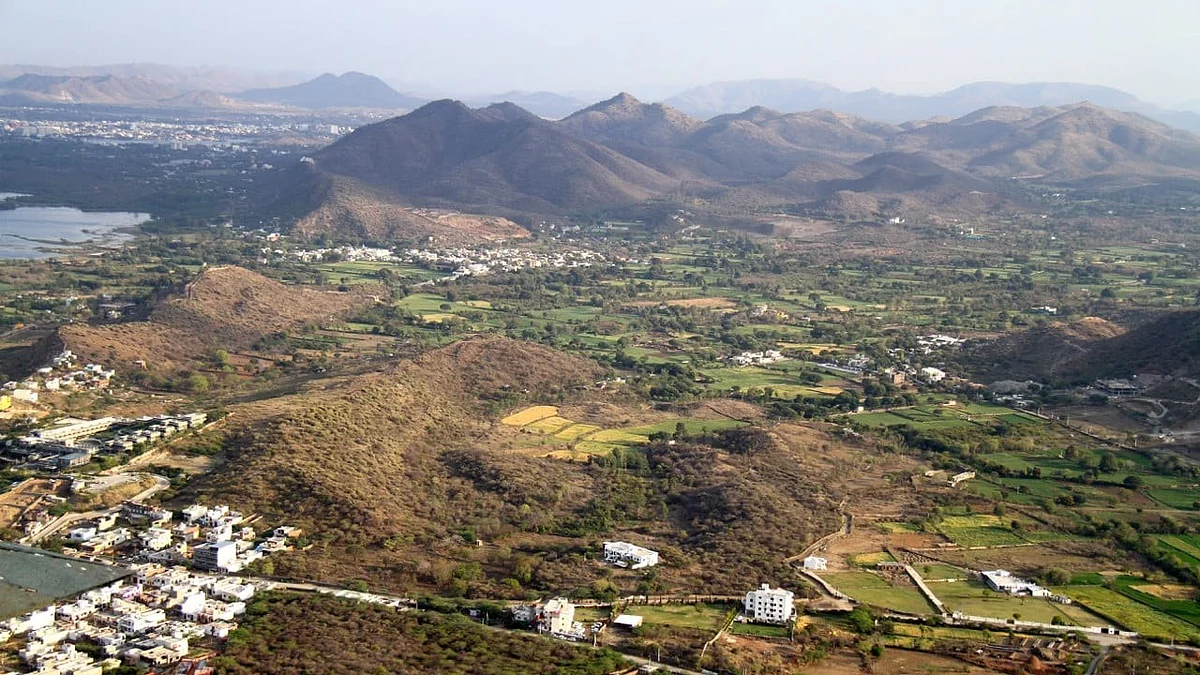


In the ongoing winter session of Parliament, Congress MP Ajay Maken’s warning in the Rajya Sabha on Monday has renewed debate over the recently accepted 100-metre criterion for classifying the Aravalli hills.
The Supreme Court, while imposing an interim ban on new mining leases in November, accepted a uniform definition of 'Aravalli Hill' as a landform rising 100 metres or more above its local relief.
Maken argues that if adopted broadly, this definition could exclude 99 per cent of the Aravallis in Rajasthan — leaving them outside regulatory protection.
Environmental scientists agree that the Aravallis are not just hills but a critical climate barrier, a groundwater recharge system, and one of India’s oldest ecological shields. Narrowing the legal definition, they say, risks weakening protection for the very formations that keep the Thar desert from pushing eastwards.
What the new 100-metre definition changes
Under the uniform criteria accepted by the Supreme Court:
Aravali Hill = Any natural feature in designated districts rising 100 metres above local average relief
Aravali Range = Group of two or more such hills within a 500-metre radius
While this simplifies enforcement for regulatory agencies, it also removes protection from thousands of low-elevation ridges, knolls and rocky outcrops that form the true physiographic system of the Aravallis — many of which are below 100 metres but ecologically indispensable.
Why this matters
The Aravallis are highly eroded, ancient fold mountains; their modern-day forms are subtle, low-lying and broken. Their ecological function does not depend on height.
If the law recognises only taller outcrops, the majority of the ecosystem becomes legally invisible — potentially paving the way for:
Mining
Construction of highways, real estate and industrial zones
Quarrying and levelling of smaller ridges
This is the core of the climate risk.
How the 100-metre criterion threatens groundwater security
The Aravallis act as massive natural aquifers. Their fractured quartzite and schist formations allow rainwater to percolate deep into underground reservoirs.
Maken noted the range allows 20 lakh litres per hectare per year of groundwater recharge.
Cities like Gurugram and Faridabad depend almost entirely on Aravalli aquifers.
If low ridges — which serve as entry points for groundwater percolation — lose protection and are quarried or flattened, recharge will fall sharply. North India is already among the world’s fastest depleting groundwater zones. Weakening the Aravallis will speed up:
Falling water tables
Drying of shallow village wells
Increased dependence on over-extracted deep borewells
Rising water scarcity in NCR
A weakened Aravalli system accelerates desertification
The Aravallis form a 2,500-km ecological barrier that disrupts hot, dust-laden winds blowing from the Thar desert into NCR and the Gangetic plains. Scientific studies show the range reduces:
Dust loads
Temperature spikes
Wind speeds carrying sand eastward
If 99% of formations lose protection and are mined, blasted or levelled:
The desertification front will move east
NCR and adjoining states could face higher particulate pollution, particularly PM10
Agricultural lands in Haryana and western UP may lose soil fertility due to dust deposition
This risk is amplified by the rising frequency of heatwaves and dry spells linked to climate change.
The Aravalli system hosts leopards, hyenas, foxes, porcupines, nilgai and hundreds of bird species. Much of this wildlife uses low-elevation corridors to move across fragmented patches.
Under the 100-metre rule, these corridors will not qualify as “hills”. If opened to mining or construction, the range will be carved into isolated ecological islands, leading to:
Reduced genetic diversity
Higher human–wildlife conflict
Local extinctions in pockets of the NCR Aravallis
Why the definition matters legally
Illegal mining in the Aravallis has been a long-standing issue, especially in Haryana and Rajasthan. A narrow legal definition could create loopholes:
Mining companies may argue that clusters under 100 metres are not Aravallis
Forest clearances may be easier to obtain
Land-use change for real estate becomes simpler
While the Supreme Court has banned fresh mining leases until expert reports are submitted, environmentalists say the long-term legal framework must be robust enough to prevent dilution.
Lessons from the Himalayas
The discussion in Parliament also saw Congress MP Ranjeet Ranjan raise concerns about cedar tree felling in Uttarakhand and indiscriminate mountain-cutting for the Char Dham road. Her warning — that such interventions trigger landslides and destabilise fragile terrains — echoes fears for the Aravallis: once geological integrity is compromised, the damage is irreversible.
Like the Himalayas, the Aravallis cannot be rebuilt once quarried away.
Environment researchers, hydrologists and geologists argue that the definition should be based on geological continuity, not height. A ridge rising even 10–30 metres can be an active aquifer and a climate-buffering landform.
The core risks of adopting the 100-metre rule are:
Loss of groundwater recharge in NCR
Faster eastward march of desertification
Increased pollution and heat stress
Fragmentation of wildlife habitats
Legal weakening of mining protections
Irreversible geological destruction of a 2.5-billion-year-old mountain system
As Maken told the House, withdrawing the criterion could prevent “northern and northwestern India from becoming a dust bowl.”
Join our official telegram channel (@nationalherald) and stay updated with the latest headlines