


Indonesia floods push world’s rarest orangutan closer to extinction
Scientists warn Sumatra deluge may have wiped out up to 10% of remaining Tapanuli population in days
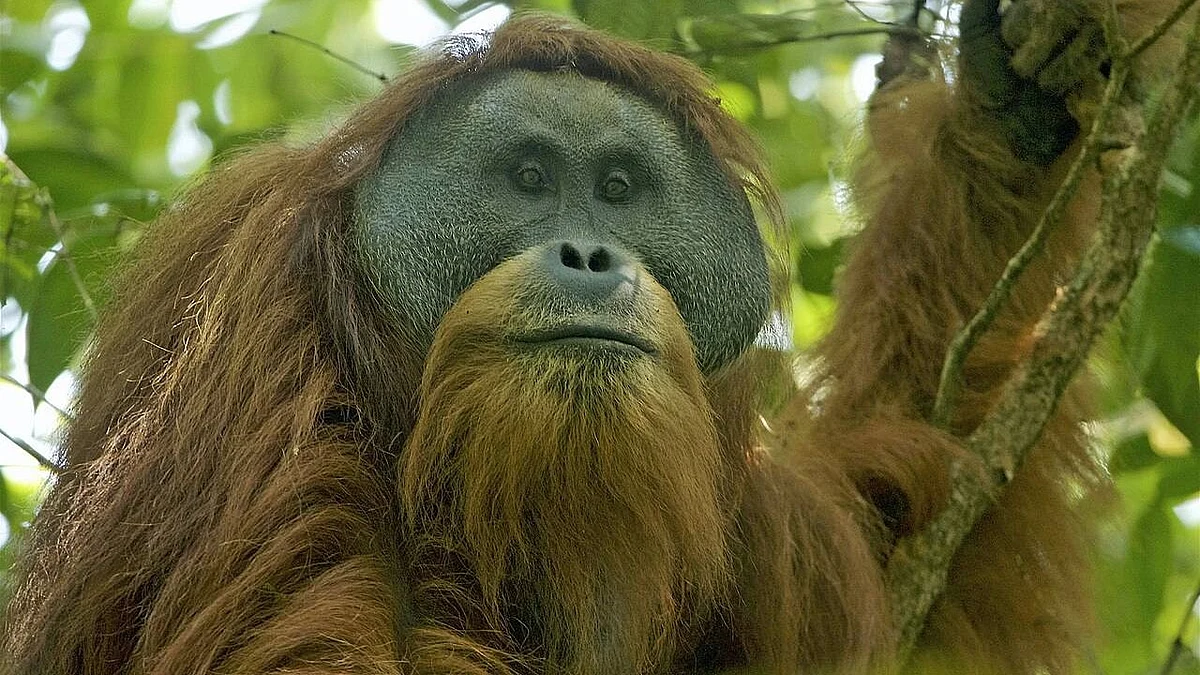


Catastrophic flooding in Indonesia’s North Sumatra province has dealt a severe blow to the world’s rarest great ape, with scientists warning that the event may have pushed the critically endangered Tapanuli orangutan closer to extinction.
Researchers estimate that between 33 and 54 Tapanuli orangutans (Pongo tapanuliensis) were killed in floods and landslides triggered by intense rainfall in late November. Fewer than 800 individuals were believed to exist in the wild before the disaster, all confined to a single forest landscape in the Batang Toru region.
Experts told The Guardian that the event has caused an “extinction-level disturbance”, citing both the scale of habitat destruction and the species’ extremely low reproductive rate.
Rare species, concentrated risk
The Tapanuli orangutan was only identified as a distinct species in 2017 and is already under pressure from mining, palm oil plantations and a large hydropower project. Unlike other orangutan species, its entire population is restricted to a limited mountainous area, leaving it highly vulnerable to sudden environmental shocks.
“It’s a total disaster,” said biological anthropologist Erik Meijaard, one of the scientists who first described the species. “The path to extinction is now a lot steeper.”
Preliminary findings by Meijaard and his colleagues, to be published this week, estimate that the floods and landslides wiped out 6.2 per cent to 10.5 per cent of the total population in just a few days — a demographic shock with few modern parallels among great apes.
Scale of destruction
According to satellite analysis conducted after the floods:
Nearly 4,000 hectares of previously intact forest were swept away by landslides and flooding.
An additional 2,500 hectares are believed to have been affected but could not be fully assessed due to cloud cover.
Large scars, some stretching over a kilometre and nearly 100 metres wide, cut through the mountainous terrain, indicating massive earth movement.
Remote-sensing expert David Gaveau, founder of conservation group Tree Map, said the damage was unprecedented in his two decades of monitoring deforestation in Indonesia. “I have never seen anything like this before,” he said.
The torrents of mud, trees and water are believed to have carried away not only orangutans but also other wildlife, including elephants.
Images reviewed by conservation groups showed the skull of a Tapanuli orangutan recovered from a mud pit in Central Tapanuli. Panut Hadisiswoyo, founding director of the Orangutan Information Centre, said a rescue team searching for human casualties had come across the remains.
“After seeing the photos, I am confident that the decayed body, reddish hair and the size of the skull was a Tapanuli orangutan,” he said.
Hadisiswoyo added that the forest had become “eerily quiet” after the landslides, reflecting the sudden loss of wildlife.
Climate and human factors
Scientists said more than 1,000 mm of rain fell over just four days in the region. A rapid analysis by World Weather Attribution found that climate change likely increased rainfall intensity by 28 per cent to 160 per cent.
However, researchers and officials stressed that deforestation and land degradation had also worsened the impact. Habitat fragmentation reduces the forest’s ability to absorb heavy rainfall, increasing the risk of landslides and flash floods.
Biologists warn that even a one per cent annual decline in the Tapanuli population could eventually lead to extinction, as the species reproduces only once every six to nine years.
In response to the disaster, Indonesia’s environment ministry has ordered a halt to all private-sector activity in the Batang Toru area for an unspecified period. Conservationists have urged:
An immediate suspension of all habitat-damaging development in the remaining Tapanuli range.
A comprehensive survey to assess surviving populations and habitat conditions.
Expansion of protected areas and restoration of degraded lowland forests.
“This fragile and sensitive habitat must be fully protected,” Hadisiswoyo said, warning that any further loss could be irreversible for the species.
Join our official telegram channel (@nationalherald) and stay updated with the latest headlines