


Adani sponsorship at London Science Museum faces protest over Great Nicobar
Survival International-led protest warns Adani's proposed port could threaten the Shompen, as genocide scholars and UN raise concerns
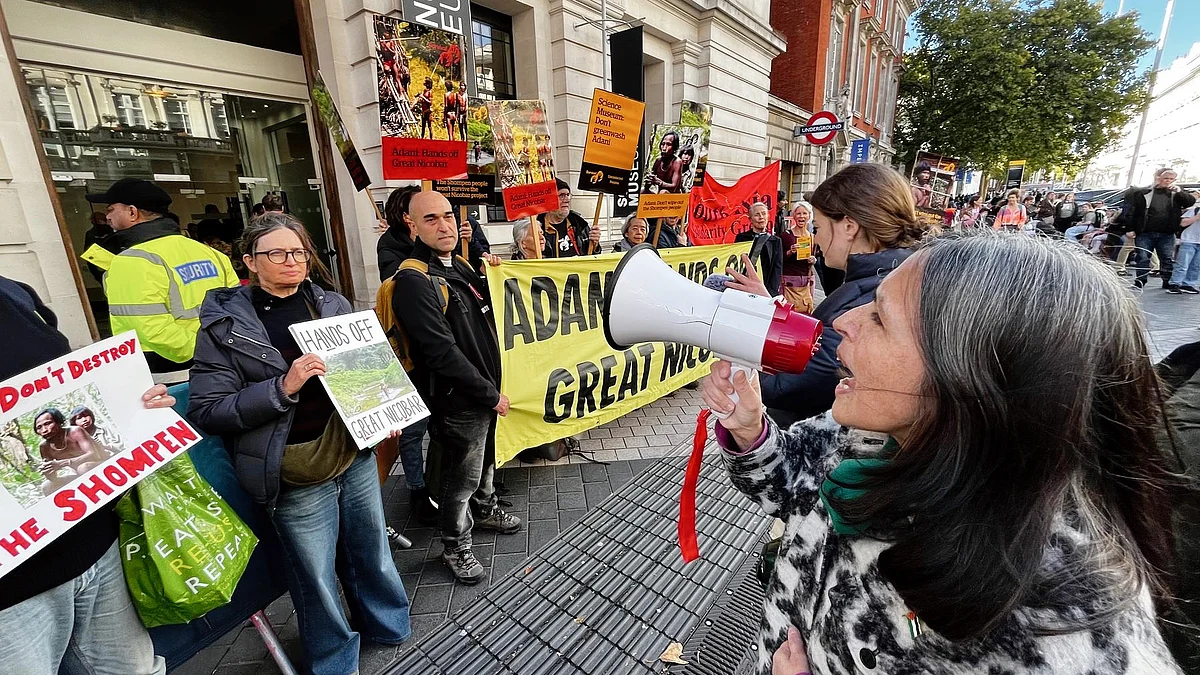


Survival International and solidarity groups protest outside London's Science Museum, demanding an end to its Adani Group sponsorship.
Campaigners cite 2024 warning by 39 genocide scholars that the Great Nicobar project could threaten the survival of the Shompen people.
Adani has registered interest in developing proposed mega-port but has not been awarded the contract.
Protesters gathered outside London's Science Museum on Tuesday, 27 October, demanding that it end its sponsorship ties with the Adani Group over the conglomerate's interest in the proposed Great Nicobar mega-project, which campaigners warn could threaten the survival of the Indigenous Shompen people.
The demonstration was organised by Survival International and joined by solidarity and environmental groups, including South Asia Solidarity Group, Hindus for Human Rights, India Labour Solidarity, London Mining Network and Money Rebellion.
Protesters targeted the museum's association with the conglomerate, with demonstrators chanting slogans against Adani Group founder and chairman Gautam Adani and the museum's director, Sir Ian Blatchford.
The protest came four years after India's ministry of environment, forest and climate change granted stage 1 forest clearance to the Great Nicobar project. It also marked five years of Adani's sponsorship of the museum, according to Survival International.
Campaigners accused the museum of helping protect the conglomerate's reputation through its sponsorship, despite concerns over the environmental and human rights implications of the proposed development.
Genocide scholars warn of threat to Shompen
The demonstration brought renewed attention to a warning issued in February 2024 by 39 genocide scholars, who said the proposed development could be a 'death sentence for the Shompen, tantamount to the international crime of genocide'.
The scholars warned that the project could destroy the Shompen's island home and expose the largely uncontacted community to outside diseases, potentially triggering a catastrophic population decline.
The Shompen are nomadic hunter-gatherers who have lived on Great Nicobar Island for thousands of years. Survival International estimates their population at around 300, most of whom remain uncontacted.
The organisation said the island's rainforest and river systems are essential to the community's survival, while the proposed development could lead to extensive destruction of its natural habitat.
Survival International executive director Caroline Pearce said the project posed an existential threat to the Shompen. "The world has been warned. If the Great Nicobar project goes ahead, we will witness the genocide of the Shompen and the devastation of their island," she said.
Pearce accused the Science Museum of helping the conglomerate improve its public image through sponsorship and urged it to end the association. "We urge the Science Museum not to be part of Adani's PR strategies — choose the Shompen not sponsorship," she said.
Adani's interest in proposed mega-port
The Great Nicobar project is a proposed large-scale infrastructure development on the southernmost island of the Andaman and Nicobar archipelago. The Indian government has described the project as strategically important, citing Great Nicobar's proximity to major international shipping routes and its potential to strengthen India's maritime presence.
The project includes a proposed international container transshipment terminal, a greenfield international airport, a power plant and a new township. The government has also outlined plans for military infrastructure and an industrial park.
Survival International has described the proposed transformation as an attempt to turn the island into the 'Hong Kong of India', warning that the scale of development could have devastating consequences for Indigenous communities and the island's ecology.
The Congress has consistently opposed the Great Nicobar project, describing it as an 'environmental and humanitarian disaster' and calling for an independent, impartial review of the proposed development. Congress MP and former Union environment minister Jairam Ramesh has repeatedly raised concerns over the diversion of forest land, the destruction of coral reefs and leatherback turtle nesting sites, and alleged violations of safeguards meant to protect Indigenous communities.
In May this year, following Lok Sabha Leader of Opposition Rahul Gandhi's visit to the island, the Congress renewed its demand for a debate in Parliament, arguing that the government's claims about the project's strategic importance could not be used to sidestep environmental and tribal rights concerns.
The Adani Group has formally registered its interest in developing the proposed mega-port and is among the entities seeking to participate in the project. However, the conglomerate has not been awarded the contract.
Campaigners have criticised the proposed development, alleging that it could result in extensive forest clearance, destruction of habitats and disruption of the traditional resources on which the Shompen depend.
Survival International estimates that the project could involve the felling of around 10 million trees.
UN raises concerns over Indigenous rights
The protest comes amid mounting international scrutiny of the Great Nicobar project. In August, the UN Committee on the Elimination of Racial Discrimination called on India to suspend the implementation of projects on the Great Nicobar and Andaman Islands until a comprehensive and independent assessment of their environmental, economic, social, cultural and spiritual impact had been completed.
The committee raised concerns over the potential impact on Indigenous communities, particularly those living in voluntary isolation.
According to Survival International, the Indian government acknowledged in its response that the Shompen could not be consulted directly because they remain uncontacted, making it impossible to obtain their free, prior and informed consent.
The issue has also reached the courts. In October, the Supreme Court declined to interfere with proceedings before the Calcutta High Court concerning alleged violations of the Forest Rights Act in the process of obtaining consent for the Great Nicobar project. The high court is scheduled to hear the matter on 25 and 26 November.
Join our official telegram channel (@nationalherald) and stay updated with the latest headlines