


NGT issues notice over deteriorating condition of Bihar's Kanwar Lake
Tribunal seeks replies from Centre, Bihar government and other authorities over ecological degradation of Asia's largest oxbow lake and Ramsar wetland
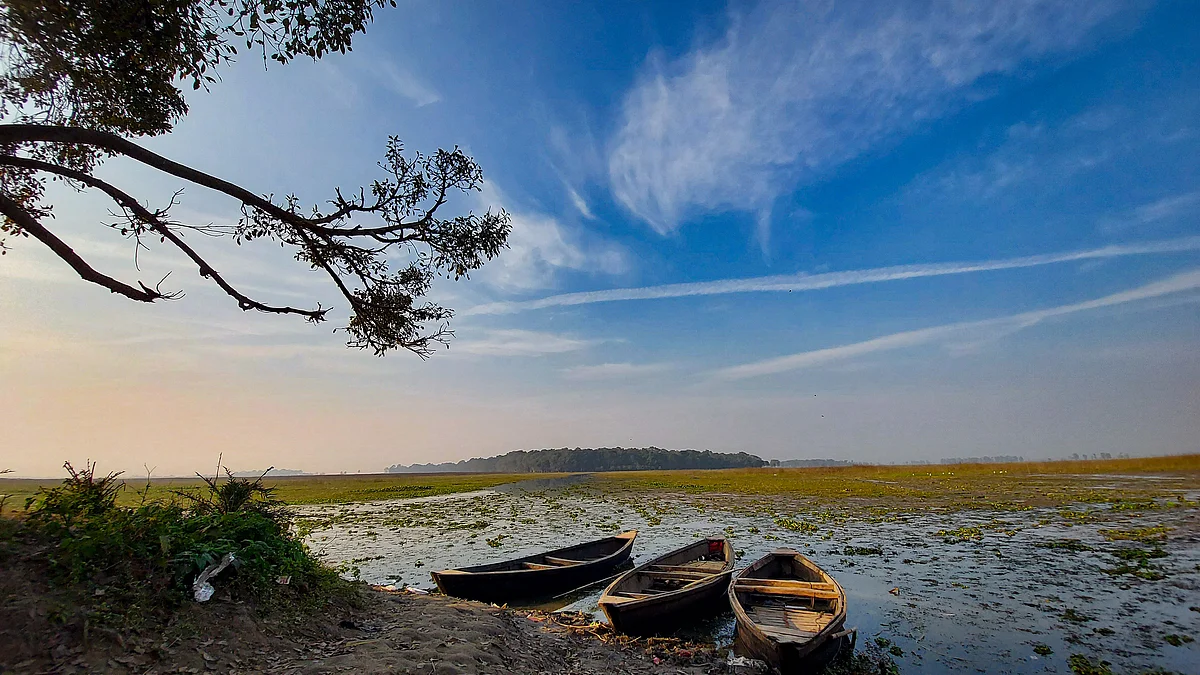


The National Green Tribunal (NGT) has sought responses from the Centre, the Bihar government and other authorities over the deteriorating ecological condition of Kanwar Lake, Asia's largest oxbow lake and a Ramsar wetland in Begusarai district.
Taking suo motu cognisance of a media report, the tribunal said the matter raised substantial issues relating to compliance with environmental laws and directed the respondents to file their replies before its Eastern Zonal Bench in Kolkata ahead of the next hearing on 31 August.
An oxbow lake is a U-shaped waterbody formed when a meandering river changes course, cutting off one of its bends from the main channel.
In its order, a bench comprising NGT Chairperson Justice Prakash Shrivastava and expert member Afroz Ahmad noted that Kanwar Lake, located at Cheriya Bariyarpur about 20 km from Begusarai, was designated a Ramsar Site in 2020 and has historically supported the livelihoods of local fishing communities while serving as an important habitat for migratory birds and aquatic biodiversity.
Referring to the media report, the tribunal said the lake has witnessed a sharp decline in fish populations and biodiversity owing to shrinking water spread, ecological degradation and encroachment. Several native fish species have reportedly declined or disappeared from parts of the wetland.
The bench observed that the lake, which once spread across nearly 63 sq km, has gradually fragmented into smaller water bodies because of falling water levels, siltation and encroachments.
The tribunal noted that Kanwar Lake was formed by the meandering of the Burhi Gandak River and represents a unique oxbow wetland ecosystem of international ecological importance.
As a Ramsar Site, it is entitled to protection of its ecological character and sustainable management under India's international commitments.
The NGT also took note of recommendations highlighted in the media report, including reconnecting the lake with the Burhi Gandak River, scientifically delineating and mapping the wetland boundary, removing encroachments and ensuring adequate monsoon recharge and groundwater seepage for its long-term survival.
It observed that the matter attracted provisions of the Environment (Protection) Act 1986, the Biological Diversity Act 2002 and the Water (Prevention and Control of Pollution) Act 1974.
The tribunal issued notices to the Union Ministry of Environment, Forest and Climate Change, the Bihar government through its chief secretary, the Central Pollution Control Board, the National Biodiversity Authority, the Principal Chief Conservator of Forests and Head of Forest Force, Bihar, the Bihar State Pollution Control Board and other authorities, directing them to file affidavits before the next hearing.
Join our official telegram channel (@nationalherald) and stay updated with the latest headlines