


After US sinks Iranian frigate, Sri Lanka aids crew of second warship near its waters
Dozens rescued and injured treated as Colombo steps in to safeguard sailors amid widening conflict; IRINS Bushehr is currently near Sri Lanka’s maritime border
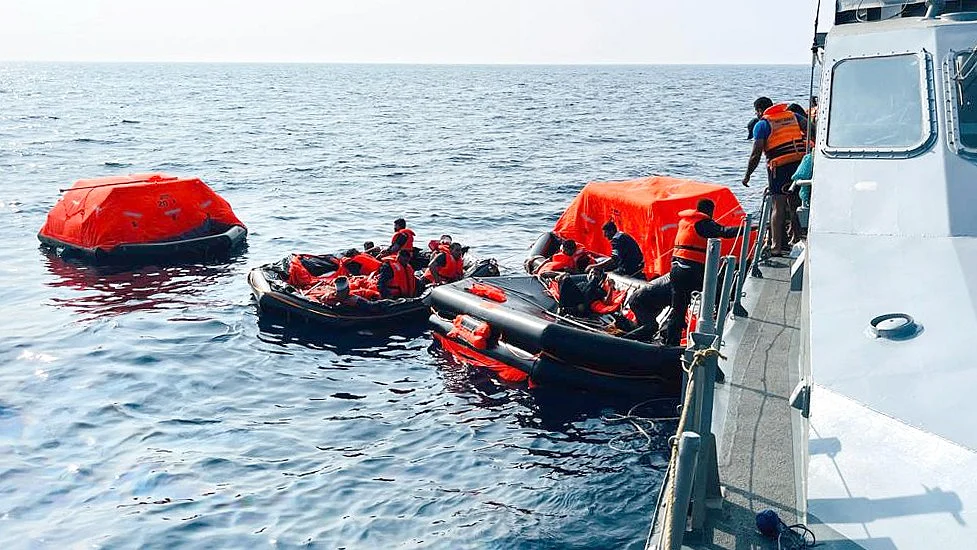


Sri Lanka has stepped in to assist a second Iranian naval vessel and shelter hundreds of sailors off its coast after a United States submarine sank an Iranian frigate in nearby international waters, even as India, whose navy had hosted the ship days earlier, has remained largely silent.
The incident occurred earlier this week when a US submarine torpedoed the Iranian warship IRIS Dena in waters near Sri Lanka, killing more than 80 sailors and leaving several others missing. The strike took place as the widening conflict involving United States, Israel and Iran spilled beyond the Middle East into the Indian Ocean region.
Sri Lankan authorities launched rescue operations soon after the attack, recovering bodies and saving dozens of sailors. According to officials, 32 survivors were brought ashore and are being treated under tight security in hospitals in the southern city of Galle.
A second Iranian naval vessel, the logistics ship IRIS Bushehr, later reported mechanical trouble while passing through waters outside Sri Lanka’s territorial boundary. The vessel, believed to be carrying more than 100 crew members, requested assistance from local authorities.
Sri Lanka transferred 204 sailors from the ship to the Welisara Naval Base near the capital Colombo, where they underwent immigration checks and medical examinations. Officials said none of the crew required medical treatment.
About 15 sailors remain aboard the vessel alongside Sri Lankan naval personnel to assist with repairs and technical assessments. Authorities plan to escort the ship to the eastern port of Port of Trincomalee, where it will remain under Sri Lankan custody for the time being.
Sri Lanka’s cabinet spokesman Nalinda Jayatissa said the government was focused on protecting lives while adhering to international maritime law. “We are doing our utmost to safeguard lives,” he said, noting that the vessel had been operating in Sri Lanka’s exclusive economic zone rather than its territorial waters.
President Anura Kumara Dissanayake said Colombo had acted after discussions with Iranian officials and the ship’s captain following reports of engine failure. He stressed that Sri Lanka’s response was guided by neutrality and humanitarian considerations.
“We will not be biased towards any state, nor will we be submissive to any state,” the president said, adding that every civilian life lost in war was a tragedy.
The Sri Lanka Navy earlier recovered 87 bodies from the wreck of the Dena and rescued 32 sailors after the attack.
Iran’s Foreign Minister Abbas Araghchi condemned the strike, describing it as an “atrocity at sea” and warning that the United States would face consequences.
The Dena had recently participated in an international naval exercise hosted by India before heading into international waters on its return journey. The drills, organised under the MILAN 2026 exercise, brought together navies from more than 70 countries.
India’s response to the incident has been notably muted, drawing criticism from opposition leaders and analysts who argued that New Delhi should have taken a stronger diplomatic position after a vessel that had just taken part in an Indian-hosted exercise was attacked so close to its maritime neighbourhood.
Opposition leaders, including Supriya Shrinate and Pawan Khera of the Congress party, accused the Modi government of cowardice and surrendering regional influence to the United States. They questioned why New Delhi failed to protest the attack on an Iranian warship that had just taken part in the MILAN 2026 naval exercise hosted by India, effectively making it a “guest of India’s Navy”.
Critics, including former diplomat Kapil Sibal, argued that Washington’s strike disregarded India’s sensitivities in the Indian Ocean, a region central to the government’s SAGAR doctrine vision, and exposed New Delhi’s fading clout at a time of rising regional tensions.
Adding to the pressure, Namal Rajapaksa, a member of Parliament of Sri Lanka, urged India to step up as a stabilising force, warning that the incident’s proximity to vital sea lanes had heightened regional concerns.
Meanwhile, Australia confirmed that three of its personnel were aboard the US submarine involved in the strike as part of a training programme under the AUKUS security pact with the United States and the United Kingdom. Officials said the Australians were embedded for training and were not directly responsible for launching the torpedo.
The episode has heightened tensions in the Indian Ocean, a vital corridor for global shipping, and underscored the increasingly global ramifications of the conflict involving Iran and its adversaries.
Join our official telegram channel (@nationalherald) and stay updated with the latest headlines