


Anticipating economic slowdown, China sets lowest GDP growth target in decades
Beijing aims for 4.5–5% expansion as leadership pivots towards “high-quality growth” and structural reforms
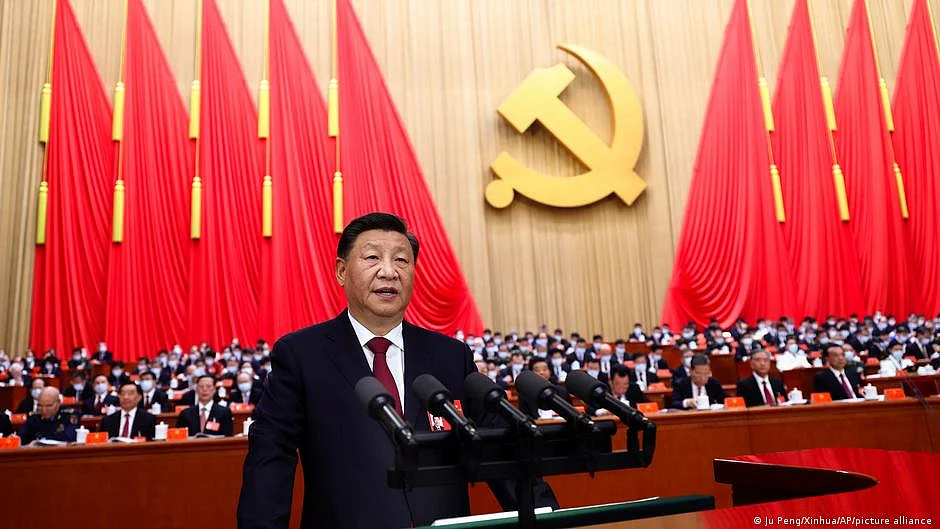


China on Thursday set its economic growth target at 4.5–5 per cent for 2026, the lowest range in decades, signalling a strategic shift by Beijing as it braces for slower expansion while attempting to restructure the world’s second-largest economy.
Premier Li Qiang announced the target while presenting the government work report at the opening session of the NPC (National People’s Congress), China’s annual parliamentary gathering held in Beijing as part of the country’s political meetings known as the “Two Sessions”.
The new target marks the first time since 1991 that China’s official GDP growth goal has been set below five per cent. The move reflects Beijing’s effort to move away from the country’s traditional reliance on property development, heavy industry and exports towards what officials describe as “high-quality growth”.
Addressing nearly 3,000 delegates at the Great Hall of the People, Li described the previous year as one marked by “profound and complex developments both at home and abroad”, according to the government work report.
Alongside the growth target, China released a draft of its 15th Five-Year Plan (2026–2030), a long-term economic blueprint that will be formally voted on next week. The plan focuses on expanding domestic consumption, strengthening technological innovation and restructuring the economy to rely more on advanced industries.
Shift towards “high-quality growth”
Chinese policymakers say the new strategy aims to create a more resilient economy capable of withstanding global shocks. Instead of relying heavily on construction and exports, Beijing intends to prioritise high-technology manufacturing, innovation and domestic demand.
The shift comes as China faces multiple economic challenges, including a rapidly ageing population, weak consumer demand and a prolonged downturn in the country’s property sector.
Economists also note that China’s economy is naturally slowing as it moves towards higher income levels, a pattern commonly seen in developing economies transitioning to advanced status.
Dan Wang, China director at political risk consultancy Eurasia Group, said the lower growth target reflects Beijing’s focus on structural reforms.
“This year is a pretty important year for structural reform,” Wang said, adding that China appears to be using a temporary pause in trade tensions with the United States to push ahead with domestic economic adjustments.
China and the United States agreed to a one-year pause in their trade dispute in October, with fresh negotiations expected later this month ahead of a planned visit by US President Donald Trump to Beijing on 31 March.
Employment targets and economic pressures
Li also announced a 5.5 per cent urban unemployment target and pledged to create more than 12 million new urban jobs in 2026, broadly in line with employment goals set in previous years.
However, some economists have warned that China’s push towards high-technology industries could pose risks for blue-collar employment, particularly in sectors linked to construction and traditional manufacturing.
Guo Shan, chief economist at advisory firm Hutong Research, said the relatively modest growth target nevertheless indicates confidence in China’s long-term development plans.
According to Guo, China needs to maintain average annual growth of around 4.3 per cent over the next decade to achieve its goal of becoming a “moderately developed country” by 2035.
“After dealing with the US but still growing by 5 per cent in 2025, Beijing has likely become more confident in setting and delivering China’s growth target,” Guo said.
Despite global economic uncertainty and supply chain disruptions linked to trade tensions, China ended last year with a record USD 1 trillion trade surplus, underlining the continued strength of its export sector.
Climate and defence priorities
The government also used the annual legislative session to outline broader economic and policy priorities for the coming years.
Among them is a renewed focus on climate policy. The draft five-year plan sets a target of reducing China’s carbon intensity — the amount of carbon dioxide emitted per unit of economic output — by 17 per cent by 2030.
Climate experts say the goal may fall short of China’s earlier pledge to reduce carbon intensity by more than 65 per cent from 2005 levels by the end of the decade.
Official data released recently showed China’s carbon intensity declined by 12 per cent between 2020 and 2025, below the 18 per cent reduction target outlined in the previous five-year plan.
Li Shuo, director of the China Climate Hub at the Asia Society Policy Institute, said the new target suggests an implicit acknowledgement of the difficulty in achieving earlier climate commitments.
“The 17 per cent target indicates a quiet recalibration, effectively recognising how difficult the original 2030 goal has become,” Li said.
China also released its 2026 national budget, which includes a 7 per cent increase in defence spending, slightly lower than the growth rate in military expenditure seen in previous years.
Economists say boosting domestic consumption will be critical to China’s long-term economic stability. However, analysts note that the policy documents released on Thursday offered limited details on how Beijing intends to significantly increase household spending.
Join our official telegram channel (@nationalherald) and stay updated with the latest headlines