


Balendra Shah appointed Nepal’s youngest prime minister in generational shift
Rastriya Swatantra Party leader takes office after landslide victory, signalling new era in Nepali politics
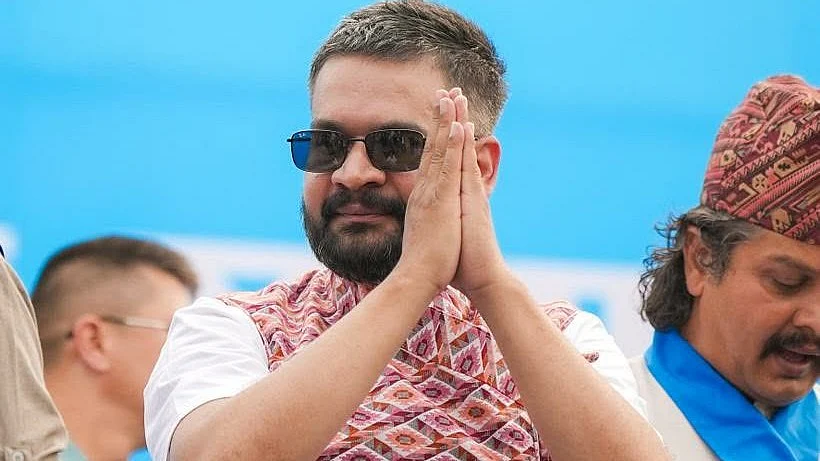


Balendra Shah has been appointed as Nepal’s new prime minister, marking a significant political shift driven by a surge in support for younger नेतृत्व in the country.
President Ram Chandra Poudel formally appointed Shah on Friday under constitutional provisions, following the sweeping electoral victory of the Rastriya Swatantra Party (RSP) in the recent parliamentary elections.
Shah, popularly known as Balen, was elected as the party’s parliamentary leader a day earlier, paving the way for him to assume office as Nepal’s 47th prime minister. He is scheduled to take the oath of office at the President’s Office in Kathmandu, accompanied by traditional Hindu and Buddhist rituals symbolising an auspicious beginning.
The ceremony is set to include the blowing of conch shells, recitations by Vedic priests and chants by Buddhist monks, reflecting Nepal’s cultural and religious traditions.
At 35, Shah is among the youngest individuals to hold the office, underscoring a broader generational change in the country’s political landscape. A significant number of newly elected lawmakers also belong to younger age groups, indicating a shift in voter preferences.
The RSP, a relatively new political force, secured a commanding mandate in the March 5 elections, winning 182 of the 275 seats in the House of Representatives. The party had centred its campaign around Shah as its prime ministerial candidate, capitalising on his popularity among younger voters.
In a notable electoral contest, Shah defeated former prime minister K P Sharma Oli by a substantial margin in Jhapa-5, securing one of the highest vote tallies recorded in Nepal’s parliamentary history.
Shah first rose to prominence in 2022 when he won the mayoral election in Kathmandu as an independent candidate, gaining recognition for his focus on urban development and governance reforms.
Born in Kathmandu in 1990, he pursued higher education in engineering, including a master’s degree in structural engineering from Visvesvaraya Technological University. His technical background has been seen as an asset in addressing infrastructure and development challenges.
His appointment as prime minister is widely viewed as a turning point in Nepal’s politics, reflecting a move away from established leadership towards a new generation promising reform and change.
With IANS inputs
Join our official telegram channel (@nationalherald) and stay updated with the latest headlines