


Netanyahu leans on ‘eye-to-eye’ claim as questions grow over joint war strategy with Trump
Netanyahu denies dragging US into war, says Trump acts independently; signals compliance on Iran strikes
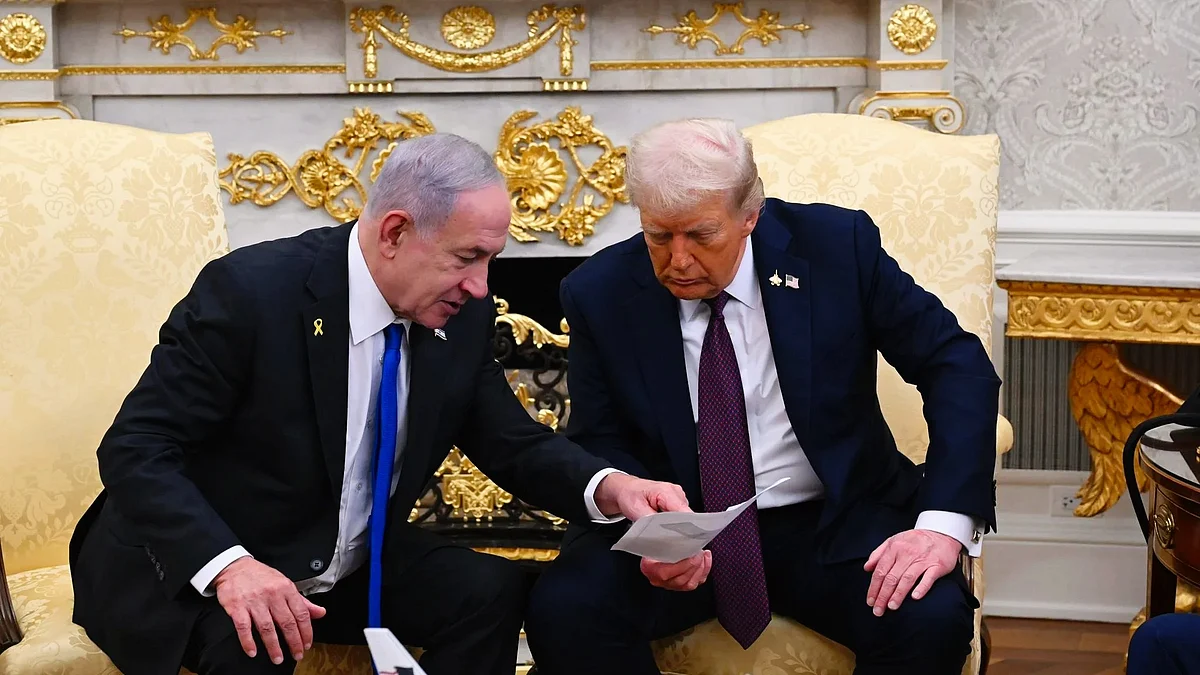


Subtle but increasingly visible differences have emerged between US President Donald Trump and Israeli Prime Minister Benjamin Netanyahu over the conduct of the ongoing conflict with Iran, particularly following Israel’s recent strike on an Iranian gas facility.
The attack on a processing site linked to the vast South Pars gas field marked a significant escalation in Israel’s campaign. While Israel had previously targeted fuel depots, it had avoided direct strikes on Iran’s core energy production infrastructure. The move triggered swift retaliation from Tehran, which struck energy facilities in neighbouring Gulf states, exacerbating already volatile global energy markets and raising fears of prolonged supply disruptions.
In remarks to reporters, Trump made clear he had opposed the strike, stating he had explicitly urged Netanyahu not to proceed. He added that while coordination between the two countries remains close, Israel had, on this occasion, acted independently. The US President also indicated that further such attacks would not go ahead following his intervention.
Netanyahu, however, confirmed that Israel had carried out the strike alone, while simultaneously seeking to downplay any rift. He stressed that he had agreed to Washington’s request to refrain from further attacks on Iranian energy infrastructure and maintained that relations with the US remained strong and closely aligned.
Nevertheless, the episode has highlighted a growing gap in objectives. US officials have acknowledged that Washington and Tel Aviv are not entirely aligned in their end goals. The American strategy has focused primarily on curbing Iran’s nuclear and missile capabilities, whereas Israel’s campaign has taken a broader approach, including high-profile targeted killings and rhetoric suggesting a desire to weaken or even transform Iran’s governing system.
This divergence was underscored by senior US intelligence leadership, which noted that the two governments are pursuing distinct strategic outcomes. While Israel has framed the conflict as an opportunity to reshape the regional order and potentially encourage political change within Iran, Trump has recently adopted a more cautious stance on the prospect of regime change.
In contrast to earlier, more assertive statements encouraging internal upheaval in Iran, the US President has expressed scepticism about the likelihood of such an outcome, citing the strength of Iran’s internal security apparatus and the challenges facing any popular uprising.
The differing approaches also reflect contrasting domestic pressures. Mr Netanyahu operates with relatively strong public backing for a sustained military campaign, whereas support for deeper US involvement appears more limited among the American public.
Even so, both leaders continue to emphasise cooperation and shared concerns about Iran’s nuclear ambitions. Netanyahu has repeatedly highlighted their close communication, while Trump has reiterated that preventing Iran from acquiring nuclear weapons remains his primary objective.
Yet, as the conflict intensifies and its economic consequences ripple across global markets, the gap between tactical coordination and strategic alignment appears to be widening — raising questions about how unified the alliance will remain as the situation develops.
With PTI, IANS inputs
Join our official telegram channel (@nationalherald) and stay updated with the latest headlines