


Bill Gates warns AI could cause a billion deaths, calls for mandatory safeguards
Microsoft co-founder’s warning adds to a Washington debate over AI regulation and US-China cooperation
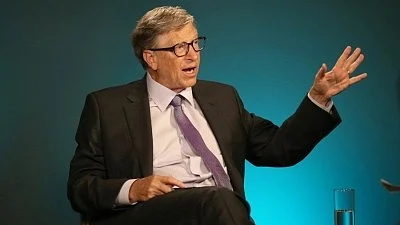


Gates warned that AI could be used to cause mass casualties and said companies should be required to build in safeguards and monitoring.
Representative Ro Khanna called for a verifiable US-China agreement restricting AI systems that can improve themselves without human training.
US officials differed over whether new rules would reduce risks or weaken American competitiveness.
Microsoft co-founder Bill Gates has warned that artificial intelligence could be used to trigger events causing a billion deaths, urging governments to require safeguards as US politicians debate how to manage the technology’s risks.
Speaking on NBC’s Meet the Press, Gates said AI could become far more capable than humans within the next several years. Asked whether it could threaten humanity, he said it was “powerful enough to drive events that, you know, cause a billion deaths”. He pointed in particular to the danger of people using advanced AI tools for harmful purposes.
Gates argued that voluntary measures by technology companies were insufficient. He called for legislation requiring AI developers to put safeguards and monitoring systems in place, saying the added costs need not substantially slow progress. Governments, he said, also needed greater expertise to identify dangerous capabilities, including those that could enable biological or cyberattacks.
The warning came amid calls in Washington for the United States and China to agree on limits for the most advanced AI systems. Democratic Representative Ro Khanna proposed a verifiable agreement prohibiting systems capable of improving themselves without further human training until safeguards are established. He said technologists from both countries should help develop restrictions and ways to monitor leading AI laboratories.
US Ambassador to the United Nations Mike Waltz said Washington and Beijing had agreed to hold a dialogue on superintelligence following a summit between President Donald Trump and Chinese President Xi Jinping. Experts would discuss safeguards concerning risks such as biological weapons research and nuclear systems, he said. The two countries had already begun talks on AI safety and ways to communicate during AI-related incidents.
Attorney General Todd Blanche took a more cautious view of new regulation. He argued that existing criminal and civil laws could be used when people or companies committed offences involving AI, and warned against rules that could leave the United States behind in its competition with China.
The differing positions expose a central challenge for policymakers: how to set enforceable limits on dangerous uses of AI while allowing the technology to develop. The debate also matters beyond the two countries. India is expanding AI use across public services and the economy, while advocating governance that addresses safety and access alongside innovation.
With IANS inputs