


Ceasefire hangs by a thread as US and Iran exchange fresh attacks
Iran fires missiles towards Bahrain, Kuwait and Qatar after new US attacks; exchange raises fears of wider regional conflict and disruption to global energy supplies
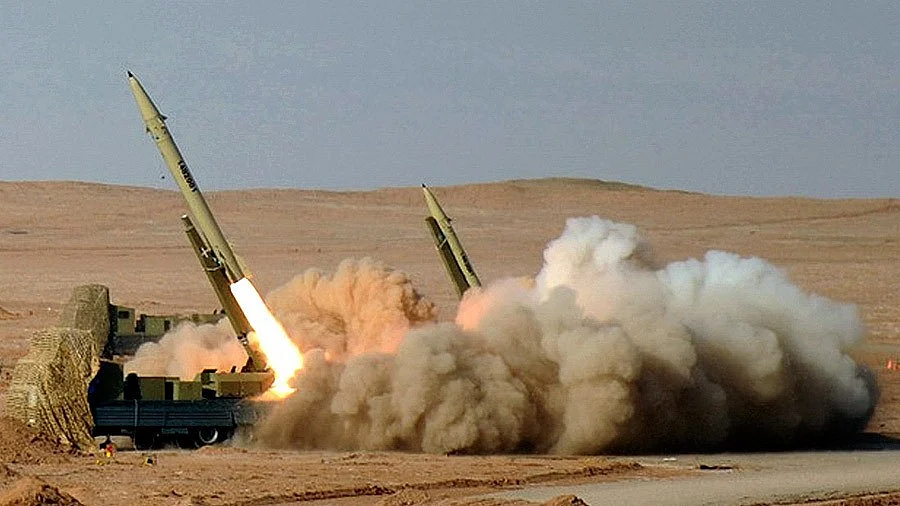


The United States launched fresh airstrikes on Iran early Thursday, prompting Tehran to retaliate by firing missiles towards Gulf countries in a major escalation that threatened a fragile interim ceasefire aimed at ending the conflict in West Asia.
The latest exchange came a day after both sides traded attacks, raising fears that the region could slide back into a wider war involving multiple countries and disrupting energy shipments through the Strait of Hormuz, one of the world's most important oil transit routes.
Sirens sounded at least three times in Bahrain, home to the US Navy's Fifth Fleet headquarters, while missiles also targeted Kuwait and Qatar.
The escalation followed US President Donald Trump's warning that recent Iranian attacks on ships in the Strait of Hormuz had effectively ended the fragile ceasefire. He also threatened a stronger military response if attacks on shipping continued.
"This is in retribution for yesterday's bombing of ships by Iran. If it happens again, it will get much worse!" Trump wrote on his social media platform after leaving a NATO summit in Turkey.
Earlier, Trump said any further military action would happen "very fast" and renewed previous threats to target Iran's civilian infrastructure, including power and desalination plants, as well as Kharg Island, through which around 90 per cent of Iran's oil exports pass.
The US military's Central Command said it struck around 90 targets across Iran, releasing footage that appeared to show attacks on an airport runway and missile launchers.
According to the US military, the strikes were intended to "further degrade" Iran's ability "to threaten freedom of navigation" through the Strait of Hormuz.
The waterway, through which around a fifth of globally traded oil and natural gas passed before the conflict began on February 28, has witnessed repeated attacks on commercial shipping, sending global oil prices sharply higher.
Iranian state media reported explosions in several locations, including Bushehr, home to the country's nuclear power plant complex, and several southern port cities.
Iran's Health Ministry said at least 14 people had been killed and 78 wounded in two days of US strikes, with most of the casualties reported to be members of the armed forces.
State media said at least three people were killed in Khuzestan province on Thursday, while a firefighter died in a strike on an airport in Iranshahr. Those deaths followed the killing of at least nine members of Iran's armed forces in Wednesday's strikes.
In Kuwait, authorities said debris from intercepted missiles injured one person after the military shot down three ballistic missiles, one cruise missile and 10 drones. Bahrain said it intercepted incoming projectiles, while there were no immediate reports of damage in Qatar.
For the first time since April, US strikes also appeared to target Iranian bridges. Iranian state media reported an attack on a railway bridge in Golestan province, while the Islamic Revolutionary Guard Corps said two bridges on the route to Mashhad had been struck ahead of the funeral of Supreme Leader Ayatollah Ali Khamenei.
The latest violence has also cast doubt over planned negotiations aimed at reaching a permanent agreement after Khamenei's funeral. The proposed talks are expected to address reopening the Strait of Hormuz and Iran's disputed nuclear programme.
The renewed hostilities come despite efforts to preserve an interim ceasefire, with analysts suggesting divisions within Iran's leadership over whether to continue military confrontation or pursue negotiations to ease international sanctions.
Parliament Speaker Mohammad Bagher Qalibaf struck a defiant tone, writing on X: "America still hasn't learned that bullying and breaking promises are no longer cost-free. Let me put it plainly: If you strike, you'll get hit."
Iranian Deputy Foreign Minister Kazem Gharibabadi also dismissed Trump's remarks, saying they reflected "not a sign of power but an admission of the failure" of US policy towards Iran.
Join our official telegram channel (@nationalherald) and stay updated with the latest headlines