


‘You miss the smell of home’: Displaced Lebanese Christians mark Easter
Clergy, families recount loss and displacement amid Israel-Hezbollah fighting linked to wider Iran conflict
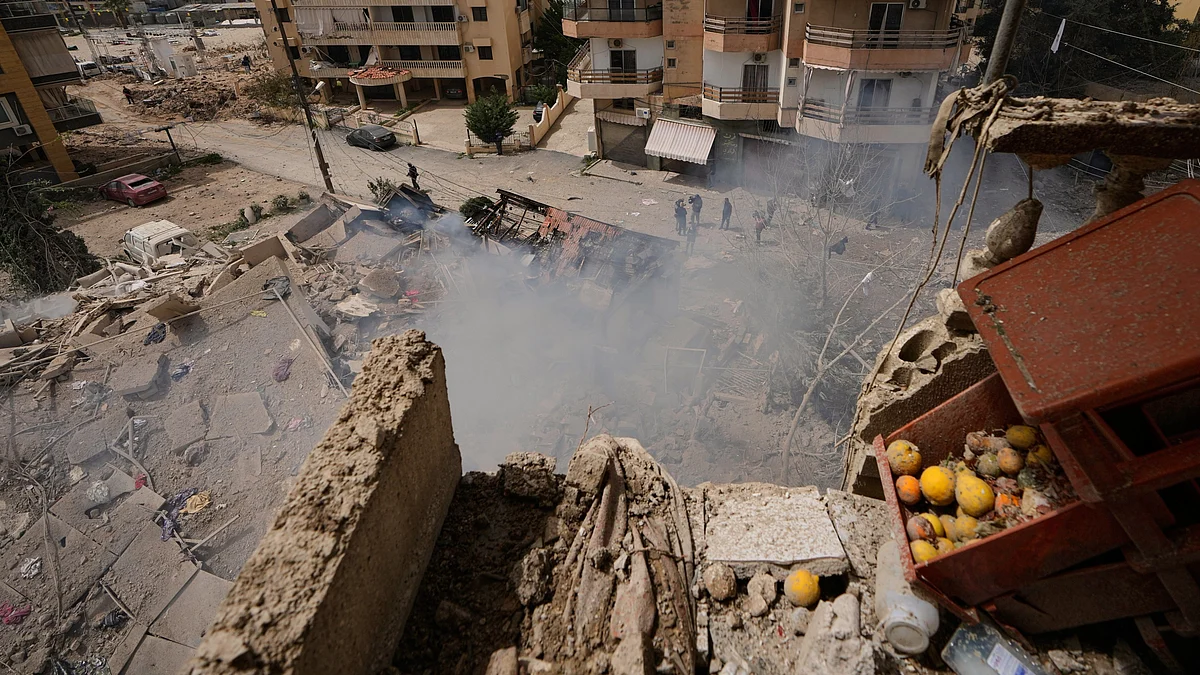


Displaced from their homes by ongoing fighting in southern Lebanon, many Christian families marked Easter this year far from their ancestral churches, as conflict linked to the wider US-Israel-Iran war continues to uproot communities.
For the Rev. Maroun Ghafari, Easter sermons that were once delivered in his village of Alma al-Shaab near the Israeli border are now being held in a Beirut suburb — beside a cardboard cutout of his damaged church.
Since hostilities escalated last month between Israel and the Iran-backed Hezbollah group, more than 1,400 people have been killed in Lebanon and over one million displaced, according to reports cited by Associated Press.
Among them are thousands of Christians from the south, forced to leave villages where their communities have existed for centuries.
Lebanon, home to about 5.5 million people, has one of the largest Christian populations in the Arab world, accounting for roughly one-third of its population.
‘War brings nothing but destruction’
Ghafari said residents of Alma al-Shaab initially resisted evacuation despite intensifying airstrikes.
Villagers had taken shelter inside their church as Israeli bombardment and Hezbollah rocket fire escalated.
“We wanted to stay, but it was always possible that one of us could be targeted or killed at any moment,” he told AP.
His brother, Sami Ghafari, was killed in a drone strike on March 8 while tending to his garden, prompting remaining villagers to flee.
They were later evacuated by United Nations Interim Force in Lebanon (UNIFIL) to northern Beirut suburbs.
“Everyone is tired… war brings nothing but destruction, death and displacement,” he said.
Faith amid loss
For many Lebanese Christians, Holy Saturday is traditionally marked by visiting the graves of loved ones — a ritual disrupted this year.
“You miss the smell of home… the sounds of the bells of three churches ringing,” said Nabila Farah, a displaced resident attending Easter services in Beirut.
Clergy in conflict-hit areas say those who remain are doing so out of commitment rather than defiance.
Marius Khairallah, a priest in Tyre, said parishioners continue to gather despite reduced numbers.
“Churches still open their doors. Prayers are still raised — even with fewer voices,” he said.
Lebanon’s Maronite Patriarch, Beshara al-Rai, criticised both Hezbollah and Israel for the toll on civilians.
“The country is going through a critical situation due to Iranian interference through Hezbollah and Israeli aggression,” he said.
Growing insecurity in the south
Concerns have increased as parts of southern Lebanon see reduced deployment of the Lebanese army, leaving civilians exposed amid advancing Israeli operations.
At St. Anthony Church in Jdeideh, Easter prayers were held in Arabic and Syriac, with many worshippers standing due to overcrowding.
The Rev. Dori Fayyad reflected on the symbolism of suffering.
“Today, you understand what the cross means… because you are going through it,” he told congregants.
Churches in the south, now damaged or abandoned, have become symbols of both faith and loss.
“These churches… are not only places of worship. They are silent witnesses to suffering and to faith,” Fayyad said.
As the conflict shows little sign of abating, many displaced families remain uncertain about when — or if — they will be able to return home.
Join our official telegram channel (@nationalherald) and stay updated with the latest headlines