


Trump tears into Senate Republicans over Iran vote, deepening rift
US president clashes with party senators over war powers resolution and ties housing Bill to proof-of-citizenship voting measure
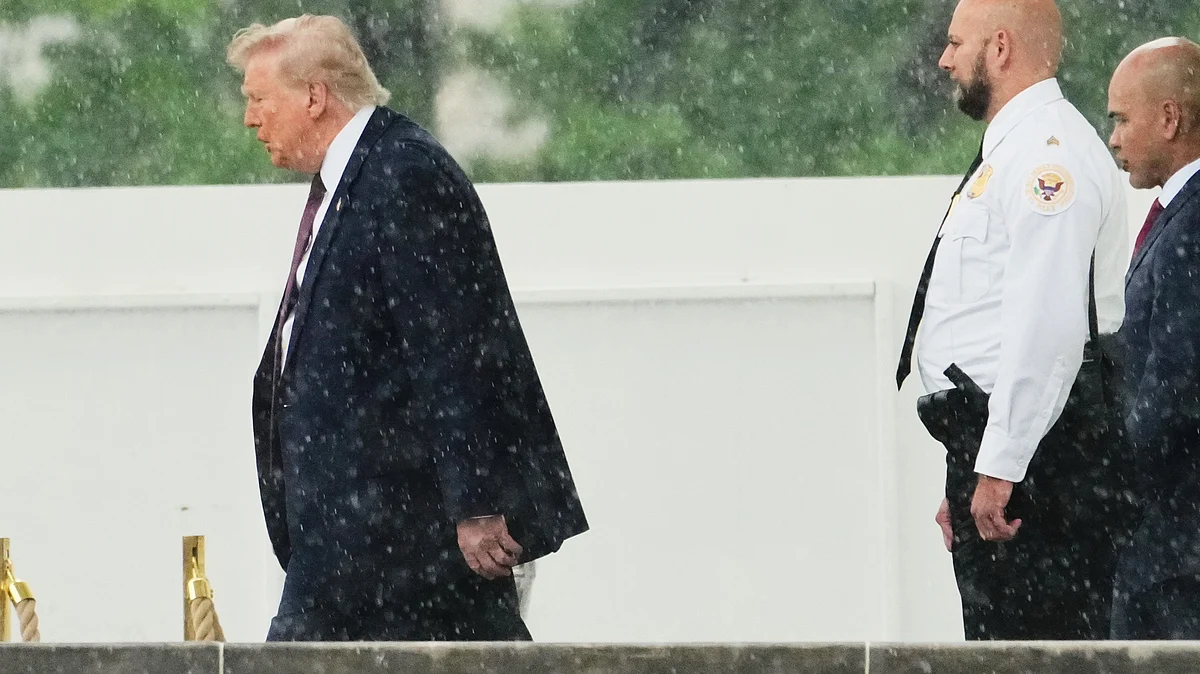


US President Donald Trump sharply criticised Senate Republicans during a closed-door meeting on Wednesday, 24 June over their support for a vote seeking to curb his administration's military actions in Iran, deepening internal divisions that have disrupted the party's legislative agenda ahead of the November midterm elections.
Trump, who addressed Republican senators at a Capitol luncheon at the invitation of Florida senator Rick Scott, had been expected to press lawmakers to pass his proof-of-citizenship voting Bill, the SAVE America Act. Instead, much of the discussion centred on Tuesday's Senate vote approving a war powers resolution, a largely symbolic measure allowing Congress to formally rebuke the administration's handling of the Iran conflict. The House passed its own version earlier this month.
According to lawmakers present, Trump singled out the four Republican senators who joined Democrats in backing the resolution — Lisa Murkowski of Alaska, Susan Collins of Maine, Rand Paul of Kentucky and Bill Cassidy of Louisiana. He had earlier described them as "losers" in a social media post.
While most Republican senators remained silent during the exchange, Cassidy confronted the president, defending his vote. "I stood and said, 'You have not told the American people what's going on'," Cassidy told reporters after the meeting. "This was supposed to last four weeks, it's lasted four months. Our original objectives have not been achieved."
Cassidy said he and Trump "went back and forth" and that he "matched his tone and volume", before eventually trying to de-escalate the confrontation. "I am voting for war powers until I get a briefing," he said.
According to a person familiar with the meeting, Trump repeatedly told Cassidy to sit down and at one stage called him a "lunatic".
Despite the heated exchange, Trump later struck a more conciliatory tone in public. "We had a really great meeting," he told reporters after leaving the Capitol, before adding, "We like everyone in the room. I don't like a few people, but that's OK."
The luncheon marked the latest flashpoint in weeks of growing friction between Trump and Senate Republicans, with tensions mounting after the Senate adopted the war powers resolution — the first such measure passed during the Iran conflict.
Ahead of the meeting, Trump also cancelled a planned signing ceremony for bipartisan housing legislation that had passed both chambers with overwhelming support, insisting instead that Congress first approve the SAVE America Act, which would require proof of citizenship for all voters.
The move frustrated Republican lawmakers, who had promoted the housing Bill as a key election-year measure aimed at lowering costs for Americans.
North Carolina senator Thom Tillis questioned Trump's decision to tie the legislation to a voting Bill that he believes has little chance of passing. "I don't know why he's holding the housing Bill hostage for the voting Bill that will never pass in this Congress," Tillis said before the luncheon. "It makes no sense to me."
Senate majority leader John Thune described the housing legislation as "an affordability issue" and said he hoped Trump would eventually sign it.
It remains unclear whether Trump intends to veto the measure, but Republicans worry that shelving a high-profile signing ceremony could signal indifference to voters' concerns about the cost of living ahead of November's midterm elections.
The dispute over the housing Bill is the latest in a series of disagreements between Trump and Senate Republicans. In recent weeks, he has blocked confirmation of one of his own nominees, pressed lawmakers to fund parts of a White House ballroom project despite resistance and pushed senators to defend his Iran strategy even as many have questioned its objectives.
Trump has also weakened his support within the Senate by endorsing primary challengers against two Republican incumbents who had previously backed much of his agenda — Cassidy and Texas senator John Cornyn. Both have become increasingly critical of the president after losing their re-election bids.
"If we're going to win the midterm elections, we need to get on the same page," Cornyn said before the meeting. "We're not on the same page now, and that I think is dangerous."
The meeting appeared to do little to bridge the divide. "It was kind of a one-sided conversation," Thune said afterwards.
With AP/PTI inputs
Join our official telegram channel (@nationalherald) and stay updated with the latest headlines