


Musk accuses Ambani’s supporters of ‘absurd hypocrisy’ amid Starlink India row
Elon Musk shares reports on Reliance’s alleged BJP links while criticising Starlink’s delayed India launch
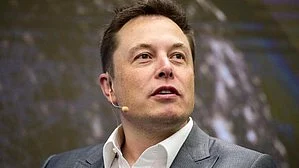


Elon Musk accused Mukesh Ambani’s supporters of “absurd hypocrisy”, arguing Starlink’s entry into India would boost competition and consumer choice
Musk shared reports alleging links between Reliance and BJP political campaigns and donations, while criticising delays in Starlink’s India launch
Telecom minister Jyotiraditya Scindia said Starlink, Jio Satcom and Eutelsat OneWeb hold licences, but must meet security requirements before operations begin
Elon Musk on Sunday renewed his criticism of Reliance Industries chairman Mukesh Ambani over the proposed entry of Starlink’s satellite internet services into India, accusing Ambani’s supporters of making contradictory arguments about the potential competition.
In a post on X, the billionaire entrepreneur described the arguments made by supporters of Ambani’s internet business as “absurd hypocrisy and hyperbole”. He questioned how they could simultaneously claim that Starlink would struggle to compete with the low prices offered by Ambani’s dominant telecom business while also suggesting that Musk’s satellite internet service could pose a serious competitive threat.
Musk argued that the entry of Starlink would benefit Indian consumers by increasing their choices and potentially putting pressure on existing internet service providers to offer better prices and services.
“On the one hand, they say Starlink couldn’t possibly compete with the amazing low prices offered by Ambani’s de facto monopoly in India and then, in the same breath, they essentially claim that Starlink would be too strong of a competitor! This is absurd hypocrisy and hyperbole,” Musk wrote.
He added that greater competition would benefit ordinary Indians, while any reduction in Ambani’s profits would not threaten the viability of his business.
“The reality is that competition would greatly benefit the average citizen in India by giving them more choices, as it always does,” Musk said.
“Ambani’s profits will be lower, but he is not going out of business. And, obviously, if Starlink is too expensive in India, no one will buy it, so SpaceX will need to make pricing affordable,” he added.
Musk also dismissed the arguments put forward by Ambani’s internet supporters as “ridiculous”, intensifying his public criticism of the Indian industrialist amid the continuing debate over satellite broadband services in the country.
Musk’s latest remarks come after a series of posts on X in which he has criticised Ambani and raised questions about Reliance’s alleged political connections.
On Saturday, Musk shared screenshots of media reports alleging that a Reliance-funded firm helped amplify BJP campaigns on social media and that a Reliance-linked company made substantial political donations to the ruling party.
One of the reports was an Al Jazeera article published in 2022 titled How a Reliance-funded firm boosts BJP’s campaigns on Facebook. Musk also shared an archived report by The Indian Express from 2024 concerning Qwik Supply, a Reliance-linked company.
According to the report, Qwik Supply donated Rs 385 crore to the BJP and Rs 25 crore to the Shiv Sena through electoral bonds.
Musk’s posts followed his broader criticism of the delay in launching Starlink’s satellite broadband services in India. Reliance has not publicly responded to his latest allegations.
The Indian government, meanwhile, has maintained that the country’s authorisation framework for telecommunications and satellite services is “fair and non-discriminatory”. It has described suggestions that the framework is being applied selectively as “baseless and misconceived”.
Earlier, Musk had sarcastically addressed Ambani as “Prime Minister Ambani” in a post on X, accusing the industrialist of seeking to protect a monopoly and questioning whether Starlink would be allowed to compete in India.
“Dear Prime Minister Ambani, Please accept my humble apologies for not realising that you are the real boss of India. Naturally, you would prefer to maintain your monopolistic exploitation of the great people of India, but would you nonetheless consider allowing Starlink to compete?” Musk wrote.
He also highlighted the lack of internet connectivity in several parts of India, arguing that satellite broadband could help bridge the digital divide.
According to Musk, inadequate internet access deprives children of educational opportunities and prevents small businesses from reaching customers in global markets.
He argued that Starlink could improve access to connectivity and create new economic opportunities for people in underserved regions.
In a subsequent post late Friday, Musk highlighted Starlink’s role in restoring communications during natural disasters in different parts of the world when conventional communication networks had failed.
He suggested that the service could also help save lives in India by providing connectivity during emergencies.
“So you would also be helping save men, women and children throughout India,” Musk wrote.
Amid the escalating public exchange, Union communications minister Jyotiraditya Scindia said on Friday that India does not permit monopolies in any sector and that multiple companies had received licences to provide satellite communication services.
Speaking at a briefing during the India Mobile Congress, Scindia said the Department of Telecommunications follows a technology-neutral approach and aims to provide consumers with a range of services from which they can choose freely.
“Let me set the record straight. For us, the Department of Telecommunications, we are technology agnostic... Our job is to be able to provide the bouquet of services to every single customer. It is for the customer to choose in a free market which service he or she prefers, and within that service bouquet, which company's service he or she prefers,” the minister said.
Scindia identified three companies that have secured satellite communication licences: Musk’s Starlink, Reliance Jio’s satellite venture Jio Satcom and Bharti-backed Eutelsat OneWeb.
He added that Amazon’s Project Kuiper had expressed interest in entering the market but would have to follow the established regulatory process.
The minister stressed that the licensing of multiple operators demonstrated that India was not restricting satellite communications to a single company. However, the companies must individually fulfil the required security conditions and other regulatory milestones before commencing operations.
Scindia also said the Telecom Regulatory Authority of India (TRAI) and the Department of Telecommunications were nearing a final decision on the pricing framework for satellite spectrum.
The pricing regime is a key issue in determining how satellite broadband operators will compete with established telecom companies in India.
The remarks came as the debate over Starlink’s entry into India expanded beyond commercial competition to include questions about regulation, market access and political connections.
While Musk has argued that Starlink would increase consumer choice and extend internet access to underserved areas, the government has maintained that all eligible operators must meet the same regulatory requirements.
With Starlink, Jio Satcom and Eutelsat OneWeb holding licences, the next steps will depend on the fulfilment of security requirements and the finalisation of the satellite spectrum pricing framework. The outcome will help determine how satellite broadband services enter India’s competitive telecommunications market.
With PTI inputs