


EU scrambles to reassess US ties amid Trump’s unpredictable diplomacy
Greenland row and tariff threats force EU to confront the strategic risks of Trump’s erratic approach


European leaders are entering emergency talks at Brussels on Thursday under no illusions about the degree of uncertainty emanating from Washington. In the space of a fortnight, US President Donald Trump has swung from threatening to seize Greenland and punish European allies with tariffs, to abruptly softening his stance — without providing clarity on what changed or why.
On the eve of the summit, Trump unexpectedly retreated from his insistence on “acquiring” Greenland, stressing for the first time that force would not be used. He also shelved tariff threats targeting eight European states backing Denmark.
The reversals temporarily lowered the temperature, but they also underscored the core problem: nothing in Trump’s behaviour suggests the EU can treat these pivots as final. European Commission President Ursula von der Leyen has already questioned the credibility of US commitments after Trump appeared ready to walk back a trade deal struck in July 2025 that was meant to pause escalation.
No details of the purported “framework” that prompted Trump’s latest U-turn have been released, adding to doubts within the bloc. Danish Prime Minister Mette Frederiksen continues to rule out negotiating away sovereignty, and officials across Brussels regard the opacity around US intentions as a strategic liability in its own right.
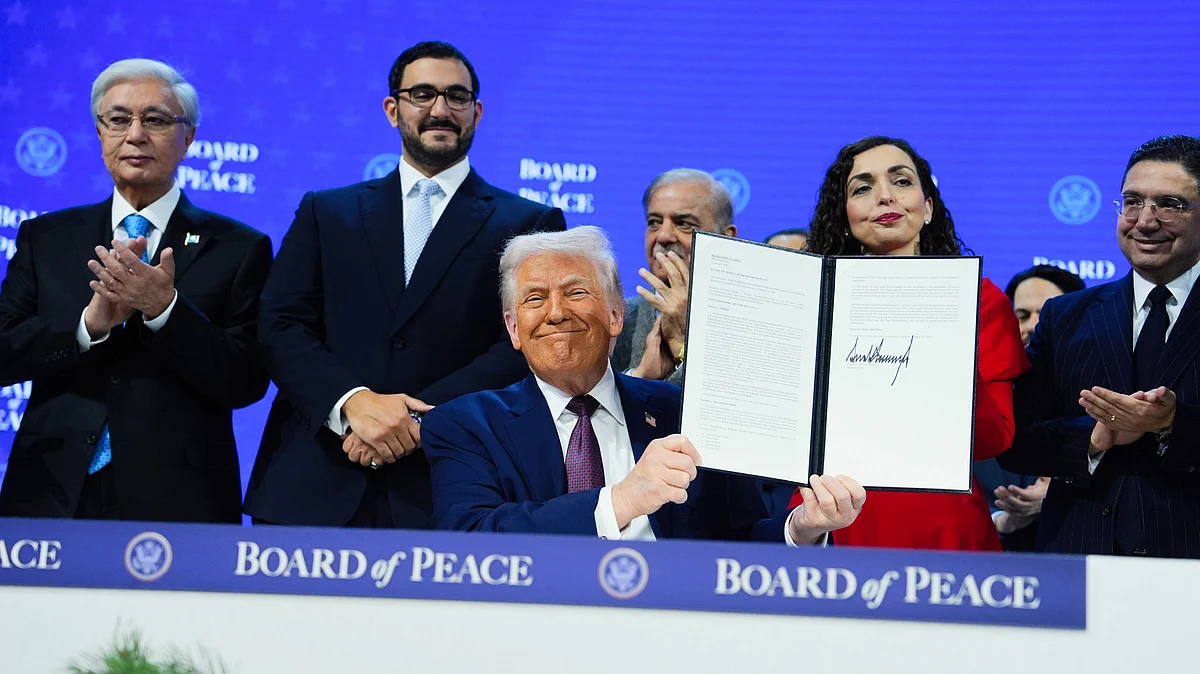
Uncertainty is also driving EU leaders to take a tougher line on Trump’s evolving proposal for a 'Board of Peace'. Initially framed as a small oversight group for the Gaza ceasefire, the concept has ballooned into something closer to a rival multilateral body, with Trump even suggesting it could absorb roles currently performed by the United Nations.
Several European countries have refused invitations: Norway, Slovenia and Sweden have declined, while France is hesitant — prompting Trump to quip that a 200 per cent tariff on French wines would change President Emmanuel Macron’s mind. Germany has kept its distance, while Victor Orban's Hungary has expectedly signed on.
The cumulative effect of these episodes has been to galvanise EU capitals. European Council president António Costa, who will chair the discussions, has framed the moment as a test of Europe’s security, principles and prosperity. After consulting leaders, he signalled consensus around defending international law, territorial integrity and national sovereignty — the same principles the EU cites in backing Ukraine against Russia and which Trump has appeared willing to unsettle in Greenland.
The volatility is now bleeding into trade diplomacy. EU lawmakers in Strasbourg paused ratification of the July trade accord after fresh tariff threats from Trump, with von der Leyen warning that additional duties would be incompatible with the deal and would further erode transatlantic trust. She argued that the bloc is “at a crossroads” and must be ready to respond with “unity, urgency and determination” should Washington escalate again.
The strategic reappraisal extends beyond diplomacy. Von der Leyen disclosed plans for a major European investment programme in Greenland to strengthen its economy and infrastructure, signalling that Brussels intends to reduce vulnerability to sudden shifts in US policy.
Polish Prime Minister Donald Tusk captured the emerging mood in a pointed social media post warning that Europe “cannot afford to be weak — neither against its enemies, nor against its allies”.
It is a remark that illustrates the new reality EU leaders are confronting: the United States remains NATO’s anchor and Europe’s closest partner, yet under Trump it has become a source of instability that must now be actively managed rather than assumed reliable.
With AP/PTI inputs
Join our official telegram channel (@nationalherald) and stay updated with the latest headlines