


From ruins to reel: Palestinian women filmmakers tell Gaza’s stories of survival
Films premiered at second Gaza International Women’s Film Festival, highlighting personal stories of survival and the devastating human cost of conflict
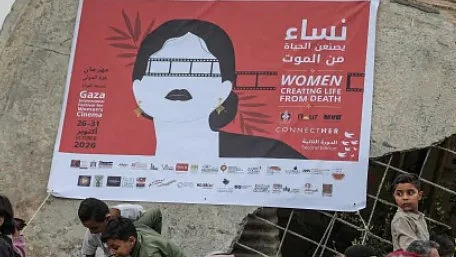


Palestinian women filmmakers are documenting the realities of war in Gaza through five documentaries exploring hunger, displacement, disability, grief and resilience
The films premiered at the second Gaza International Women’s Film Festival, highlighting personal stories of survival and the devastating human cost of conflict
The newly launched Gaza Cinema Academy aims to train young women filmmakers and connect their work with international festivals, distributors and audiences despite severe resource constraints
In Gaza, where the ruins of homes bear witness to years of devastation and the struggle for survival has become part of everyday life, a new generation of Palestinian women filmmakers is finding ways to tell stories that might otherwise remain unheard. Through intimate documentaries shaped by loss, hunger, displacement and resilience, these emerging artistes are transforming personal experiences into cinematic testimonies of life under war.
Among them is A Sack of Flour, an 11-minute documentary by emerging filmmaker Mona Abu Qass. Drawing on her own experiences, the film examines the struggle to find food in Gaza, the dangers surrounding aid distribution points and the lives lost in the desperate search for flour. As reported by Al Jazeera, the documentary also explores how the trauma of hunger continues to haunt families even when food becomes available again.
The film was among five documentaries by Palestinian women screened on Monday at the opening of the second Gaza International Women’s Film Festival, which also marked the official launch of the Gaza Cinema Academy.
Held at the site of the destroyed al-Nakheel Hall in al-Bureij, central Gaza, the event unfolded under the evocative slogan, “Women Creating Life from Death”. The venue itself stood as a stark reminder of the destruction wrought by Israel’s war on Gaza. According to Al Jazeera, the conflict has killed more than 74,000 Palestinians, while widespread devastation has left much of the enclave in ruins.
“The idea for the film stems from a personal experience and a true story,” Abu Qass told Al Jazeera, describing a project rooted in the daily realities of bombardment, destruction, siege, hunger and loss.
She said she hoped to capture the small but telling details that reveal both the depth of human suffering and people's determination to hold on to life. By portraying ordinary experiences against the backdrop of war, she seeks to show how conflict reshapes relationships, shatters dreams and tests the hopes that families struggle to preserve.
The film’s subject carries renewed urgency amid concerns over restrictions on goods entering Gaza and reductions in food assistance, which have contributed to shortages and fears of renewed famine.
Another documentary featured at the festival, Beyond Silence, by emerging filmmaker and journalist Raghda al-Buhaisi, turns its lens towards the often-overlooked struggles of people with disabilities during wartime.
The film follows a deaf artist who never learned to read, write or communicate through sign language. His world of artistic expression was shattered when his studio in Rafah, southern Gaza, was destroyed. The violence also claimed the lives of his parents and several other family members.
After being displaced to Deir el-Balah in central Gaza, he found shelter with another family, who helped him establish a modest studio beside the road. There, amid the uncertainty of displacement, he returned to his paintings, allowing colour and line to express grief that words could not contain.
Al-Buhaisi told Al Jazeera that the documentary seeks to highlight the additional burdens faced by people with disabilities during war, from repeated displacement and the loss of loved ones to the destruction of livelihoods. She believes art can transcend barriers of language and silence, turning deeply personal pain into a visual message capable of carrying Gaza’s suffering to audiences around the world.
The festival also showcased three other documentaries — Soso: The Lifeline, Remnants of Light and Dandana — each offering a different window into the human cost of war.
Soso: The Lifeline follows an orphaned child and his donkey, whose unlikely companionship becomes a source of assistance for people struggling to survive. Remnants of Light portrays a filmmaker confronting the devastating loss of her family and home, searching for fragments of hope amid the wreckage of her life.
Dandana tells the moving story of a mother who lost all eight of her children and turns to Palestinian songs alongside her surviving family as a way of navigating overwhelming grief. Through music, memory and shared sorrow, the film explores the fragile threads that bind people to life after unimaginable loss.
Together, the five documentaries reflect the varied experiences of Palestinian women and families living through war, giving individual stories a wider human resonance.
The films emerged from a filmmaking diploma programme launched in March, which brought together 25 young Palestinian women. The initiative has offered participants an opportunity to develop their creative skills while documenting the realities unfolding around them.
Festival director Ezzedine Shallah told Al Jazeera that the films draw on experiences lived by women and girls during the war, creating a visual record of everyday life and allowing women to narrate their own stories in their own voices.
Although their subjects differ, Shallah said, the documentaries transform personal suffering into broader human narratives, illuminating the psychological and social scars left by conflict. By preserving experiences that might otherwise never reach a cinema screen, the films become testimonies intended to travel beyond Gaza’s borders.
The festival, which runs until 31 October, features 73 films from 24 countries, creating a wider platform for filmmakers from Gaza and elsewhere to share their work.
Yet the pursuit of cinema in Gaza remains an uphill struggle. Destroyed cultural institutions, scarce equipment, limited funding, unreliable electricity and internet access, and the constant pressures of war and displacement have severely constrained film production. For women filmmakers, these obstacles are compounded by limited access to professional training, production opportunities and international festivals.
Rima Mahmoud, a filmmaker and co-founder of the festival, said the war and Israel’s longstanding siege of Gaza have made it increasingly difficult for young women to pursue filmmaking. Many have had to rely on simple equipment, finance projects themselves and find ways to document their surroundings despite extraordinary hardship.
Mahmoud stressed that these films deserve international exposure, adding that their creators need technical and financial assistance, translation services and partnerships with film festivals and distribution platforms.
For Palestinian filmmaker Mai Masri, who is based in Lebanon and is also a co-founder of the festival, the initiative represents more than an artistic platform. It offers young women the means to reclaim their narratives, resist erasure and preserve collective memory while developing skills that could help them continue working in Gaza or through digital platforms.
The launch of the Gaza Cinema Academy marks another step towards establishing a more lasting foundation for filmmaking in the enclave. The academy has developed a filmmaking diploma in cooperation with al-Quds Open University, accredited by the Palestinian Ministry of Education.
Masri said the academy is working to help young directors bring their films to international audiences. Efforts are under way to establish agreements with distributors so the documentaries can be screened at educational and cultural institutions outside Palestine, as well as through international platforms and festivals focused on women’s rights and human rights.
Such partnerships, she said, could amplify Palestinian women’s voices, illuminate their lived experiences and artistic achievements, strengthen the international presence of Palestinian cinema and open new pathways for emerging female directors.
In a place where so much has been reduced to rubble, these films offer a different kind of record — one shaped not only by destruction, but also by memory, creativity and the determination to be heard. Through stories of a sack of flour, a deaf artist’s paintings, an orphaned child’s companionship and a grieving mother’s songs, Palestinian women filmmakers are seeking to preserve the human dimensions of a war that has transformed every corner of life in Gaza.
Their cameras may operate amid scarcity and uncertainty, but the stories they capture are reaching beyond the ruins, carrying the voices of Gaza towards a world they hope will listen.
Join our official telegram channel (@nationalherald) and stay updated with the latest headlines