


Gaza: Aid flow falls short of ceasefire terms, analysis of Israeli figures shows
UN database records an average of just 113 trucks per day offloaded at Gaza crossings, far below the promised 600
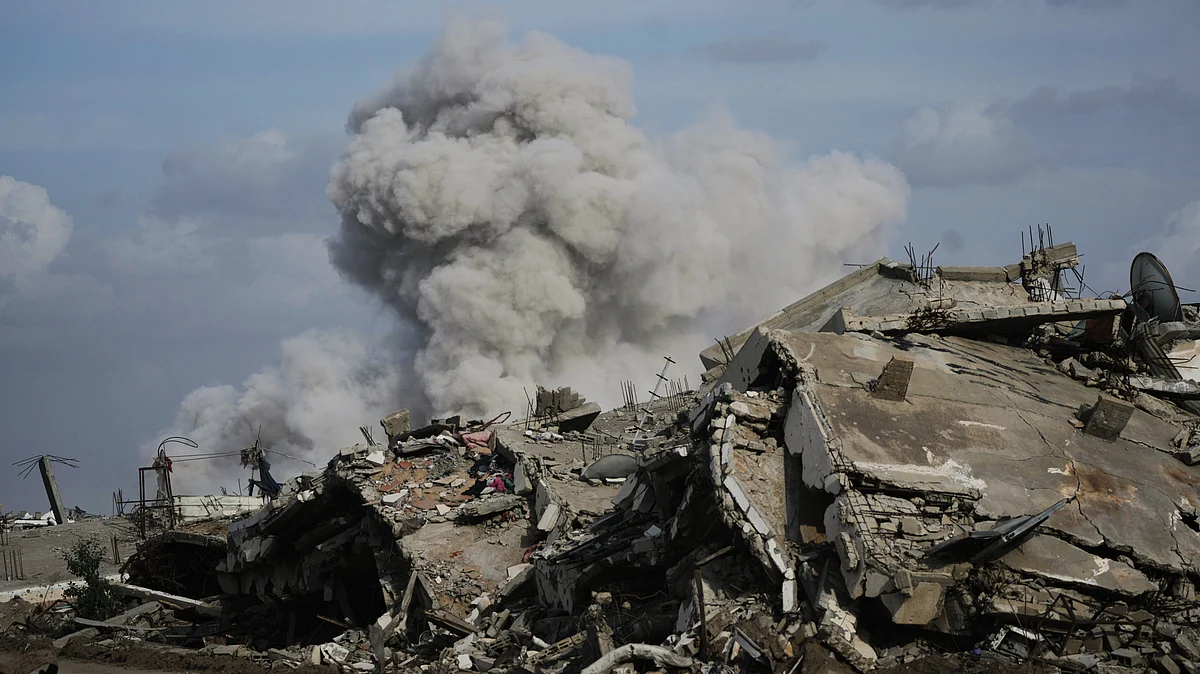


Aid deliveries to Gaza are falling dramatically short of what was promised under the US-brokered ceasefire, with newly analysed data showing that the flow of relief is nowhere near the volume required to stabilise the devastated territory.
Under the October agreement between Israel and Hamas, Israel committed to allowing 600 trucks of humanitarian supplies into Gaza each day. But an Associated Press review of data published by COGAT — the Israeli military authority overseeing aid entry — indicates that the daily average between 12 October and 7 December was only 459 trucks, far below the pledged amount.
COGAT says 18,000 trucks of food alone entered Gaza during that period, representing 70 per cent of all cargo delivered since the truce began. By those figures, the total number of trucks entering during the ceasefire is just over 25,700 — well short of the 33,600 trucks that should have passed through by that point under the ceasefire terms.
Humanitarian agencies, however, have long challenged the accuracy of Israel’s self-reported numbers. The UN’s own database records only 6,545 trucks being offloaded at Gaza crossings in the same timeframe — an average of just 113 trucks per day.
These figures exclude bilateral shipments outside the UN system, but they underline what aid groups have repeatedly said: the practical volume reaching Gazans is a fraction of what is claimed.
A Hamas document shared with AP put the total number of trucks entering Gaza since the ceasefire at 7,333, broadly aligned with the UN’s lower estimates and far from Israel’s.
The shortfall comes as humanitarian officials warn that Gaza’s recovery is bottlenecked by Israeli restrictions, logistical delays and security barriers that continue to choke off aid. In a stark assessment this week, the UN Office for the Coordination of Humanitarian Affairs said needs in Gaza “far outpace the humanitarian community’s ability to respond”, citing insecurity, customs hurdles, prolonged screenings and a lack of internal transport routes.
The consequences for Gaza’s 2 million residents, most displaced by war, are worsening. Food supplies remain precarious, with parts of the territory only recently emerging from famine conditions. UNICEF has reported starving mothers giving birth to malnourished infants, some of whom have died in hospital. As winter rains intensify, tens of thousands living in makeshift tents face flooding, cold exposure and scarcity of basic supplies.
Aid flow has stopped at least once altogether during the ceasefire. Israel froze entry following what it said were Hamas breaches, including the failure to return the bodies of hostages within the agreed window. Hamas says it has struggled to recover remains due to the scale of destruction caused by Israeli bombardment.
Hamas, in turn, accuses Israel of violating the ceasefire by restricting aid, keeping the Rafah crossing closed, and continuing deadly strikes on Gaza.
At the political level, tensions now centre on the fate of the final missing hostage, Ran Gvili. Prime Minister Benjamin Netanyahu’s office told AP that Gvili’s remains “must be returned” for the first phase of the ceasefire to be considered complete. “Once phase one is completed, phase two will begin,” the office said.
Hamas militants and Red Cross personnel have been searching the ruins of Gaza City for the final body. Islamic Jihad says it has handed over the last hostage remains it possessed.
On Tuesday, Hamas called for greater international pressure on Israel to reopen key crossings, halt airstrikes and allow a meaningful increase in humanitarian deliveries.
The dispute over aid flows adds yet another complication at what mediators describe as a pivotal moment for extending the ceasefire into its far more difficult second phase — one that now hangs in the balance.
With AP/PTI inputs
Join our official telegram channel (@nationalherald) and stay updated with the latest headlines