


Gaza: Israeli strikes kill 2 as Palestinians seek reopening of Rafah crossing
Four others, including children, are injured, bringing Palestinian deaths since October’s truce to at least 422
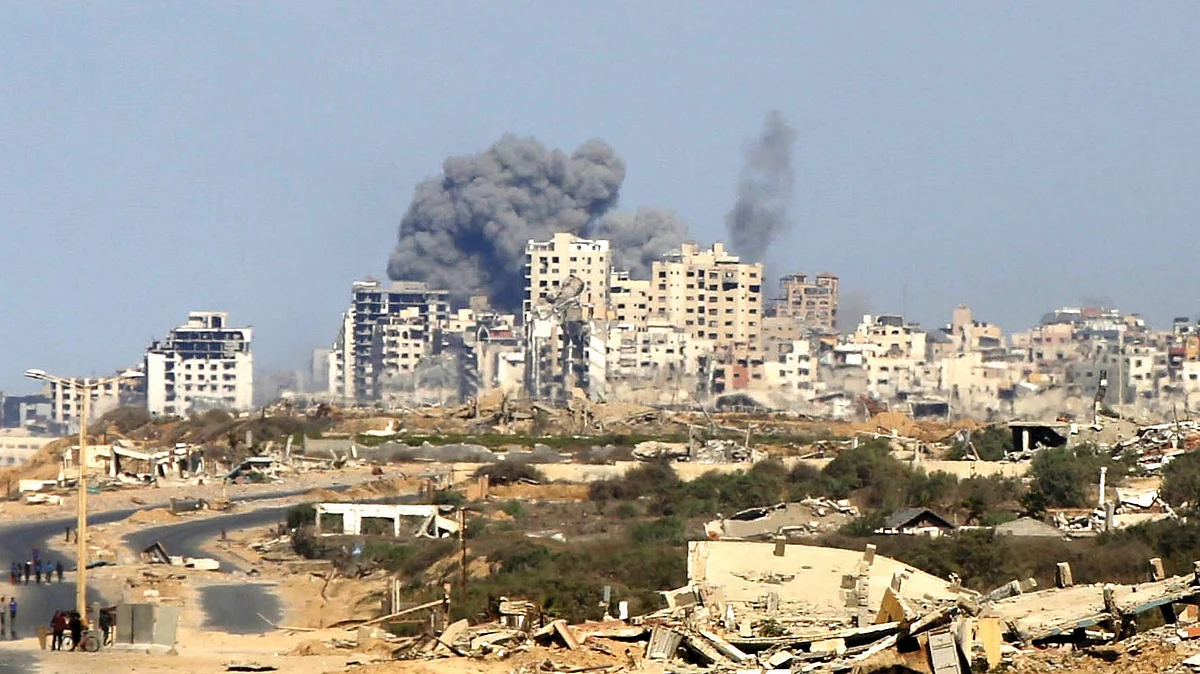


Under the fragile hush of a United States-brokered ceasefire, southern Gaza once again echoed with the thunder of war.
Israeli artillery shells and helicopter fire tore through the night, striking the al-Mawasi coastal area where displaced Palestinians had sought refuge in tents. One such strike reduced a canvas shelter to ruins, killing a five-year-old girl and her uncle, Gaza health officials told Al Jazeera.
Four others, including children, were wounded. With these deaths, the toll of Palestinians killed by Israeli forces since the truce took effect in October has climbed to at least 422, the Al Jazeera reported.
At Khan Younis’s Nasser Medical Complex, medics described the aftermath in grim tones, confirming that the attack hit a tent housing families already uprooted by months of devastation. Israel’s military claimed it had targeted a Hamas fighter allegedly planning an imminent attack, though no evidence was provided, and it remained unclear whether the statement referred to the deadly strike on the tent.
Despite the ceasefire, Gaza continues to bleed. Near-daily Israeli attacks persist, while strict controls on humanitarian aid choke relief efforts. Palestinian officials say nearly 88 percent of buildings across the enclave have been damaged or destroyed, turning neighbourhoods into fields of rubble. Most of Gaza’s two million residents now survive in tents, makeshift shelters, or the skeletal remains of bombed-out homes.
The violence is not only sudden but lingering. In the central Maghazi refugee camp, a house weakened by earlier strikes collapsed on Monday, killing a 29-year-old father and his eight-year-old son, according to the Palestinian Civil Defence. Rescue teams later admitted they were powerless to respond to many such emergencies, crippled by fuel shortages and a lack of heavy equipment.
The ceasefire itself, reached after more than two years of relentless bombardment that claimed over 71,000 Palestinian lives, is unfolding in uneasy stages. Its first phase promised captive and prisoner exchanges, an increase in humanitarian aid, and the reopening of Gaza’s Rafah border crossing with Egypt. Hamas has released all remaining living captives and returned dozens of bodies, while Israel has freed nearly 2,000 Palestinian detainees, including some serving life sentences.
Yet for Gaza’s people, relief remains painfully out of reach. Aid agencies say Israeli restrictions continue to obstruct deliveries, and the Rafah crossing — Gaza’s former lifeline to the outside world — remains shut. Israel occupied the Palestinian side of the crossing in May 2024, sealing off what had long been the enclave’s sole gateway.
A report by Israel’s Kan broadcaster on 1 January suggested that authorities are preparing to reopen Rafah “in both directions” following pressure from US President Donald Trump. If confirmed, it would signal a shift from Israel’s earlier stance that the crossing would open only to allow Palestinians to leave Gaza — a policy condemned by Egypt, Qatar, and others as a prelude to ethnic cleansing.
The report has stirred cautious hope among Palestinians, long accustomed to promises that vanish as quickly as they appear.
“For me, it’s a dream,” said Tasnim Jaras, a student in Gaza City. “If the crossing opens, we can continue our education.”
Moaeen al-Jarousha, wounded during the war, spoke of survival rather than dreams. “I need urgent medical treatment abroad. I’m living in very difficult conditions,” he said.
Al Jazeera’s Hani Mahmoud, reporting from Gaza City, captured the mood of fragile anticipation. “This isn’t about travel,” he said. “It’s about life itself — medical care, education, family reunification. But hope here is never simple. People have heard such announcements many times before, only to watch the gates close again.”
Meanwhile, Israeli forces continue to control roughly 53 per cent of Gaza. Witnesses reported ongoing demolitions in the eastern Zeitoun neighbourhood of Gaza City, even as the ceasefire holds in name. The Israeli military also said it struck a Palestinian who crossed the so-called “yellow line,” an unmarked boundary set after the truce, claiming it acted to “remove a threat” — again without offering evidence.
Beyond Gaza, Israeli strikes were also reported against Hezbollah and Hamas targets in southern and eastern Lebanon, underscoring how the flames of conflict continue to leap across borders.
For Gaza’s people, caught between ceasefire clauses and exploding shells, the war may pause on paper — but on the ground, it refuses to end.
Join our official telegram channel (@nationalherald) and stay updated with the latest headlines