


Poverty and unemployment surge in Gaza in the aftermath of Israel’s war
After more than two years of war, Gaza’s economic and social fabric lies in tatters
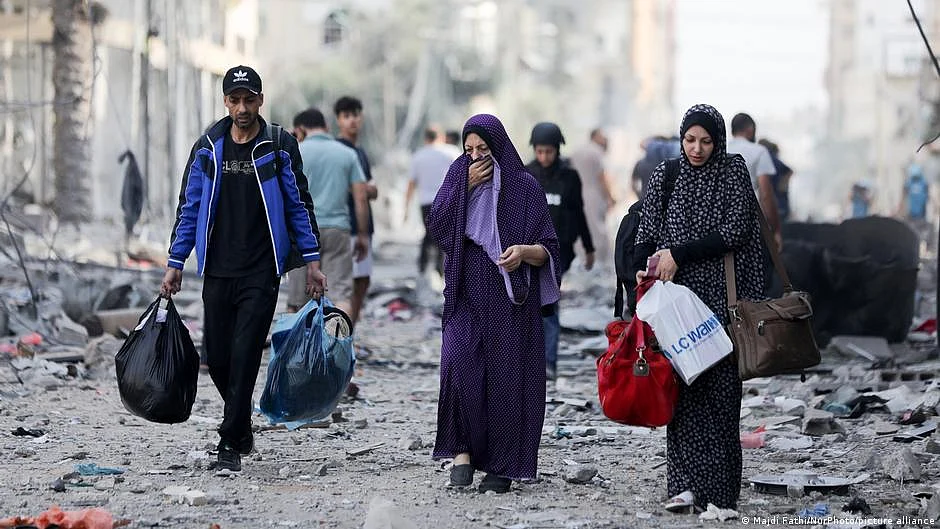


Under a canvas roof that barely shields them from Gaza’s winter rain, Alaa Alzanin and his family cling to survival in a crowded United Nations-run school in central Gaza City, the Al Jazeera reported.
The tent, wedged among dozens of others, has become home to Alzanin, his wife Mariam, their five children, his elderly mother and a younger sister — the latest stop in a relentless journey of displacement that has uprooted them eight times since their house in Beit Hanoon was destroyed during Israel’s war.
At 41, Alzanin carries the weight of a family he can no longer support. Once a day labourer in Gaza’s fields and infrastructure projects, he now joins the ranks of hundreds of thousands left jobless across the Strip. “Now I have no work. I can’t provide for my family,” he told Al Jazeera, his voice heavy with resignation. He remembers a different life — long days spent ploughing soil, opening irrigation channels, spraying crops and planting tomatoes and cucumbers for a modest daily wage. That life has vanished, buried beneath rubble and unemployment.
A few kilometres away, despair takes another form in the story of Majed Hamouda. The 53-year-old from Jabalia, who lives with polio and whose wife carries thalassaemia, shelters with his five children in a school camp in Gaza City’s Remal neighbourhood. Once dependent on modest state assistance, Hamouda says even that lifeline vanished when the war began. “We are like dead people, but not buried yet,” he said quietly, as one of his daughters broke down beside him. “If someone destroys your home and throws you into the streets like dogs — even dogs live better lives than ours.”
Hunger stalks the Hamouda family daily. On days when there is nothing to eat, Hamouda sends his only son, Yaqoub, to scour the streets for plastic and rubbish to sell. The irony is painful. “My little son was first in his class. He won a prize as a ‘Little Scientist’ after completing eight experiments,” Hamouda said. “Now I watch him collecting nylon to burn for cooking, running after hot meal deliveries. Sometimes I cry just watching him.” Fresh food, he added, has become a distant dream. “To eat a tomato or a cucumber now feels inhumane to even hope for.”
After more than two years of war, Gaza’s economic and social fabric lies in tatters. The United Nations World Food Programme warns that the trickle of aid entering the besieged enclave falls drastically short of nutritional needs, with supplies far below the daily requirement of 2,000 tonnes due to limited crossings and Israeli restrictions. Famine looms, and hunger has become routine.
The numbers paint a grim picture. According to the Palestinian Central Bureau of Statistics, unemployment has surged to 50 percent across Palestine and an overwhelming 80 percent in Gaza, leaving more than 550,000 people without work. A report by the UN Conference on Trade and Development says the Palestinian economy has been hurled back decades — GDP returning to 2010 levels and per capita income collapsing to figures last seen in 2003, erasing 22 years of development in just two.
“Before the war, Gaza witnessed economic growth,” said Maher Altabbaa, director-general of the Gaza Governorate Chamber of Commerce and Industry. Tourism, industry and commerce had begun to stir, and investment was finding its way into the enclave. Today, that fragile progress has been obliterated. Gaza’s GDP plunged by 83 percent in 2024 alone, dropping to just $362 million, while GDP per capita sank to $161 — among the lowest figures in the world.
The private sector, once Gaza’s economic backbone, accounting for more than half of employment through small and medium enterprises, has been crippled. Agriculture, which once achieved near self-sufficiency and contributed significantly to the Palestinian economy, now struggles to survive. And even before the war, Gaza laboured under a blockade imposed since 2007, with poverty already engulfing more than 60 percent of the population and humanitarian aid sustaining nearly four in five residents.
Now, Gaza’s own authorities estimate that 90 percent of all sectors — housing, infrastructure, industry — have been wiped out. Total economic losses are put at around $70 billion. Yet amid the devastation, officials speak cautiously of rebuilding. “Supporting small and medium enterprises is essential, as they can absorb the workforce quickly,” said Ismail al-Thawabta of the Gaza Government Media Office. Reopening crossings, allowing raw materials and spare parts to flow freely, and reviving agriculture, industry and services are seen as the only path away from permanent aid dependency.
But for families like the Alzanins, recovery feels impossibly distant. Mariam, three months pregnant, says food parcels keep hunger at bay but not malnutrition. “We eat and feel full from the hot meals, but they are not nutritious,” she said. Markets display fruits, fish and eggs, but they remain beyond reach. “The children ask for bananas and apples. We buy tiny portions, only for them.”
Her own body bears the cost of deprivation. “I am pregnant. I need proper food and supplements,” she said softly. “I am losing my teeth — there has been no calcium in my food for two years. Alhamdulillah.”
As ceasefire plans remain uncertain and Gaza’s future hangs in the balance, the Strip faces an immense task: not just rebuilding homes and roads, but restoring dignity, livelihoods and hope. For now, amid tents, hunger and silence, Gaza’s people wait — determined to endure, yet haunted by how much has already been lost.
Join our official telegram channel (@nationalherald) and stay updated with the latest headlines