


Iran has made no commitment to buy agricultural produce from US: Tehran
Tehran denies claims by Trump and J.D. Vance; asserts it has given no commitment to buy agricultural produce from US with assets expected to be unfrozen and released
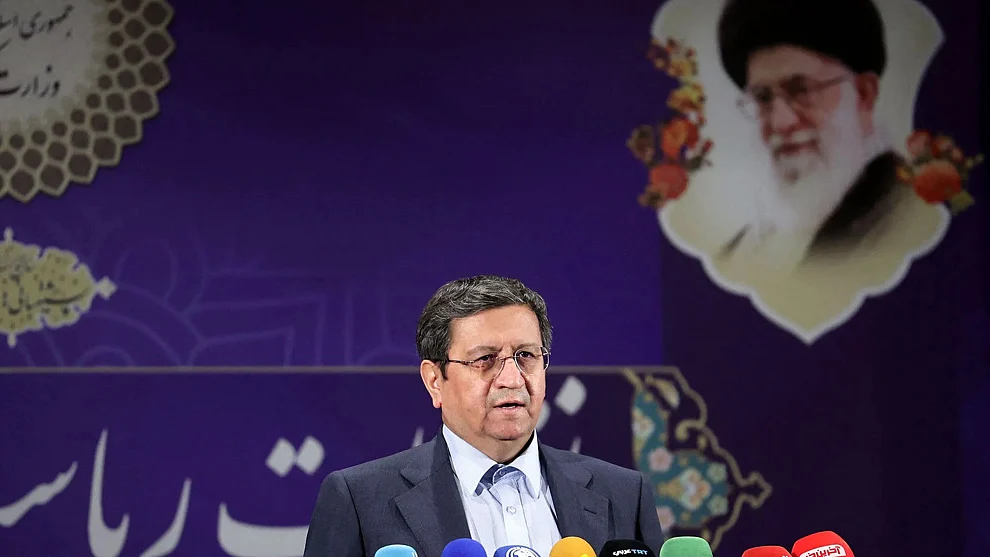


Iran’s Central Bank Governor Abdolnaser Hemmati has rejected claims by President Donald Trump and vice president J.D. Vance that Iran will buy American agricultural goods with the unfrozen funds. Hemmati said the first $6 billion in released Iranian funds will be used according to the terms of the 2023 U.S.-Iran prisoner swap agreement, which limits spending on essential goods and medicine. Iran would buy U.S. agricultural products only if they offered better prices and quality than alternatives, noting that Iran actually sourced agricultural purchases from major American and European companies in recent years, adding that how unfrozen funds would be spent is largely Iran’s lookout.
Other Iranian spokesmen, notably Seyed Mohammed Marandi, also weighed in and said that Tehran is under no obligation to purchase agricultural products from the United States under the Iran-U.S. memorandum of understanding. “Iran is not planning to purchase US agricultural goods, and there were no discussions regarding IAEA inspectors coming to Iran either. Ignore Western propaganda,” Marandi tweeted.
Iranian Foreign Ministry spokesman Esmaeil Baqaei said cooperation with the IAEA will continue under the existing framework and in accordance with decisions made by Iran's parliament and Supreme National Security Council. He stressed that Iran has not made any new commitments regarding IAEA inspections, and said participants in the 18-hour US-Iran talks in Switzerland confirmed that Iran's nuclear file was not discussed and that no new commitments were made.
Iran's nuclear facilities had been subject to IAEA inspections prior to the June 2025 US-Israeli bombing campaign during the 12-Day War. The strikes followed an IAEA report on Iran's nuclear activities, which Tehran has repeatedly contested and criticised, as it helped pave the way for the attacks on its nuclear infrastructure. The foreign ministry spokesman denied any meeting of the Iranian delegation with the chief of the International Atomic Energy Authority Rafael Grossy in Switzerland. Denying any new arrangement for inspecting the country's affected nuclear facilities, the spokesperson added that as a party to the NPT, Iran will adhere to the standard procedures, which are already well-defined and transparent.
The US President and vice president, Tehran susggested, are addressing their domestic audiences and counter criticism that the US administration had granted too many concessions to Iran. There has been criticism in the US about unfreezing Iranian assets worth $300 billion, forcing President Trump to point out that it was Iran’s money which had been frozen as part of US sanctions.
Meanwhile, the lead negotiator for Iran, M.B. Ghalibaf provided a first person account of what happened in Switzerland during the negotiations. He recalled the sequence in an interaction with the media while flying back to Iran. Media reports including in Tansim News, IRNA, Drop-site News and Clash, described the sequence in his own words:
Trumps’ Threats: "In the middle of discussions, I learned that Trump had made threatening remarks regarding our president, the negotiating team, and possible attacks on our territory. I told Vance: 'We are here engaged in talks, and according to the signed understanding, the first clause states that there should be no threats or coercion. Yet today your president has issued threats. Understand that we never negotiate under threats or pressure'.”
“We ended the negotiations, left the meeting, and did not return. The American side sought another meeting through the mediators, but we refused. The Qatari and Pakistani mediators then came to us, and we told them that we would speak with them, but not with the American side directly. The outcome of these discussions and the 80-minute negotiations was the statement later released by the Pakistani and Qatari side.”
On Refusal to Get Photographed: “We have certain principles, and up to this point, we have never wanted to appear in the same photo or frame as the Americans. The mediators insisted that this was the beginning of the talks, but we clearly stated that we would not participate in any such joint appearance and would only come for negotiations without being in the same frame.”
Strait of Hormuz: The Strait of Hormuz will be managed by Iran, in accordance with those laws and under arrangements established by Iran. Problems may arise in the Strait of Hormuz. Therefore, we agreed to establish a centre and a telephone hotline so that, during the 30-day period, if issues occur, they can be resolved more quickly. God willing, this will contribute to the prosperity of the regional economy. The recent agreement between Iran and the United States has fundamentally changed the situation in the strategic waterway. Everyone should know that the administration of the Strait of Hormuz will never go back to the way it was before the war. Of course, international regulations will be observed, but Iran will administer the Strait of Hormuz."
Join our official telegram channel (@nationalherald) and stay updated with the latest headlines