


Iran has not yet elected new supreme leader: Top Iranian cleric in India
Iran’s supreme leader’s representative in India thanks Indian people for solidarity as New Delhi offers formal condolence
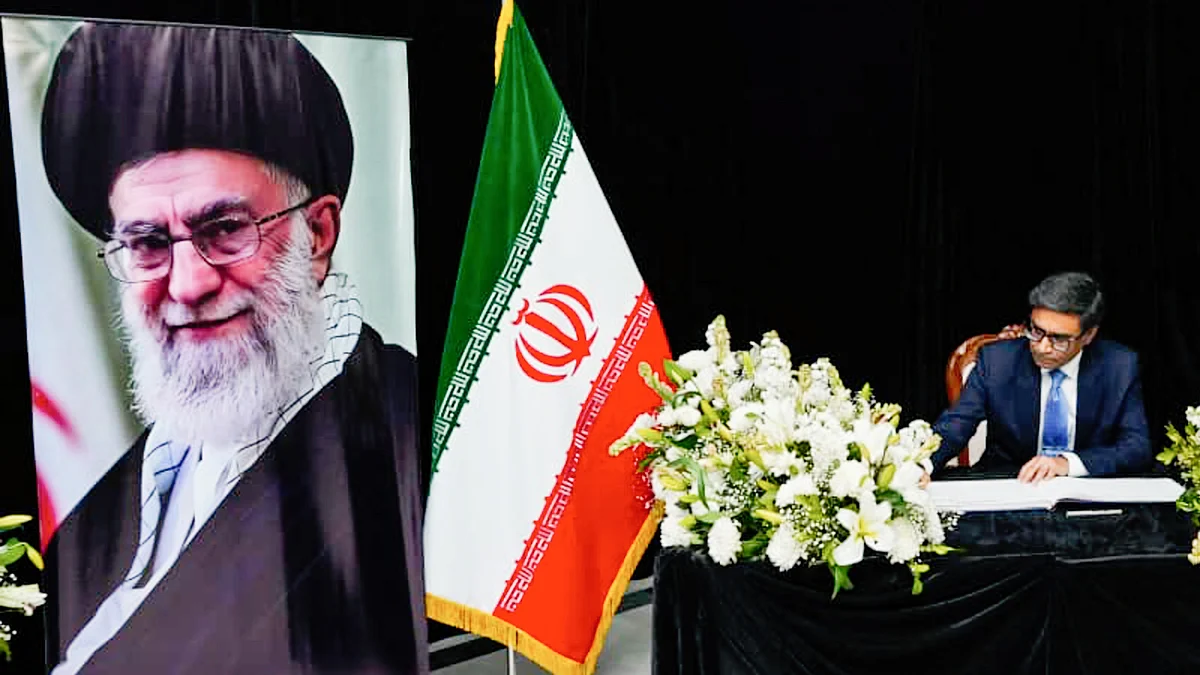


Iran has not yet chosen a successor to Supreme Leader Ayatollah Ali Khamenei, who was assassinated in a joint US–Israeli airstrike last week, a senior Iranian official said on Thursday, dismissing media reports that his son Mojtaba Khamenei had already been selected.
Ayatollah Dr Abdul Majeed Hakeemelahi, the representative of Iran’s supreme leader in India, said the process to elect the country’s next leader was still underway.
“This news is not true because, till now, they (the council) have not chosen or nominated anyone, and the process is still underway,” Hakeemelahi said when asked about reports claiming Mojtaba Khamenei had been elected as the next supreme leader.
He said Mojtaba Khamenei was among several potential candidates but stressed that his candidacy was not linked to his lineage. “There are several candidates for this position, and Ayatollah Mojtaba is one of them. It is not because he is the son of Ayatollah Khamenei. Rather, because of his qualifications, they may consider choosing him. But it is not finalised, and they are still assessing to find the qualified person for this position,” he said.
Hakeemelahi explained that the selection of Iran’s supreme leader is carried out by the Assembly of Experts, an 88-member clerical body elected through public vote. “One of the responsibilities of this council is to elect the supreme leader. Now they have started negotiating to get a qualified person for this position,” he said.
According to him, deliberations have begun but the ongoing conflict has made the process difficult. “They did a lot of discussion, but the situation is not good because we are under attack by the US and Israel. So when they get the good situation, and they gather, they will choose the one who is qualified for this position,” he added.
The supreme leader is Iran’s highest political and religious authority, wielding ultimate authority over state policy and serving as commander-in-chief of the armed forces.
Hakeemelahi said there would be broad unity behind whoever is eventually chosen. “Whoever they elect, everyone will support him and follow him. And he will be our supreme leader, and all Iranian officials and citizens will accept the choice of this council,” he said.
Asked whether Iran was concerned about publicly naming a new leader after Israeli defence minister Israel Katz threatened to target Khamenei’s successor, he said the country remained prepared to defend itself. “Iran is ready to defend itself,” he said.
Israeli and US strikes recently targeted a building associated with the Assembly of Experts in the city of Qom. Local television footage showed the structure severely damaged, though Iranian state media later reported that the building was no longer being used for meetings.
Recalling Khamenei, Hakeemelahi said the late leader had often spoken about the deep historical links between India and Iran. “He used to tell people to study about India — ‘If you want to know the history of Iran, you cannot understand it without understanding and studying the history of India’,” he said. “We will continue to follow his path and never forget him.”
Hakeemelahi also thanked the people of India for their expressions of solidarity after the assassination of the Iranian leader. He said Indians had “showed their sympathy, their solidarity, and their support” to Iran and had mourned Khamenei’s killing.
Notably, his remarks thanked the people of India rather than the Indian government.
New Delhi formally conveyed its condolences on Thursday, with foreign secretary Vikram Misri visiting the Iranian embassy and signing the condolence book on behalf of the government of India. The Ministry of External Affairs released photographs of Misri’s interaction with Iran’s ambassador to India, Mohammad Fathali.
External affairs minister S. Jaishankar also spoke with his Iranian counterpart Seyed Abbas Araghchi over the phone, though details of their conversation were not immediately available.
Khamenei, who became Iran’s supreme leader in 1989, was killed in a US–Israeli strike on 28 February at the age of 86. His wife later succumbed to injuries sustained in the attack, while his daughter, son-in-law and granddaughter were also reported killed in the airstrike.
While India has called for resolving the escalating West Asia crisis through dialogue and diplomacy, the government initially refrained from reacting directly to Khamenei’s assassination.
The visit by the foreign secretary to the Iranian embassy therefore assumed significance amid sustained criticism from Opposition parties that the government had remained silent following the killing of the Iranian leader.
With PTI inputs
Join our official telegram channel (@nationalherald) and stay updated with the latest headlines