


Iran rejects ceasefire proposal as Trump deadline looms; insists on permanent end to war
Tehran says truce without guarantees unacceptable; strikes intensify across region as oil prices surge


Iran on 6 April rejected a fresh ceasefire proposal amid intensifying hostilities, insisting that it would only accept a permanent end to the war with guarantees against future attacks, even as US President Donald Trump set a deadline for reopening the Strait of Hormuz.
Iran conveyed its response through Pakistan, which has emerged as a key mediator in the ongoing conflict, according to Iranian state media.
“We won’t merely accept a ceasefire… we only accept an end of the war with guarantees that we won’t be attacked again,” a senior Iranian diplomatic official told the Associated Press.
Ceasefire proposal and mediation
The proposed framework, backed by regional mediators including Pakistan, Egypt and Turkey, envisages a temporary ceasefire followed by negotiations towards a comprehensive settlement.
The plan reportedly included reopening the Strait of Hormuz — a critical global oil transit route — as part of the initial phase.
However, Tehran rejected the idea of reopening the strait as part of a temporary truce, signalling that it would not accept externally imposed deadlines while reviewing the proposal.
Iran’s foreign ministry said negotiations could not proceed under “ultimatums” or threats.
Trump’s ultimatum
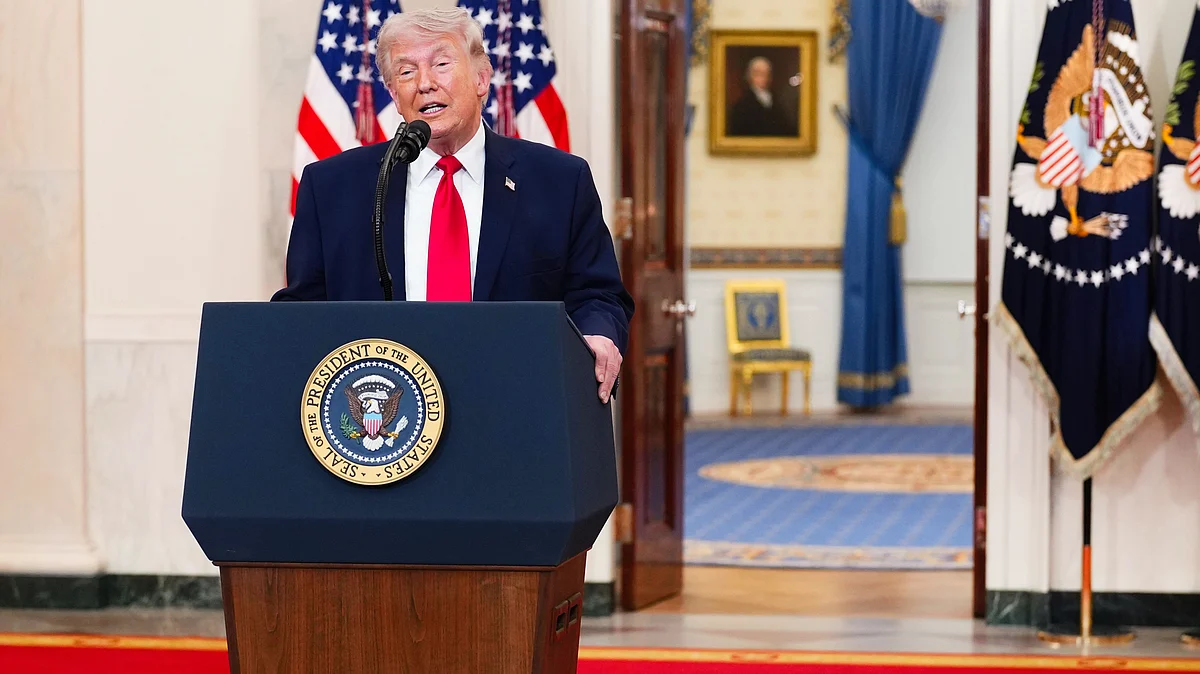
Trump has warned that failure to reopen the Strait of Hormuz could trigger strikes on Iranian infrastructure, including power plants and transport networks.
In recent statements, he indicated that such action could be taken within hours if no agreement is reached.
The Strait of Hormuz carries nearly one-fifth of the world’s oil supply, and its disruption has already pushed global energy prices sharply higher.
Escalation on ground
Even as diplomatic efforts continued, military escalation persisted across the region.
Israeli forces carried out strikes on Iran’s South Pars gas field, a key energy installation shared with Qatar, targeting infrastructure linked to Iran’s energy revenues, according to reports.
Iranian media said senior figures from the Islamic Revolutionary Guard Corps were killed in recent strikes.
Explosions were reported in Tehran, with residents describing sustained aerial bombardment and air defence activity.
Iran has also continued missile and drone attacks targeting Israel, US military positions and infrastructure in Gulf countries.
Gulf states, including the United Arab Emirates and Kuwait, activated air defence systems to intercept incoming projectiles, reflecting the widening regional impact of the conflict.
In Israel, missile strikes hit northern areas, including Haifa, resulting in civilian casualties, reports said.
The conflict has also expanded into Lebanon, where Israeli forces have targeted positions linked to Hezbollah, an Iran-backed militant group.
The ongoing disruption in the Strait of Hormuz and attacks on energy infrastructure have unsettled global markets.
Brent crude prices surged sharply in early trading, reflecting concerns over supply disruptions, though they later showed some volatility.
Rising energy prices have added pressure on governments worldwide, with concerns over inflation and supply chains intensifying.
Diplomatic efforts continue
Despite the escalation, mediators continue efforts to broker a ceasefire.
Pakistan’s role has been central, with senior officials indicating that negotiations are at an advanced stage, though key disagreements persist.
Iran has maintained that any agreement must address long-term security concerns rather than provide only a temporary pause in hostilities.
The conflict has resulted in significant casualties across multiple countries.
Hundreds have been reported killed in Iran in recent strikes, while deaths have also been reported in Israel and Lebanon.
The broader war, now in its sixth week, has caused widespread destruction, displacement and humanitarian concerns across the region.
Join our official telegram channel (@nationalherald) and stay updated with the latest headlines