


Iran says Hormuz shipping pact with Oman enters final stage
Iranian officials say full restoration of navigation through the Strait of Hormuz will depend on the implementation of wider understandings
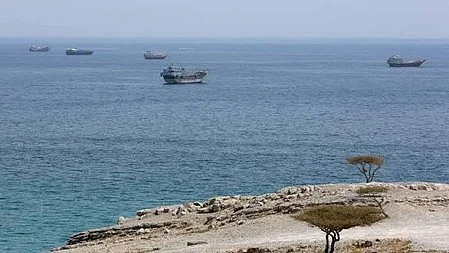


Iran has said it is in the final stages of concluding an agreement with Oman on revised commercial shipping arrangements through the Strait of Hormuz, marking a potentially significant step towards restoring maritime traffic through one of the world's most strategically important waterways.
Iranian deputy foreign minister for legal and international affairs Kazem Gharibabadi said Tehran and Muscat had reached an agreement in principle on almost all key issues after more than three weeks of negotiations. The proposed arrangement would replace the temporary northern and southern navigation corridors with a single shipping route passing through Iranian territorial waters for an initial period of between two and four months.
Speaking to Iran's official IRNA news agency, Gharibabadi said discussions had largely resolved issues relating to vessel entry and exit routes and operational procedures. However, he stressed that the proposed agreement should not be interpreted as a full reopening of the Strait of Hormuz.
Iran has maintained tighter control over the strategic waterway since February, restricting the movement of vessels linked to the United States and Israel following military strikes on Iranian territory. The confrontation subsequently escalated into attacks on commercial shipping and military installations across the region, severely disrupting one of the world's busiest energy transit corridors.
The Strait of Hormuz is a vital gateway for global energy supplies, with around one-fifth of internationally traded oil and significant volumes of liquefied natural gas traditionally passing through the narrow waterway. Prolonged disruption has pushed up energy prices, increased shipping costs and added pressure to the global economy.
Iranian officials indicated that broader restoration of navigation remains linked to wider diplomatic understandings with Washington. Gharibabadi dismissed reports of direct negotiations with the United States but acknowledged that Tehran had received messages from Washington expressing readiness to honour commitments contained in a peace memorandum agreed in June.
An Iranian source familiar with the negotiations also said reopening the strait would depend on tangible implementation of US commitments, adding that the recent removal of sanctions on an Iraqi airline by the US Treasury Department was unrelated to the broader agreement between Tehran and Washington.
Separately, Iranian foreign ministry spokesperson Esmail Baghaei said the draft agreement with Oman was in its final phase and suggested that a joint announcement could follow if external factors did not derail the process.
Regional officials familiar with the talks said negotiators from both countries had completed a draft agreement and were awaiting final approval from Iran's Supreme Leader. According to the officials, the arrangement is intended as a temporary mechanism that could help revive wider negotiations between Tehran and Washington, including discussions over Iran's nuclear programme.
Previous proposals under discussion reportedly envisaged commercial vessels entering the Persian Gulf through an Iranian-controlled route and departing via an Omani-managed corridor, with charges levied for maritime security and environmental protection. The United States has previously opposed any arrangement that would allow Iran to collect transit fees or institutionalise greater control over the waterway.
US President Donald Trump indicated earlier this week that an announcement could be imminent, telling reporters that substantial progress had been made and that a deal could emerge within days. Vice-president J.D. Vance also acknowledged that negotiations remained complicated, describing efforts to end the conflict as difficult and likely to take time.
Even as diplomatic efforts gathered pace, security tensions across the wider region persisted. Yemen's Iran-backed Houthi movement claimed to have targeted Saudi-linked shipping with ballistic missiles, while maritime authorities also reported an explosion near a commercial vessel in the Gulf of Aden.
Meanwhile, the fragile ceasefire between Israel and Hezbollah showed further signs of strain after Israeli forces carried out strikes in southern Lebanon, prompting renewed concern over the stability of the broader region despite ongoing diplomatic contacts.
With IANS inputs
Join our official telegram channel (@nationalherald) and stay updated with the latest headlines