


Iran's Araghchi reportedly heads to Pak as ceasefire push falters
Islamabad steps up mediation as US extends shipping waiver and military build-up underscores fragile truce
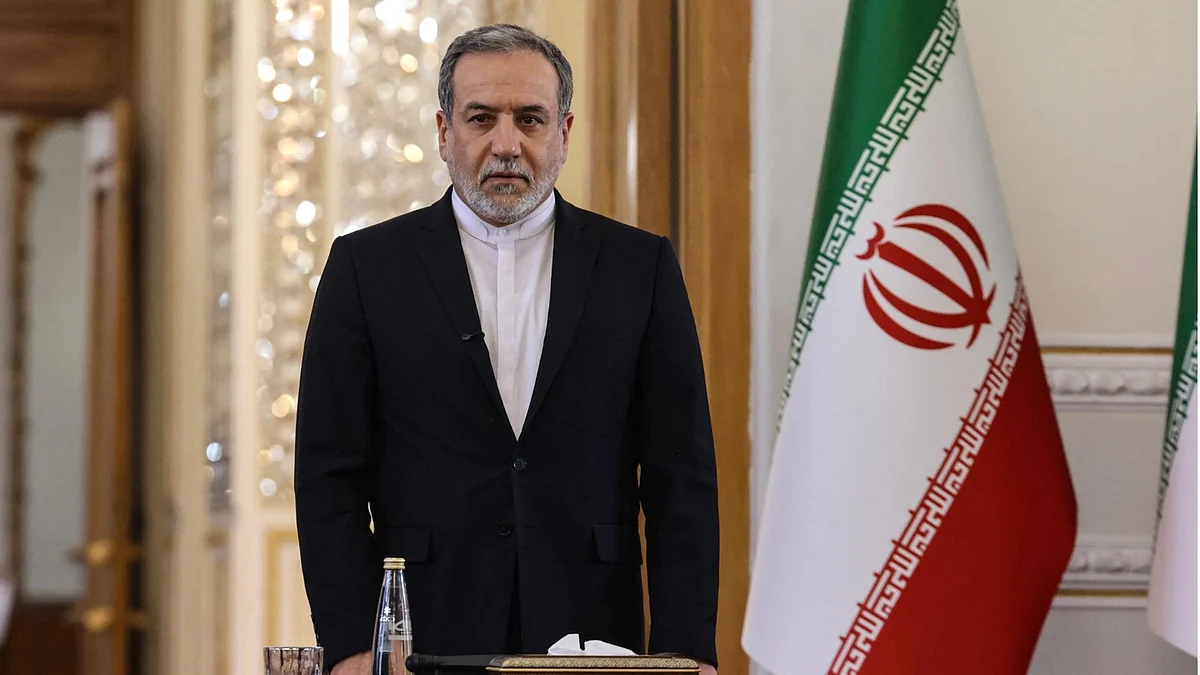


Iran’s foreign minister Seyed Abbas Araghchi is reportedly scheduled to arrive in Pakistan on Friday, 24 April at a critical moment in West Asia diplomacy, as efforts to restart stalled ceasefire negotiations between Iran and the US struggle to regain traction against a backdrop of continued military tension and economic disruption.
Iran’s state-run IRNA news agency described the visit as part of “bilateral consultations” and discussions on wider regional developments. The trip, which will also take Araghchi to Oman and Russia, reflects Tehran’s attempt to engage multiple diplomatic channels even as the situation on the ground remains volatile.
Pakistan has positioned itself as an intermediary in the crisis, seeking to bring Iran and the United States back to the negotiating table after a planned second round of talks failed to materialise earlier this week. Officials in Islamabad say Araghchi is travelling with a small delegation, with discussions expected to focus on the contours of a possible renewed dialogue and the terms of a fragile ceasefire.
The urgency of these efforts is underscored by the wider consequences of the conflict, which began after US and Israeli strikes on Iran in late February. Since then, the region has been on edge, with the Strait of Hormuz — a critical artery for global energy supplies — emerging as a focal point of confrontation. Roughly a fifth of the world’s oil and natural gas passes through the strait in normal times, making any disruption immediately consequential for global markets.
Although US President Donald Trump earlier this week announced an indefinite extension of a ceasefire with Iran — partly at Pakistan’s urging to allow more time for diplomacy — the move has done little to ease tensions in the waterway. Iran has continued to exert pressure on shipping lanes, including reported attacks on vessels in recent days, while the United States has maintained a blockade of Iranian ports and issued warnings that its forces will act decisively against perceived threats.
Washington has simultaneously reinforced its military posture in the region. Three aircraft carriers — the USS George H. W. Bush in the Indian Ocean, the USS Abraham Lincoln in the Arabian Sea and the USS Gerald R. Ford in the Red Sea — are now deployed, marking the first time since 2003 that such a concentration of US naval power has been present in the region. According to US Central Command, the deployment includes roughly 200 aircraft and 15,000 personnel.
The economic fallout has been immediate. In a bid to stabilise energy flows, the White House on Friday announced a 90-day extension of the Jones Act waiver, allowing non-US vessels to transport oil and liquefied natural gas between US ports. The waiver, first introduced in March, is intended to ease logistical bottlenecks caused by disrupted shipping routes.
Markets reacted cautiously. Brent crude, the global benchmark, fell back to around USD 104 per barrel following the announcement, after earlier climbing above USD 107 — a surge of nearly 50 per cent compared to levels seen before the conflict escalated at the end of February. Analysts say volatility is likely to persist as long as uncertainty around Hormuz continues.
Diplomatic engagements in Islamabad on Friday reflected both urgency and ambiguity. Araghchi held discussions with Pakistan’s foreign minister Ishaq Dar and Army chief Asim Munir, with both sides reviewing ceasefire-related issues and broader regional developments. Pakistan’s foreign ministry later emphasised the need for “sustained dialogue and engagement” to address outstanding issues and advance regional stability, though it offered few specifics on any breakthrough.
The human cost of the conflict continues to mount alongside the diplomatic and economic pressures. Iranian authorities report at least 3,375 deaths since the war began, while more than 2,290 people have been killed in Lebanon, where fighting between Israel and the Iran-backed Hezbollah escalated shortly after the initial strikes. Israel has reported 23 fatalities, with additional casualties recorded among Gulf states, as well as among Israeli forces and US personnel deployed in the region.
For now, Pakistan’s mediation efforts represent one of the few active diplomatic tracks available. But with military posturing intensifying and mistrust between Washington and Tehran still high, the gap between ceasefire declarations and realities on the ground remains wide — leaving the region, and global markets, in a state of uneasy suspense.
With AP/PTI inputs
Join our official telegram channel (@nationalherald) and stay updated with the latest headlines