


Israel watches Iran protests warily amid fears of wider regional escalation
Benjamin Netanyahu praises Iranian protesters’ courage but signals restraint as experts warn foreign strikes could backfire
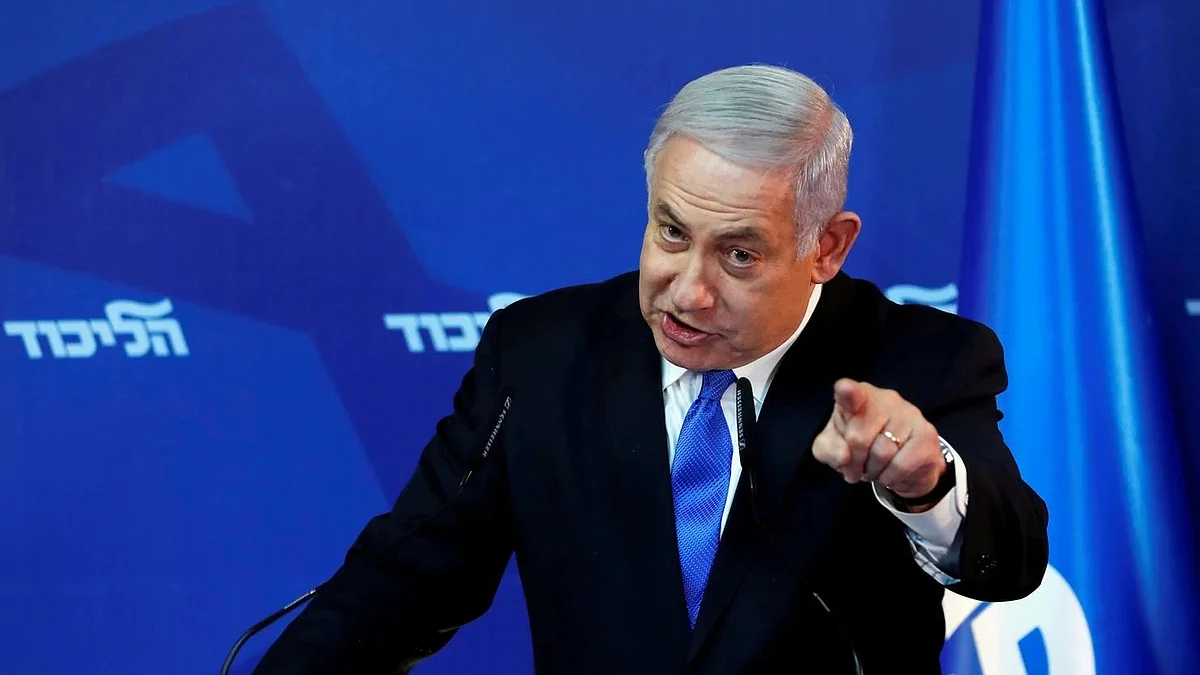


Israel is closely monitoring the fallout from widespread protests in Iran, Prime Minister Benjamin Netanyahu has said, as US President Donald Trump’s threats of military action raise concerns that domestic unrest inside the Islamic Republic could spiral into a broader regional conflict.
Speaking at the start of Israel’s weekly cabinet meeting on Sunday, Netanyahu expressed admiration for Iranian demonstrators while condemning the killing of civilians by the authorities.
“The people of Israel, the entire world, are in awe of the tremendous heroism of the citizens of Iran,” he said, adding that he hoped Israel could one day rebuild relations with Iran once the country was “freed from the yoke of tyranny”.
Israeli officials, however, have sought to emphasise caution. Netanyahu and US Secretary of State Marco Rubio discussed Iran overnight on Saturday, according to an Israeli official speaking on condition of anonymity, but Israel’s military said there were no new instructions for civilians to remain near bomb shelters, suggesting no immediate threat of an Iranian missile strike.
The Israel Defense Forces (IDF) described the protests as an “internal Iranian matter”, while stressing that the military would be prepared to respond forcefully if required. Analysts say Israel is unlikely to initiate an attack while Iran’s leadership is under pressure at home.
Danny Citrinowicz, a former Israeli military intelligence official and now a senior researcher at the Institute for National Security Studies, said neither side appeared eager for another confrontation. “From an Iranian standpoint, the last thing Iran wants is to divert attention towards Israel,” he said, adding that Tehran’s priority was restoring domestic stability.
He noted that the uncertainty inside Iran made it more likely Israel would adopt a wait-and-see approach, with “neither side having an appetite” for a renewed conflict following last summer’s 12-day war.
That conflict began with Israeli strikes on Iranian nuclear and military facilities, with Israel arguing it could not allow Tehran to develop nuclear weapons. Iran has consistently maintained that its nuclear programme is peaceful.
According to the US-based Human Rights Activists News Agency, Israeli strikes killed 1,190 people in Iran and wounded 4,475, while Iranian missile barrages killed nearly 30 people in Israel and injured around 1,000.
Tensions have risen further after Iran’s parliament speaker, Mohammad Bagher Qalibaf, warned that US forces and Israel would be “legitimate targets” if Washington attacked Iran. His remarks were delivered amid chants of “Death to America!” in the Iranian parliament.
Trump, who has issued repeated warnings to Tehran on social media, has a record of following through on military threats. The US State Department cautioned over the weekend: “Do not play games with President Trump. When he says he’ll do something, he means it.”
Some Israeli analysts argue that foreign military action could undermine, rather than strengthen, the protest movement inside Iran. Citrinowicz said an external attack could fuel nationalism and rally public support around the regime, weakening the demonstrations.
The United States played a central role in brokering a ceasefire during last summer’s Israel-Iran war and directly assisted Israel by striking Iranian nuclear sites, allowing Netanyahu to claim that Israel had achieved its objectives and to accept a US-backed truce.
Despite the volatile backdrop, Israeli experts stress that Jerusalem has little interest in intervening in Iran’s internal affairs. Menahem Merhavy, an Iran specialist at the Hebrew University of Jerusalem, said Israel’s primary concern remained Iran’s military capabilities, particularly ballistic missiles, rather than the nature of its political leadership.
“Unless there’s something dramatic involving missiles, I don’t see Israel stepping into this,” Merhavy said, adding that any Iranian attack on Israel would be catastrophic for Tehran’s leadership given the international scrutiny of its crackdown on protesters.
He suggested Israel might be able to offer limited, indirect support, such as facilitating internet access, but said even that was unlikely. “Israel doesn’t want to meddle with this,” he said. “It is, ultimately, an internal Iranian matter.”
With agency inputs
Join our official telegram channel (@nationalherald) and stay updated with the latest headlines