


London Diary: British politics hit by the ‘Mamdani effect’
A 43-year-old charismatic new Green Party leader is taking Britain's political landscape by storm



Britain is having its own ‘Mamdani moment’ with a hitherto unknown left-wing hypnotist-turned-politician making waves across the left-right divide.
Meet Zack Polanski, the 43-year-old charismatic new Green Party leader who was relatively unknown until a few months ago. (And whose party was struggling to be taken seriously outside the environmentalist bubble.)
Since he took over in August, the Green Party’s fortunes have changed dramatically on the back of his personal charisma and a broader ‘environment plus’ agenda of social, racial and economic justice. This has helped expand its reach beyond its traditional base of those often dismissed as ‘tree-huggers’.
Dubbed the ‘rock star’ of the Left, Polanski draws huge crowds — largely young voters disillusioned with the ruling Labour party and the discredited Tories. Media savvy and blessed with a populist touch, he’s impossible to ignore.
At an unprecedented 17 per cent, the Green Party found second place in a nationwide poll, posing a challenge both to the Tories and Labour. Among young voters, it’s number one, backed by 34 per cent of those aged 18 to 24.
Since Polanski was elected leader, membership numbers have soared to more than 150,000, earning the party an additional £4 million. A far cry from when it barely managed to raise about £5 million a year.
Labour MPs are nervously watching this political upstart’s unexpected rise. One cabinet minister reportedly told The Times: “This Polanski thing is real. We can’t ignore it.”
****
An unusual asylum story
Amid all the seemingly improbable reasons people give for seeking asylum in Britain, the following wins hands down as the most creative asylum story.

An Iranian migrant whose asylum application was rejected and who was set to be deported has won a reprieve after claiming that he fled his home because he had been found having an affair with his elder brother’s wife. The brother, a soldier, had threatened him with a gun.
His uncle helped him escape and seek refuge in Britain. If he went back, his life would be at risk because adultery in Iran is a crime, punishable with a hundred lashes of a whip or a death sentence. The identity of the 20-year-old asylum seeker has not been disclosed, ostensibly to protect him from his alleged enemies.
His original asylum claim was rejected because his story was considered ‘implausible and incredible’. He had better luck with a review panel which ruled that the appeal must be reheard because his story may be true.
The case has been seized by critics of the immigration system as proof of their point that it is ‘broken’ and is being ‘played’ by people seeking a better life outside their own countries.
Sexual harassment allegations shake Oxford University
An Indian-origin senior Oxford University academic has been forced to resign over allegations of sexual harassment.
Soumitra Dutta (62), dean of the prestigious Saïd Business School, was accused of making ‘unwanted advances’ on a female academic. She accused another male colleague of rape and had approached the dean for help. Dutta reportedly told her, “I feel very attracted to you. Can something happen between us?” Though he denied the allegation, it was upheld by an internal inquiry.
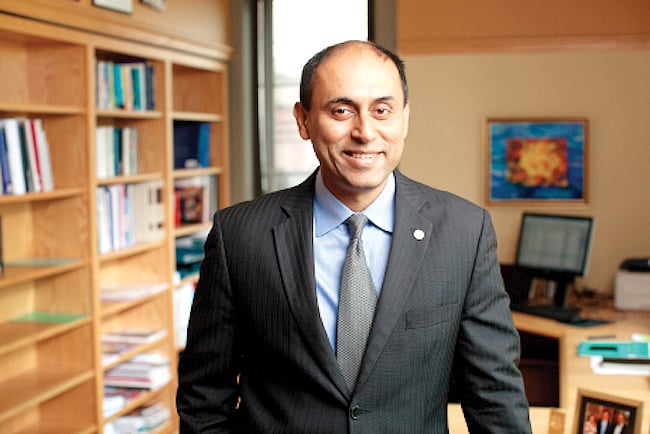
Dutta is the third senior Oxford professor to have left the university in recent months over similar allegations, prompting serious questions about the safety of women staff and students.
Two weeks after Dutta left, John Tasioulas resigned as director of Oxford’s Institute for Ethics in AI after a harassment inquiry into his conduct. He was followed by Miles Hewstone, who stepped down as emeritus professor at New College.
During the inquiry against Dutta, it emerged that the university management had been told that female students and staff at the School did not feel safe but these concerns were ignored.
The university has declined comment while insisting that it strove to ‘foster a safe environment in which all students and staff can thrive’. A spokesperson said, “Harassment and sexual misconduct in any form are not tolerated here.”
Few are convinced. And with good reason.
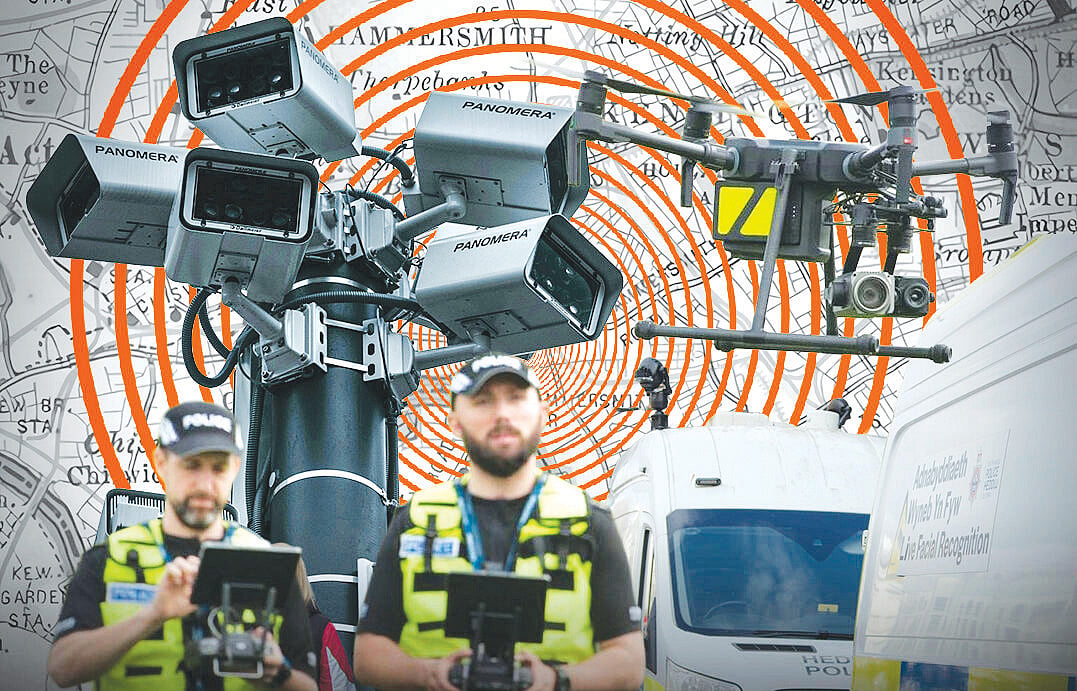
Minority fears over ‘Big Brother’ cameras
A move to introduce ‘live’ facial recognition cameras on high streets to tackle crime has prompted concerns about its effect on black and ethnic minority communities.
There are fears that they are more likely to be targeted than their white counterparts, as is the case with the ‘stop and search’ policy which has seen more blacks stopped and searched than native whites.
At least one police force uses facial recognition software developed by
Corsight, an Israeli biometrics firm whose technology has been used by the Israeli military to carry out mass surveillance in Gaza.
And, finally, almost 50 per cent of Britons admit to lying when the talk at work or a dinner party turns to the latest popular Netflix offering they haven’t seen. Why? Because they don’t want to appear ‘uncool’.
Join our official telegram channel (@nationalherald) and stay updated with the latest headlines